 Blogcritics The critical lens on today's culture & entertainment
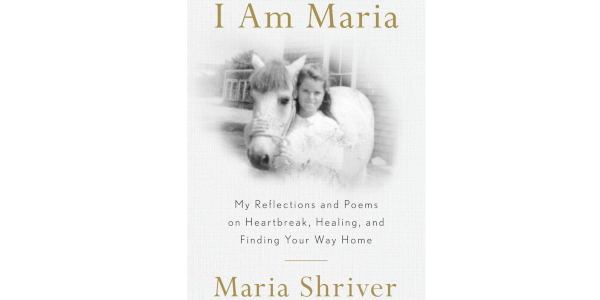
Even though Maria Shriver has been writing poetry for a while, she didn’t feel ready at first to put together and publish I Am Maria. A prominent journalist and the former First Lady of California, Shriver spoke about this with an audience at Holy Trinity Catholic Church in Georgetown. She said, “I was afraid for years because I thought, well, nobody spoke to me about their heartbreak. Nobody spoke to me about their shame.”
This spring, Shriver has been promoting her new book, which offers her personal reflections and poetry. Along the book tour, she sits down with friends and family for intimate conversations that usually include reflections and music. In the beautiful Washington D.C. neighborhood of Georgetown, her two brothers Tim and Mark Shriver spoke with her in front of the audience. Dr. Jill Biden, the former First Lady, also attended, but she didn’t offer any remarks that evening.
On Moving to California
Throughout her early life, Shriver felt annoyed when people would approach and ask, “Which one are you?” Her father, Sargent Shriver, was married to Eunice Kennedy. And so the Kennedy reputation and expectations were always there.
Shriver decided it would be best to leave the East Coast after she finished her studies at Georgetown, and make a life for herself. “I wanted to become someone in my own right. I felt I couldn’t do that if I stayed here.”
She selected journalism as a profession because no one else in the family was doing it. Working her way up, she settled in California where she eventually met and married Arnold Schwarzenegger, the famous actor and bodybuilder. By then, she believed she was as far removed as possible from politics. However, in 2004, Schwarzenegger became the Governor of California on the Republican ticket.
“How ironic that I ended up back in the same place, just on a different coast, with a person in a different political party doing the exact same thing.” Shriver filed for divorce from Schwarzenegger in 2011 after she discovered he was having an affair. She found herself crying on the floor of her hotel room with “a plea to a loving God, a plea to God to help me find my way. Then I had to find my way spiritually by breaking down the walls that I had built up.”
On Writing Poetry
I Am Maria focuses on Shriver’s memories of the past, as well as where she finds herself today. Talking about highs and lows through poetry and reflection was important to her healing from heartbreak and trials. “The more able we are to talk about them, the less shameful they are. The less hold they have on us.”
Writing has always been a way for Shriver to communicate her thoughts, whether reporting as a journalist or simply keeping a diary. However, putting her thoughts down through poetry turned out to be an entirely different experience. “Poetry was a way to get out of my head and into my heart. Poetry was a way for me to go back in time so [that] I could go ahead into the present.”
Through that writing process, she unlocked new feelings and qualities about herself. “I did not know you could be strong and weak, and vulnerable and tough. I did not know that all of these paradoxes could go together.”
On Touring and Helping Others
On opening my program folder that night in Georgetown, my older brother and I smiled when we saw a little white notebook tucked into one pocket. On the cover it said, “For the Poet Within.” Shriver said she hoped everyone would try their hand at poetry, even if the notebooks stayed private.
“It’s hopefully an invitation for people to discover all the different parts of themselves, knowing that they’re there and then making a decision about where to use those [parts] in their lives.”
Shriver also thought it was important to include in I Am Maria poetry she’d written for her four children. In a sense, she felt that she was outlining to them how they could navigate through their own trials in life. “I had to put the broken pieces of myself back together and I wanted my children to see me do that.”
In the search for healing, Shriver emphasized that storytelling is important for the connections we can make with others. “When you know people’s stories, you can have compassion for their stories. You have compassion for them, and then you have compassion for your own story.”
Visit Maria Shriver’s website for more information about her books and other projects.