 Blogcritics The critical lens on today's culture & entertainment
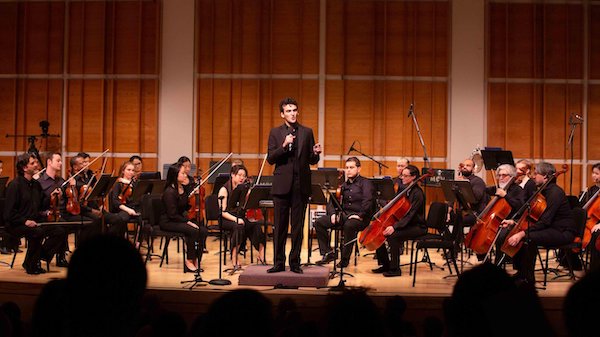
Can art make you a better person? The question emerges from the German concept of bildung. By one definition, the idea is to combine “education, cultivation, personal formation and character, emotional and moral development, and maturation.” Goethe and others considered art an essential component of bildung. So, can art make you a better person? Ian Niederhoffer and his chamber orchestra Parlando posed the question at the ensemble’s season-opening concert on October 7, 2025, with music by Felix Mendelssohn, Richard Strauss, and the early-20th-century German-Jewish composer Franz Schreker.
The program’s title, “The Broken Promise,” suggests an answer in the negative. But through the music and Niederhoffer’s introductions, the conductor’s take turned out not to be that simple. The cogently conceived, emotionally packed concert both embraced and challenged the bildung ideal.
Parlando and the Princess
The sequence began optimistically, with Mendelssohn’s overture to his Die Heimkehr aus der Fremde. The young composer wrote this one-act comic opera, or singspeil, in 1829 for members of his own family to perform and enjoy, and it wasn’t published until after his death. Niederhoffer used the spirited overture to exemplify the sheer pleasure and uplift that art such as Mendelssohn’s can bring. A lied-like introduction by the strings leads to a buzzy and beautiful romp from the full orchestra, with a call to action from the horns. The piece would raise an audience’s expectations for a happy ending to the story, and that’s just what they would get.
The program then jumped ahead some eight decades to 1908 for The Birthday of the Infanta Suite by Franz Schreker. Schreker would go on to become one of Germany’s most popular opera composers in the 1920s, until the rise of the Nazis shut down his career. (He didn’t survive to witness World War Two and the Holocaust.) Niederhoffer described him as one of the many German Jews who embraced bildung during the country’s optimistic, culturally fertile early 1900s.
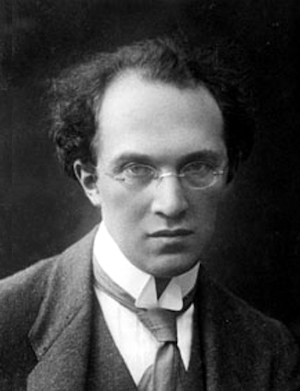
Parlando’s performance indicated why the Infanta suite helped establish Schreker’s reputation. Its 11 short movements illustrate the initially joyful, eventually tragic events of Oscar Wilde’s fairy-tale short story “The Birthday of the Infanta.” The music makes it easy to picture dances and entertainments marking the birthday of a Spanish princess. The opening strains could be a progenitor of every Disney-princess theme familiar to moviegoers of later decades (and right up to today). The music then rides along on strong and often exquisite themes connoting romance, dance, and song.
I’d never heard the piece before, and listening to it really kept me on my metaphorical toes. The performance was was a spirit-raiser, notwithstanding the tragic end of the story’s brokenhearted Dwarf. Since most of the movements run together, it can be hard to pick out which one we’re hearing (though not so for “The Bullfight.”) Presumably it would all be clear during a staged performance of the actual dance-pantomime. In any case, Schreker’s bountiful imagination overflows throughout. The composer richly depicts in music images that Wilde’s story merely mentions, like “The Dwarf’s Dance in Blue Sandals over the Corn” and “The Dwarf’s Dance in the Red Robe in Autumn.”
Death of the Ideal?
In the back of my mind, though, lurked the parallel that Niederhoffer had raised between the Dwarf’s psychological destruction and the canceling that would later befall the composer and presage the Holocaust to come. The nightmares of World War Two gave birth to, and are reflected in, the devastating piece that followed.
Metamorphosen for 23 strings was an aging Richard Strauss’ response to the collapse of the German culture he had known and helped build and sustain. I’m not exaggerating in saying that this rendition was one of the most powerful concert performances of a 20th-century work that I have experienced. Niederhoffer and the Parlando string players outdid themselves in concentrated expressivity. Strauss’ writhing counterpoint and aching themes sang with passion.
The minor-scale theme Strauss borrowed from the funeral march of Beethoven’s “Eroica” Symphony sighs insistently. Strauss’ musical references to the canon support the contention that the work is a tragic and mournful reflection not only on what happened to the composer’s beloved country but on the impermanence of culture in general, suggesting implicitly that the bildung ideal is illusory.
Still, while we wait for impermanence’s ultimate victory, we can still marvel at Strauss’ accomplishments, the brilliance of some of his lesser-known contemporaries, and the genius of titans like Beethoven who came before him. As Niederhoffer reflected, with eminently sensible illogic, “Art can’t make you a better person – but that doesn’t mean that it won’t.”