 Blogcritics The critical lens on today's culture & entertainment
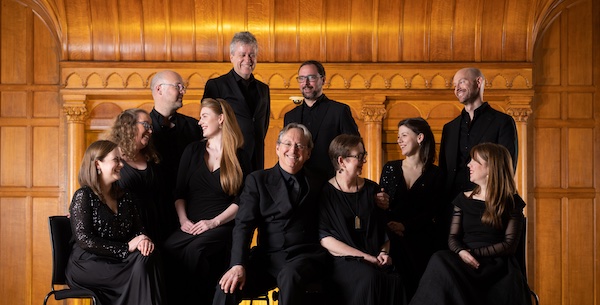
If Beethoven and Mozart are history, early music is archeology. However beautiful it may be to hear, or fun to play and sing, pre-classical and especially pre-baroque music often demands research and sometimes reconstruction along with practice and interpretative skill.
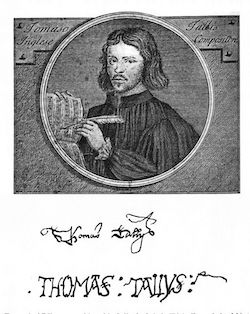
So, while we don’t have ensembles called the Haydn Experts or the Schubert Professors, the Tallis Scholars seems a natural name for a group specializing in Renaissance sacred music.
A World of Early Music and a World Premiere
For more than half a century now, the choir that Peter Phillips founded in 1973 has studied hard and much. As one of our finest and most venerable exponents of choral music from the 16th century and environs, the Tallis Scholars continue to tour and record, spreading the gospel of European and New World composers like William Byrd, Josquin des Prés, Duarte Lobo, the ensemble’s namesake Thomas Tallis himself, and many others, famous and obscure, including long-ago practitioners of devotional songcraft whose names have been lost to time.
The Tallis Scholars champion new music as well. Their current “Mother and Child” program showcases a world premiere of a new setting of the “Salve Regina” by contemporary composer Matthew Martin.
Miller Theater’s Early Music series hosted the ensemble at the Church of St. Mary the Virgin in Times Square on Dec. 4, 2025 with music of Tallis, Byrd, and a 15th-century Englishman about whom we know little more than his name, John Nesbett. Martin’s piece was commissioned by Miller Theatre for this ensemble and this occasion. It’s both an impassioned reflection on Renaissance choral traditions and a fruitful expression of how a 21st-century sensibility can marshal the oldest instrument in history – the human voice – to create something both firmly recognizable and excitingly new.
Medieval to Modern
The text is a mere 13 lines of Latin comprising one of the four seasonal Marian Antiphons for the end of Complice (the end-of-the-day prayers in a monastery). Many composers have set it to music over the centuries – indeed the Tallis Scholars performed two Renaissance settings, one French and one Guatemalan-Spanish, on their program “A Renaissance Christmas. Martin tailored his setting for the Tallis Scholars, with four soprano parts, two alto, two tenor, and two bass.
He places it immediately in the context of traditional sacred vocal music by having a solo voice (an alto) sing the whole text to start. Renaissance composers often harked back to their Medieval predecessors by combining plainchant with the sophisticated polyphony of their own day.
The piece next adds the low voices creating a spacious atmosphere. Martin goes on to create complex and unexpected harmonies, transitions, tone clusters, and dissonances that sometimes resolve, sometimes don’t, reflecting 21st-century practice. Unusually, in the first section a soprano ostinato accompanies as lower voices develop the material. Organ-like and even slightly brassy colors emerge.
Yet with all this art, the piece creates a hard-to-pin-down impression of voices speaking directly to the listener. The subject may be the Virgin Mary, but what we hear seems devilishly knowing.
Byrd, Tallis, and Beyond
More traditionally saintly-sounding were the “Gloria” and “Sanctus and Agnus” from Thomas Tallis’ seven-voice Missa Puer natus. The “Gloria” opened the concert revealing the clarity with which an expert ensemble can express distinct parts amid the echoes of a large church. Bell-like sopranos in the middle stanza and the magnificent “Amen” were high points.
The “Sanctus and Agnus” did not immediately follow, but came after Martin’s modernist music. That made it feel different, almost a little pedestrian at first, without the challenges to the ear that the “Salve Regina” had posed. But the Scholars’ unalloyed purity of sound won the day, with a gorgeous “Agnus Dei” and a mesmerizing finish on “dona nobis pacem.”
The 10-member choir pared down to just six singers and three parts to sing the first of four motets from William Byrd’s Votive Mass of the Virgin. In the “Ave maris stella” a soprano solo alternates stanzas with imitative polyphony from the full mini-choir.
With the ensemble back at full strength, celestial high voices contrasted with full-force tuttis in the “Rorate caeli.” A striking “Alleluia” in the “Ave Maria” set things up for the climactic prediction of the Virgin bearing a son in the “Ecce virgo concipiet,” sung with such a full, rich sound that the air inside the church felt velvety. Rising scales sparkled to illustrate “lift[ing] up your heads…Who shall ascend into the mount of the Lord?”
The final selection (save for a very short French encore) was John Nesbett’s “Magnificat” from an earlier era of the Renaissance. In comparison it sounded archaic. Passages with just the sopranos and basses sounded eerily hollow, while plainchant passages took us yet further back in time. And amid the lines of intelligible Latin, extended vowels conveyed the celebratory mood of a joyous song without words.
That 15th-century music sounded truly ancient, a reminder that the convenient handle “early music” covers several centuries and vast stylistic and geographic ranges. We are so fortunate that musicians like these singers work so hard to reignite and tend the ancient music lovingly unearthed and restored by inspired, hardworking scholars. The creativity and worldview of past ages inspires and teaches us too.
The Tallis Scholars are on tour in the U.S. and Canada through Dec. 14, 2025. Their latest recording, a Gramophone Editor’s Choice, is available now.
Visit the Miller Theatre Early Music Series online for upcoming concerts at the Church of St. Mary the Virgin and the Miller Theatre website for Miller Theatre’s full schedule.