 Blogcritics The critical lens on today's culture & entertainment
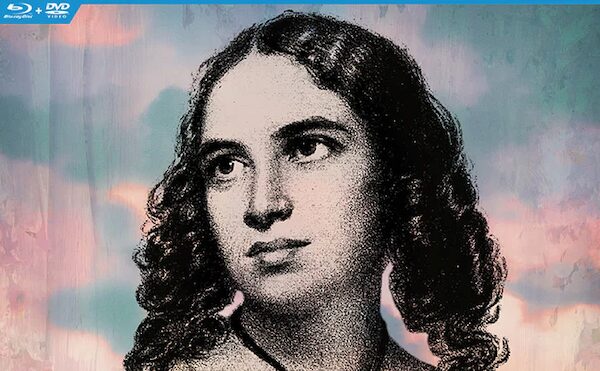
When 23-year-old Fanny Mendelssohn married Wilhelm Hensel in Berlin in 1829, the was something unusual about the processional music that beamed from the church organ. The composer was not a well-known leading light of German music. It was not even Fanny’s younger brother Felix, whose famous wedding march is still heard at marriage services today. The composer was the bride herself – Fanny Mendelssohn.
A woman composer? Felix, away on tour, was supposed to have sent music home for the event, but it hadn’t arrived. So the night before her wedding Fanny sat down to compose her own wedding theme. It would be played the next day by an organist who, like all organists of the day, was a man, because the organ was one of those instruments that required the musician to open his legs to play the pedals, and that would never do for a woman.
Restoring a Great Composer to Her Rightful Place
Forbidden instruments weren’t the only restriction on musically-inclined women of that time and place. Woodwinds and brass? Surely not! A woman couldn’t be seen putting such an object to her lips. Women weren’t supposed to compose either, and certainly not to publish their work. Writing music was a masculine activity to which persons of the female sex weren’t at all suited; for women music could be only “an ornament,” not a vocation, as a 20-year-old Felix once told his sister.
Fanny had already learned this lesson in her teenage years, as the precociously talented Felix, three years younger, received a musical education denied to Fanny by her tradition-minded parents.
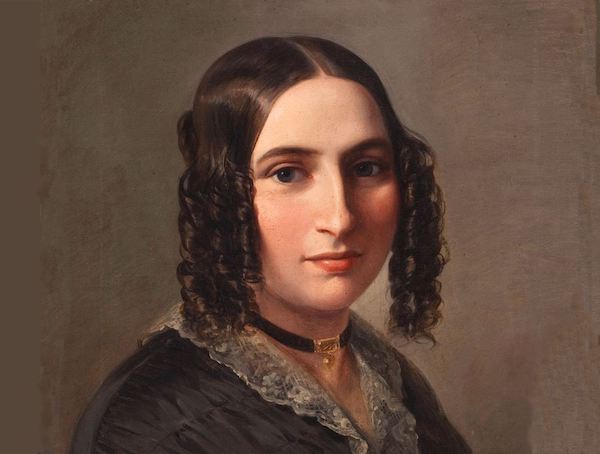
The life of Fanny Mendelssohn (later known by her married name of Fanny Hensel) springs into color in the recent documentary Fanny: The Other Mendelssohn. Written, produced and directed by Sheila Hayman, a multiple-great-granddaughter of Fanny, it recounts the life and work of this great, unjustly obscure composer. At the same time it traces how modern-day scholars and musicians have been working to bring Fanny Hensel and her music out from the shadows.
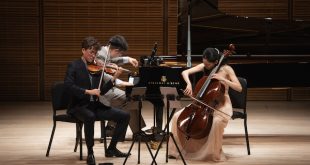
The year before her wedding, Fanny had written what is today one of her best-known pieces, the “Easter Sonata.” Once attributed to her brother, it has been determined by 21-century scholars to be Fanny’s. Tracking down the manuscript and determining its origin and composer is one thread in the documentary. In another modern-day mini-story, English pianist Isata Kanneh-Mason prepares for a performance of the piece.
Commentary by Kanneh-Mason and other musicians and scholars gives valuable context to Fanny’s career. We learn a bit about how, starting in the 1970s, feminist scholarship began to retrieve Fanny’s music and legacy from obscurity. It’s quite an interesting story and the documentary tells it well, if only in outline.
Fanny Mendelssohn: Living a Life in Music, in Spite of It All
We learn about Fanny’s year of creative inspiration in Italy with Wilhelm. We learn how in addition to composing hundreds of songs, piano pieces and other works, Fanny hosted musical salons in what the documentary calls her “gilded cage” – her home – where she could present and perform for guests privately and thus without funny looks. We learn about the creation of music like her 12-movement cycle “Das Jahr,” an “unarguable masterpiece” that she may have deemed “too out there, too wild” to be published, but that appeared privately in an edition with illustrations by Wilhelm.
We and the makers of the documentary are fortunate that so much archival material has been preserved. We’re also lucky that Fanny wrote so many letters and kept diaries. Two hundred years from now, if our civilization still exists, will historians be able to trace so well the creative lives of today’s greatest artists, with archival “material” now digital and letter-writing a lost art? It’s very doubtful.
One thing historians should be able to see, though, is how in the early 21st century more and more women composers were making their marks. And they’ll know, perhaps in part thanks to this historically and emotionally informed documentary, that Fanny Mendelssohn stood as an inspiration to them, as she should to all of us who care about music.
The documentary Fanny: The Other Mendelssohn is available on streaming services now. I reviewed the DVD version in a DVD/Blu-ray edition.