 Blogcritics The critical lens on today's culture & entertainment
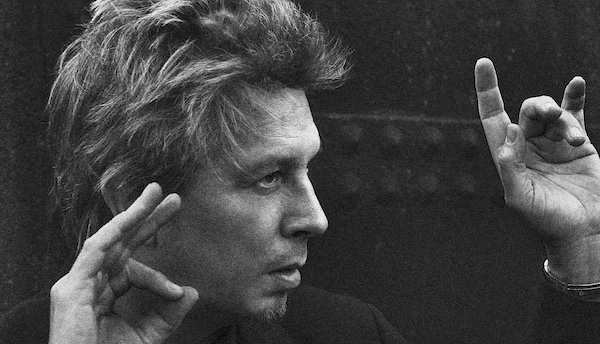
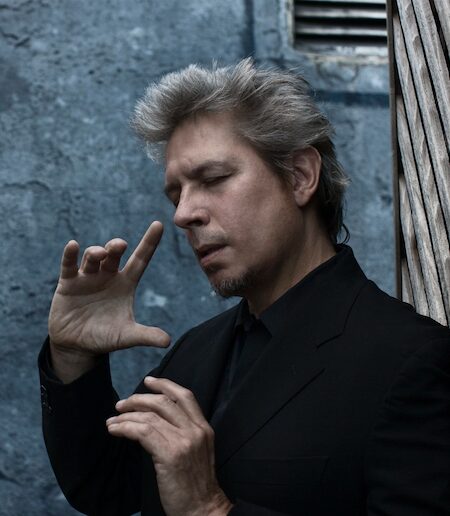
Academy Award-winning composer Elliot Goldenthal has been a major force in movie music for decades. Interview with the Vampire, Frida, Drugstore Cowboy, Alien 3, In Dreams, Demolition Man – the list of his film scores goes on.
He has scored for the theater too, and created orchestral pieces.
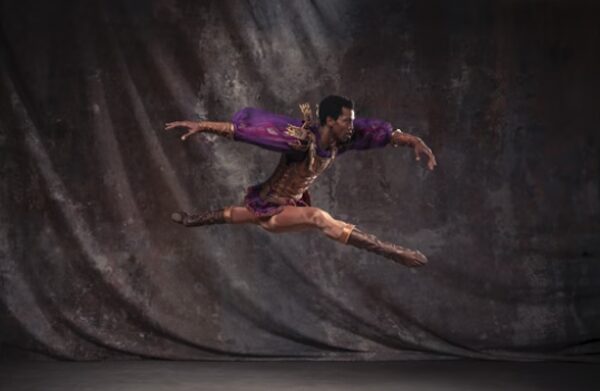
But dance is a different animal. Enter Shakespeare’s Othello – the ballet. A revival is on the American Ballet Theatre’s (ABT) schedule for March 6–20, 2026 at Lincoln Center in NYC.
Envy and Treachery at the Ballet
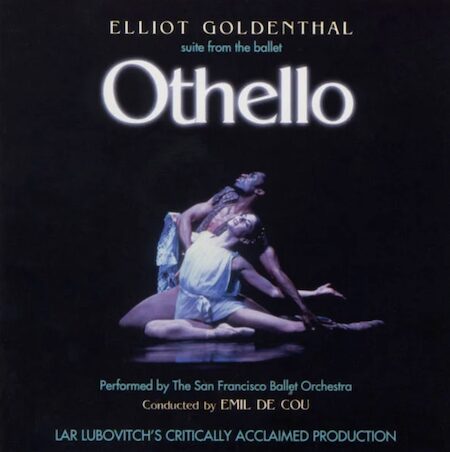
You will find, fitting not-quite-comfortably on his website’s “Film” page, a recording of an orchestral suite Goldenthal crafted from his score to Lar Lubovitch’s ballet Othello: A Dance in Three Acts for the American Ballet Theatre. The company last performed the ballet in 2015, after having toured it three times over the years since debuting it in 1997. The San Francisco Ballet and the Joffrey Ballet, Chicago have also performed the work.
I asked the composer what he thought accounts for this ballet’s popularity and longevity.
“The longevity of Othello on stage begins with Lar Lubovitch’s deeply personal vision of envy, jealousy, and treachery, embodied through the three central figures of Iago, Othello, and Desdemona,” Goldenthal told me. “The ballet unfolds through a series of counterbalancing solos and duets that grow increasingly charged as the psychological drama deepens.”
Ancient Murders and a Living Template
Goldenthal described the three roles as functioning “almost as dramatic archetypes, offering dancers profound emotional terrain to inhabit.” This has helped make the work “a kind of living template, renewed each time great artists bring their own humanity and interpretation to it.”
Extraordinary artists have indeed embodied those central roles over the years. At its 1997 premiere Desmond Richardson created the role of Othello, Julie Kent that of Desdemona, and Parrish Maynard that of Iago. Their performances established “a powerful dramatic template,” as Goldenthal described it. “In subsequent revivals, dancers such as Marcelo Gomes, Alessandra Ferri, James Whiteside, Herman Cornejo, and Misty Copeland – who took on the role of Bianca in the 2015 revival – have brought their own psychological nuance and physical authority to the drama. Each generation has imprinted the ballet with its own interpretive depth, ensuring that the work remains not only a repertory staple but a living, evolving theatrical experience.”
I asked the composer how creating music for the ballet differed from composing for the screen and the theater, and what his process was like for Othello.
The music, he told me, “developed through an unusually close collaboration with Lar Lubovitch over a concentrated period. Our process involved a continual back-and-forth exchange. Lar would often begin by suggesting dramatic ideas drawn from Shakespeare, along with the theatrical forces he envisioned — solos, duets, trios, or the corps de ballet — as well as their placement within the narrative and, quite often, their duration.”
Once Goldenthal had completed the music for a scene, he and Lubavitch continued their dialogue as the choreographer worked with the dancers, refining the dance in the studio. “That refinement stage became an essential part of the process,” the composer said, “allowing the music and movement to evolve together until they formed a unified dramatic expression.”
A Prolific Career, on Screen and on Stage
1997 seems awhile ago now, but it was a fertile period in Elliot Goldenthal’s long, prolific, and continuing career. I asked him to help us situate Othello in the arc of that career.
The score emerged, he said, “during an especially intense and productive period…I had just presented the New York premiere of my oratorio Fire Water Paper with Seiji Ozawa at Carnegie Hall in 1996, while also working across film, theater, and music theater — including Neil Jordan’s Michael Collins (1996), Batman & Robin (1997), and Juan Darien: A Carnival Mass, directed by Julie Taymor at Lincoln Center’s Vivian Beaumont Theater in 1997.”
Looking back, Goldenthal suggests that “the large-scale, full-evening nature of works like Fire Water Paper and Juan Darien likely shaped Lar’s interest in collaborating, as they explored extended musical and dramatic forms.
“Lar also responded strongly to the darker energy of the danse-macabre tarantellas from my score to Interview with the Vampire (1994),” he added, “a quality that resonated with the psychological intensity at the heart of Othello.”
The Symphonic Logic of ‘Othello’
There’s a long tradition of adapting scores to create concert works. If you listen to a classical music radio station, you’ll hear suites created from West Side Story and Candide – probably a lot more often than you’ll hear the original scores, outside of seeing a live performance or film version. Goldenthal took up this tradition when, around 2015, he adapted his Othello score to create an Othello Symphony. I asked him about this process of adaptation. He prefers a different word: “transformation.”
“I have long enjoyed transforming many of my film works into concert suites, particularly for festivals and orchestral programs that celebrate cinematic music around the world,” he said. “In those cases, the process involves reshaping music originally tied to image and narrative into a form that can stand independently in the concert hall.”
Othello was “especially suited to this transformation,” he said. “Its extended developmental structure and the strong relationships among its motivic ideas already possessed a symphonic logic. Adapting it for the concert stage felt less like an arrangement and more like revealing another dimension of the music — one designed to be experienced purely as a live orchestral journey.”
Thanks to the persistence of this ballet in ABT’s repertoire, dance and music enthusiasts can now reprise the original journey of this classic Lubavitch-Goldenthal Shakespeare adaption. Lincoln Center will present a revival of Othello: A Dance in Three Acts March 6 through 20, 2026. In addition to music by Elliot Goldenthal, the production features scenic design by George Tsypin, costumes by Ann Hould-Ward, lighting by Pat Collins, and projections by Wendall K. Harrington. Visit the ABT website for schedule and tickets.