 Blogcritics The critical lens on today's culture & entertainment
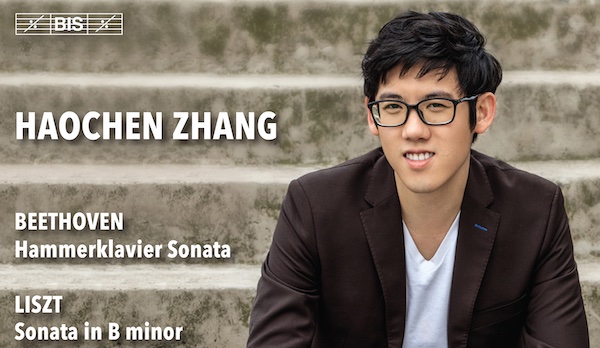
Since taking the gold medal at the 2009 Van Cliburn International Piano Competition, Haochen Zhang has become an admired and sought-after soloist and chamber musician. His recordings include concertos by Prokofiev and Tchaikovsky, Liszt’s Transcendental Études, and all five Beethoven piano concertos.
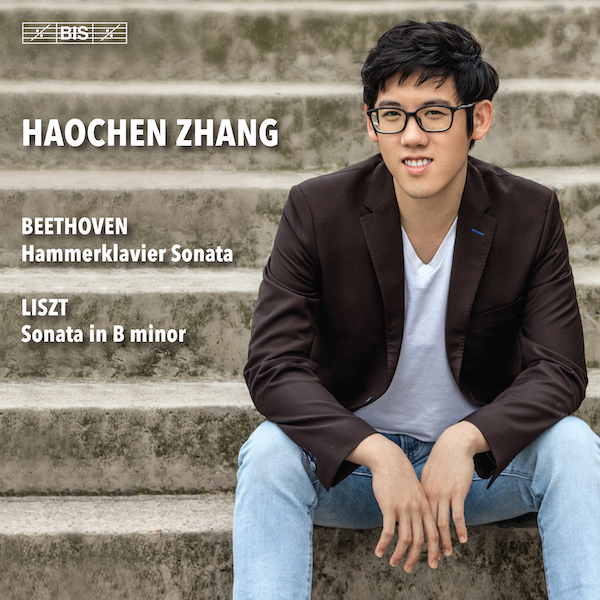
His latest album, Haochen Zhang plays Beethoven & Liszt, out now on the BIS label, focuses on those last two composers, both of whom have played major roles in Zhang’s life and career. On it Zhang undertakes two towering works of the classical and Romantic eras: Beethoven’s Hammerklavier Sonata (formally, the Große Sonate für das Hammerklavier) and Liszt’s Sonata in B minor.
We last spoke to Zhang back in 2020 – just before the pandemic shut down musical touring – about a very different program, one relating to the Lunar New Year and including Gershwin’s Rhapsody in Blue. We’re happy to have reconnected with him so we could ask him some questions about his experience with the Beethoven and Liszt sonatas, about recording the album, about his upcoming activities, and more.
What’s your own performance history with the Hammerklavier and the B minor Sonata? Have you been playing them for many years? At what point in your artistic development did you take them on?
I performed the Liszt B-minor Sonata many years ago in a recital program, where it was followed by Boulez’s First Piano Sonata. The pairing was intended to highlight the modernity of the B minor Sonata, which is often overlooked due to its longstanding reputation as a quintessential “romantic” work.
In the 2023–24 season, I performed the Hammerklavier as part of a recital program primarily focused on Beethoven’s late sonatas, alongside Op. 78, 109, and 111.
The two sonatas and their composers are historically connected in at least one way: in 1836, Liszt gave the first public performance of the Hammerklavier. But musically speaking, what do you see as the linkages between the two works? What makes them work well together on an album?
Considering the important fact that Liszt was the first pianist to publicly perform the Hammerklavier, one can understand why he was drawn to this work, which was widely regarded at the time as “unplayable.”
After all, like Beethoven, Liszt was deeply fascinated by the dramatic potential of musical expression – likely influenced by his enduring interest in literature and philosophy – the idea of unifying diverse musical elements and motives under a single overarching narrative, and, perhaps most importantly, the drive to expand the sonorities, expressive range, and possibilities of the piano as an instrument.
Both the Hammerklavier and the B minor Sonata, in their own distinct ways, strive to achieve these ambitions. To me, they epitomize the sonata form of the Classical and Romantic eras, respectively.
Your current concert programs include the B minor Sonata as well as other works by Liszt, and you’ve already recorded the Transcendental Études. Has Liszt’s music long been especially meaningful to you?
Growing up, I had my own prejudices against Liszt – probably like many other young pianists – viewing him and his music primarily as a display of pianistic showmanship, offering little beyond pure virtuosity and superficial sound effects.
It wasn’t until much later, as I delved deeper into 19th-century Romanticism and its broader context of literature, poetry, and philosophy, that I began to see another side of Liszt: how he sought to infuse sonic landscapes with narrative depth, how he intertwined poetic and literary sensibilities with musical drama, and how he, in many ways, foreshadowed the Impressionism that would emerge decades later.
Through this journey of discovery, Liszt has become a much more meaningful composer to me, and he now occupies a special place in my musical life.
This is also your second Beethoven recording. How has Beethoven figured in your artistic journey?
I’ve had special affections for many different composers over the years, and those feelings often shift and evolve as I grow. But Beethoven has always remained at the top of my list, and my love for his music only deepens with time. Nearly all of his late works are among my favorite pieces – not just the piano compositions, but also the string quartets.
Just as he influenced generations of great composers who followed him, studying and understanding his architectural genius, dramatic sense, expressive range, and the richness and versatility of his musical language has profoundly shaped me as a musician.
Where did you record the album? And is there something special (or special to you) about the Steinway D that we hear on the recording?
I recorded it in a church in Neumarkt, Germany – the same venue where I recorded my first studio album in 2016. I was drawn to the acoustics of the hall and the sense of intimacy the space offers. I also enjoyed playing the Steinway D there, which, to me, has a rich tone and a wide range of colors.
What other music, besides Beethoven and Liszt, is on your horizon for upcoming concerts?
I have several upcoming recital programs featuring works by Schubert and Liszt, including a recital debut at Paris’s Théâtre des Champs-Élysées, chamber music tours, and a variety of concerto performances by composers across the repertoire – including a marathon performance of all the Rachmaninoff concertos at the NCPA in Beijing.
You also have upcoming concerts in Philadelphia with the Philadelphia Orchestra. You’re a Curtis graduate and a Philadelphia resident, and I’ve read that your first performance with the city’s orchestra was all the way back in 2006. Do you have strong ties to Philadelphia and its musical life?
Philadelphia is my second home. I came to study at the Curtis Institute when I was 15, and it was Curtis that played a pivotal role in shaping my musical development. Listening to the Philadelphia Orchestra as a teenager also holds a special place in my musical memory, which is why performing or recording with the Orchestra always feels like coming home.