 Blogcritics The critical lens on today's culture & entertainment
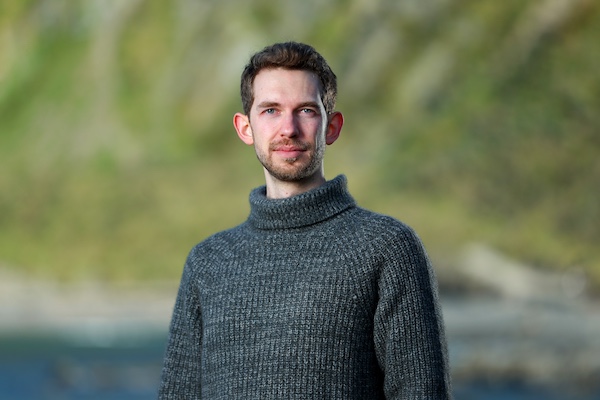
The prestigious Azrieli Music Prizes for 2026 were awarded recently, and we’re talking to each of the four winners about their music, their backgrounds, and the Prize. Earlier this week we heard from Dalit Hadass Warshaw. Today we present our interview with composer and cellist Nicholas Denton Protsack, who received the 2026 Azrieli Commission for Canadian Music.
Denton Protsack is a New Zealand–based Canadian composer and cellist who takes inspiration from ecology to create music that often blends experimental improvisation with notated music and recorded media. In this way he endeavors to “create new connections between music and the natural world.” Denton Protsack recently completed his PhD in music at Victoria University of Wellington, and this year he was named the SOCAN Emerging Composer in Residence with the National Youth Orchestra of Canada.
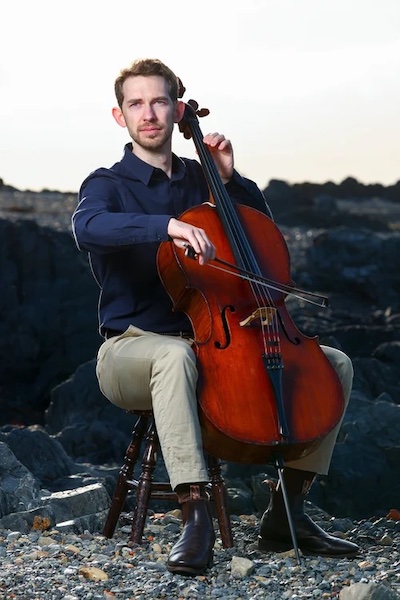
As a cellist he performs widely as a soloist and chamber musician, specializing in contemporary and experimental music and collaborating on projects that bridge classical and avant-garde traditions. He is a founding member of New Zealand’s Moth Quartet and Canadian groups Branchroot Ensemble, which released its debut album in 2023, and Sounds Like Things, a duo with percussionist Andrew Stauffer who create soundscapes with everyday found objects.
As if that weren’t enough, Denton Protsack is also founder and artistic director of Whatnot Records, “a genre-defying independent label dedicated to producing, promoting and distributing experimental music in all its forms.”
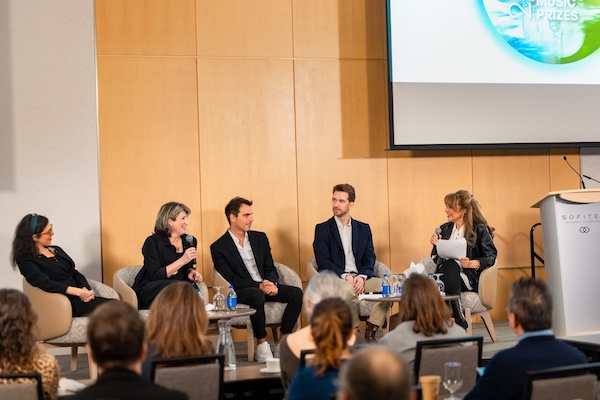
We began by asking the composer about Height of Land, his piece for the Azrieli Commission for Canadian Music. A large-scale work for orchestra, chorus, and solo cello, it’s described as “invit[ing] listeners into a sound world where land, water and voice converge in a living, breathing musical ecosystem.”
The title comes from a cartographical term for the natural divides that shape Canada’s borders and geography. However, reflecting what Denton Protsack calls “musical ecopoiesis,” or the creative process of collaboration with the natural world, the piece will have no fixed border between the cello and orchestra. Instead the two forces are woven together to “embody the balance between individuality and collective voice.”
How will you be using the orchestra, chorus, and solo cello to make musical ecopoiesis a reality in Height of Land?
There are many, many – perhaps limitless – ways in which musical ecopoiesis can occur. The limit is essentially one’s imagination and perception of how music and nature might interact with one another.
I will utilize many such devices in Height of Land, including the musical imitation of natural sounds (birdsong, thunderstorms, rivers, etc.), the abstract musical representation of physical, environmental features, and even the translation of scientific data into music.
What’s specifically Canadian about this sound world, and how is the title related to Canada or reflected in the music?
The definition of “Canadian music” is something that many composers, including myself, continue to struggle with.
When I think of Canadian music, I am reminded that Canada is one of the most culturally and geographically expansive countries on the planet; owing to this, Canadian music must mean many different things to many different people.
In the case of Height of Land, however, the term “Canadian music” is somewhat of a happenstance: It is music that is created for the advocacy of environments that exist within what we call Canada – including the complex, extractive, and even genocidal history that these environments have witnessed. By writing music that creatively interacts with these places and times, I am writing music that can be understood as Canadian.
The term “height of land” itself, however, is an unassuming but almost exclusively Canadian expression that describes drainage divides: mountain ranges and ridges that determine the flow of rivers and have been [used] by many peoples – predating the establishment of Canada – for the drawing of borders and territorial lines.
Your music for cello has featured extended techniques that can suggest sounds from the natural world. Are there any specific ways you’ll be using the cello, or other instruments or vocals, to create unexpected effects?
There will be a number of ways in which this occurs, and many I am still in the process of developing. Without giving too much away, the setup of the orchestra, chorus, and cello will be not standard, with performers being placed throughout the hall, encouraging in the audience a sense of participatory immersion in a musical environment.
Additionally, there will be a number of atypical percussion instruments, comprised of natural and everyday materials one might expect to find in a Canadian environment.
You’re the founder of an experimental music label, Whatnot Records. What’s the focus of the label, and are there releases in the pipeline that you can tell us about?
The label focuses on the creation, distribution, and promotion of experimental and new music in all its forms. We currently have a couple of albums on the go, with the nearest one being a new album called Tundra by my group, Moth Quartet [scheduled for release on December 12, 2025].
You’ve composed chamber and orchestral music and music for solo cello, but up till now only a few pieces for vocal ensemble. What are you looking forward to in working with voices in Height of Land?
While I have not written nearly as many works for vocal ensemble as for orchestra, chamber ensemble, or cello, I have always viewed the delineation between vocal and instrumental music to be a somewhat false dichotomy. Height of Land will, I guess, in many ways be a proving ground for this notion, as the chorus will be treated much more like a family of instruments in the orchestra than an entity separate from it.
Furthermore, there will be no lyrics; instead the choir will sing on neutral syllables and collectively produce dense vocal or body-percussion sound effects.
How do you balance your activities as a performer and as a composer?
In short, I don’t see a need for balance, because performing and composing are two sides of the same coin for me. The kind of performing I do informs my composing, and the kind of composing I do informs my playing.
This has been a very deliberate career choice for me, and I tend to brush aside concerns from those who say that I must specialize in one or the other to be truly successful. Imagine telling John Coltrane that he might never realize his full potential if he stuck with both the sax and jazz composition!
Is there any music by other composers that you’ve performed recently that meant a lot to you or impressed you greatly?
My good friend and Moth Quartet collaborator, Elliot Vaughan, recently had us try out his String Quartet No. 1, and it absolutely blew me away when I learned that he was only in his early 20s when he wrote it. A total hidden gem that I would recommend to any new music-loving string quartet.
What does it mean to you, as an artist who is now based in New Zealand, to receive the Azrieli Commission for Canadian Music, representing major recognition from your native Canada?
Living in Aotearoa, New Zealand, has given me many new perspectives on Canada, and has also informed my identity as a Canadian composer in many unexpected and exciting ways.
I think the contemporary music communities of Aotearoa and Canada share some interesting commonalities with regard to how they relate with their environments and complex, challenging histories.
I also strongly believe that both communities deserve far more artistic credit than they often receive.
Azrieli is one opportunity that speaks volumes to the strengths of the Canadian new music community. It is one of the most extensive and comprehensive awards on the planet that a composer can receive, and it is an absolute honor and privilege to be its recipient.
Much like living in Aotearoa has given me many new perspectives on my Canadian identity, I believe the creative journey this award has opened up for me will also grant me new perspectives on what it means to be a Canadian composer.
Height of Land will be performed at the Azrieli Music Prizes Gala Concert on October 15, 2026 and two subsequent international performances TBD. Hear more by Nicholas Denton Protsack online.