 Blogcritics The critical lens on today's culture & entertainment

Wilfrido Terrazas, a Mexican-born composer and flutist, sets Spanish-language poems by a variety of writers in the album-length suite Trilogía del Dolor (Trilogy of Pain). There’s plenty of anguish in both the lyrics and the music, but it adds up to a compelling and at times operatic mix of avant-garde, improvisation, and folk strains.
The work is in three parts with increasing ensemble sizes and instrumental complexity, with each part of the triptych divided into three to five movements.
Part One is for tenor voice (Miguel Zazueta, who has a remarkable instrument) and flute (Terrazas). Wobbling and vibrato are defining characteristics of the first piece, “Intento recoger nuestra memoria.” This carries a suggestion of Middle Eastern music, as do the unison passages. Many notes are approached rather than nailed, by both flute and vocalist. Howling vocalise sometimes climbs to the upper extremes of the male head-voice, while elsewhere the lyrics (in Spanish, with English translations in the liner notes) are simply spoken softly.
Terrazas switches to a lower-register flute for the subdued “No recuerdo cómo,” where Zazueta’s nervous vocalizing is as quiet as can be and the flute provides soft supporting drones – until the anxiety bursts tortuously into the clear in the final minute-and-a-half.
Part of the intrigue comes from wondering when the wriggling, stabbing passages are written and when (or to what extent) they are improvised. Throughout the album, following the lyrics (from poems by Nuria Manzur-Wirth in the first section) is helpful and even necessary to understand the feeling behind the music.
Tightly tuned unisons bring us back into the realm of European opera for parts of the third piece, “Lengua nuevam.” But extended vocal techniques veer sharply into the avant-garde as an image of burning approaches. This distinctive juxtaposition within a single piece of music is a key to Terrazas’ originality.
Parts Two and Three set texts of the composer’s own. Parts of Part Two, for clarinet, cello, and narrator, feel like chaos, with some of it, as in the middle section of the grim “Duelos,” painful to listen to – in keeping with the theme of the suite. In “Recuento,” where the composer calmly reads a long poetic reminiscence about childhood, pained instrumental passages separate stanzas, reflecting the deep-buried anguish that bubbles up in the poem’s brief passages in italics. (Infinite shame…Whose pain is that? / What is its space? / How did it get there?)
The mood turns full-throttle bleak in “Duelos.” The narrator reads calmly but the instruments wrestle and howl. It recalls a beatnik reading-with-improvisional-music but with the jazz stripped out leaving just music’s raw marrow.
In contrast, the last piece of Part Two, about a visit to the grave of revolutionary hero Emiliano Zapata, begins with folksy harmonic wanderings from clarinet (Madison Greenstone) and cello (rocío sánchez) as the composer launches into his long poem. An instrumental middle section floats into what sounds like improvisation again, but restrained, sustaining the overall meditative mood. Thus the music exactly matches the poem’s thoughtful progression through the poet’s complicated feelings about national and family history.
Part Three, “Ten Thousand Regrets,” is for two voices (here soprano Mariana Flores Bucio and again tenor Miguel Zazueta), flute, clarinet, cello, and percussion. The first piece centers on a sad duet between the voices. The larger palette really emerges with the long percussion solo that opens the second piece, a setting of a gloomy poem by Ricardo Cázares. Zazueta’s keening vocalise and the freeform ensemble-explosion in the last two minutes express the devastation more than the narration of the actual words. (“and nothing, those trees / those trees over there, I say / sons of bitches // what are they doing, what / do they see / what do we / want them for if they / are good for nothing”)
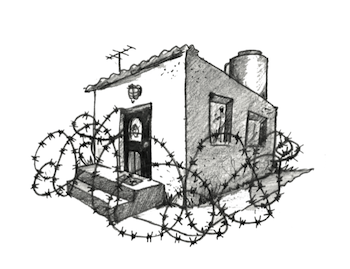
Just the title of the third poem, Tania Favela’s “No hay posibilidad do movimiento” (“There Is No Possibility of Movement”), reaffirms the suite’s pessimistic outlook. In the first half the soprano and tenor coolly sing the lyrics as the flute warbles along. Then a folk-song accompaniment supports an evocative melody sung with passion by Flores Bucio, later joined by Zazueta and an increasingly chaotic instrumental flurry. Percussive strikes make way for the voices to click back into wailing harmony for the final two lines. Here I envision those Samuel Beckett plays where a person is stuck in one spot with nothing to do but speak. It’s one of the suite’s most powerful passages.
But there are two pieces to go, and the next one up has one of the album’s most accessible sections, a through-written folk setting of a brief poem by Mónica Morales Rocha sung with cloudy beauty by Flores Bucio in duet with Terrazas’ manically whistling flute. Halfway through, the vocals fade into the background, the clarinet takes over, and the gentle rhythm falls apart. Snatches of the melody pop up in the ensuing improvisatory chaos before everything spins off into space to the pounding of a drum and sighing percussion.
The last piece finally brings calm. Wobbly harmonies among the vocals and winds roll out a poem by Nadia Mondragón called “The Loss.” A small storm of group improvisation intrudes before a peaceful conclusion.
Two pieces of advice: On at least one listen, follow the lyrics; and listen attentively, preferably with good earbuds or speakers. It’s worth the effort. Trilogía del Dolor isn’t made to be background music or for casual listening. There’s a lot of pain and grief here. But it has inspired a suite of eclectic and eccentric chamber music that’s almost operatic.
Trilogía del Dolor from Wilfrido Terrazas is out now on New Focus Recordings and available at Bandcamp.