 Blogcritics The critical lens on today's culture & entertainment
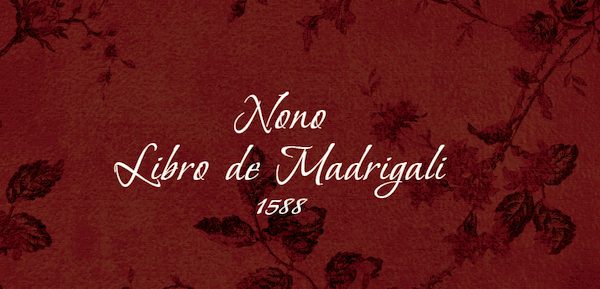
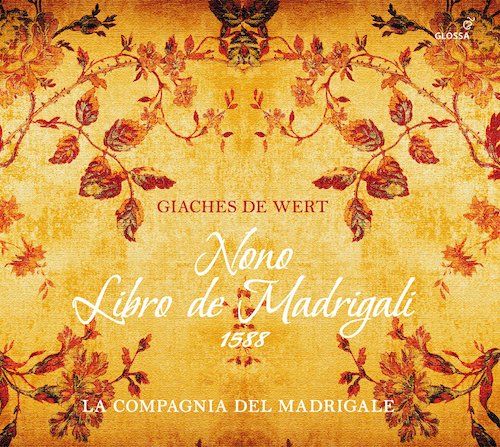
The Italian early-music vocal ensemble La Compagnia del Madrigale has a very specific focus: Italian madrigals. It’s a narrow but deep body of work that gives them plenty to explore. They’ve performed and recorded madrigals by Monteverdi (of course), Cipriano de Rore, Orazio Vecchi, Luca Marenzio, and others, including that wizard of weirdness Carlo Gesualdo. And they’ve devoted their latest album to the ninth book of madrigals by Giaches de Wert.
De Wert hailed from Flanders but spent his influential (though personally troubled) career in Italy, mostly in Mantua and with connections to Ferrara. In the prolific songwriter’s 230 or so secular madrigals he achieved mastery of various techniques of the time – and pushed beyond them.
Joy is palpable in the celebratory first track, “Or si rallegri il Cielo” (“Now let Heaven rejoice”), written for the coronation of the Duke of Mantua. De Wert creates a similar mood in “Ha Ninfe adorne e belle,” his paean to Margherita Gonzaga, one of his d’Este family patrons.
The second track, “L’anima mia ferita,” is the direct opposite, bursting with sadness as the poet describes his tears as “a river of sorrow,” set to music that’s starker and sounds more ancient.
Anxiety suffuses the restless echoes of “Un bacio solo a tante pene, hai, cruda?” (“A single kiss for so much suffering, cruel one?”) And so on, through the gamut of human emotions. La Compagnia lives these musical qualities as expressively as any early music ensemble on the planet.
Among de Wert’s skills was exquisite word-painting. In “Sovra un bel cristallino e puro rivo,” for example, dancing vocal parts depict a “sparkling stream,” while mournful harmonies illustrate a “tear of sorrow.” Not much is calm about “Ecco che un’altra volta, o piagge apriche,” but the word tranquilla sounds decidedly so, as are the “shaded, dark paths” in “Mesola, il Po da lato, e ‘l mar a fronte.” In an especially striking case, “Death’s cruel dart” is something less than cruel when, in “Di morte già sentìa il fero ultimo dardo,” it bestows a “gentle gaze” on the poet (none other than Torquato Tasso in this case) with a rising harmonic shift to a major chord.
Many passages on the recording evoke the feeling of a person speaking, revealing their emotions directly to you, rather than singing a piece of musical art at you. The last section of “Quel rossignol, che sí soave piagne” is one notable example. Another comes in the striking and mournful melody that begins “Valle che de’ lamenti miei se’ piena,” one of de Wert’s settings of canzonieri by Petrarch. The opening vividly sets the tone for the poet’s lament for a lost love. The music rises to almost a frenzy in the third minute, though interestingly on the image of “gentle birds and fishes” and not the previously mentioned “wild beasts.” This choice leaves an impression of bitterness.
Aiding the poignant expressivity is the warm sound of the recording. Though clean, it seems to incorporate something of the ambience of the room, adding to the feeling of intimacy these seven gifted singers create.
If this era of early music is new to you, the album will be a revelation as well as a pleasure. For those familiar with music of the period, it will be an exceptional addition to a collection. Giaches de Wert: Nono Libra de Madrigali, 1588 from La Compagnia del Madrigale comes out April 17, 2026 on GLOSSA.