 Blogcritics The critical lens on today's culture & entertainment
Timbre, Texture, and Sustain
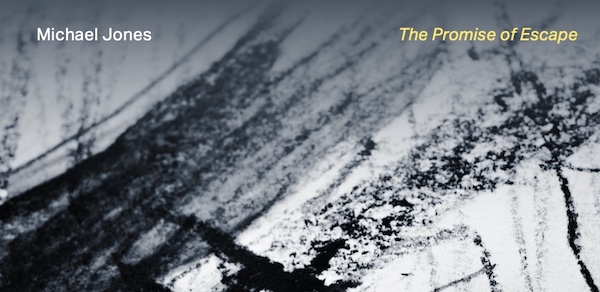
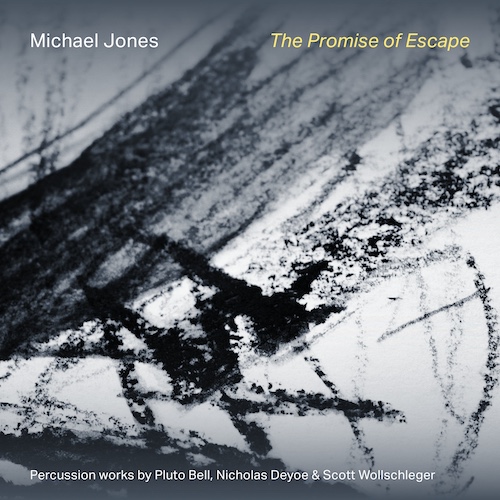
Composers are continuing to create solo and ensemble percussion music built on the expressive possibilities of struck objects, rather than on the power and rhythm that characterize most percussion in both popular and classical music. “A Moment in Time” by Pluto Bell, the first track on the new album The Promise of Escape from percussionist Michael Jones, is a prime example.
“A Moment or Two”
A variety of pitched and metallic sounds from bells and bell plates, crotales, and the bars of a glockenspiel float above a gulf of solid space. Widely spaced strikes on a booming bass drum punctuate the depths of the emptiness. The placement of the different instruments in the listener’s ears creates a sense of surrounding space; the bleed of one tone’s decay into the attack of the next seems to smooth over the passage of time. And this is an album on which time becomes very malleable.

Around the sixth minute the bass drum drops out, and the bells establish a rhythm like that of a tolling clock. The sequence of tones feels like it could be carrying a message, but any contents remain mysterious. In the 10th minute a deep gong announces a third section. The bass drum returns briefly, the rhythm collapses, and the bells seem to withdraw into contemplation. We’re left with – I’m not sure what. And how much time has passed? It’s hard to estimate without looking.
“Lullaby”
The glockenspiel, this time in whole form, returns in “Lullaby” by Nicholas Deyoe. The piece begins with the instrument in conversation with drums, woodblock, and cymbals. Intermittently, this piece has more density and drive than Bell’s. But rather than defining a beat – that’s left to the woodblock, and only intermittently – the unpitched sounds of the drums carry the narrative, while the glockenspiel offers commentary. The sustain of the bass drum, the quiet rat-a-tat of the woodblock, and feedback-like whines from the cymbal add flavor and atmosphere.
Silence becomes an important element during the middle third of the 12-minute piece. High-pitched whines streak over the soundscape like comets, until a few angry drum strikes banish them into the ether. Noise and busyness announce the final section, building tension and further driving the narrative. But before any definitive statement can be made, the music withdraws into silences and gentle tinkling and tapping. One last trickle of a single note from the glockenspiel closes the door.
Escape
For Scott Wollschleger’s “trace – escape – horizon” Jones breaks out the vibraphone.
While traditionally struck with mallets, vibes are nowadays sometimes played via bowing to create humming, droning sounds (which sometimes sink uncomfortably close to pure sine waves). These tones depart from common expectations of percussion.
Wollschleger’s music reshapes time to an extreme. It demands patience and, given the right frame of mind, rewards it. That was true of his album-length work Lost Anthems (reviewed here), and it’s true, in a different way, of this more recent work. There, many short movements brought frequent changes. Here, for a solid 16 minutes – which is not even half the length of the whole piece – we hear only two tones a whole step apart, and in different registers, bowed and struck.
Fresh tones finally arrive, heralding a second part that develops into something like a 12-tone-(ish) extrapolation of the first. A scratchy timbre reminiscent of a harmonica is added – a new voice that contrasts with all that came before. Around 24 minutes in, an echoey vibrato effect makes itself known, then a dyad resembling a double-stop on a violin but which actually, I gather, comes from a pitch pipe. (Hey, that’s not percussion! Is that cheating?)
All along, the music challenges what listeners typically expect from percussion instruments – although I have long believed that the vibraphone, like the piano, has a dual nature. Indeed the sustained atmospherics that can be produced by the mechanics of the vibraphone might qualify as a third nature, beyond tonal and percussive.
In any case, that quality contributes to the effect of “ambiguity and weightlessness” that Wollschleger says he was striving for. The piece climaxes with a new timbre: high reedy sustained tones that waft the listener into another realm, without breaking the hypnotic spell. A neat trick. Meanwhile the pitches on the struck keys begin to waver dreamily. A harsh strike wakes us up in the 30th minute, only to give way to hazy trills.
But high grating pitches, generated (I think) by bowing, introduce a new harshness in the last few minutes. A wake-up call: The piece is coming to an end. By the time a hollow, whitish-noisy hiss sneaks in for the final minute, we may wonder, where has the time gone? Has this piece really traversed 36 minutes? Yes. Yes it has. The promise of escape is fulfilled. Music is something to escape into, and then, sometimes, to escape from. Michael Jones, percussionist, is a good guide to both.
The Promise of Escape from Michael Jones is out now on New Focus Recordings and available at Bandcamp.