 Blogcritics The critical lens on today's culture & entertainment
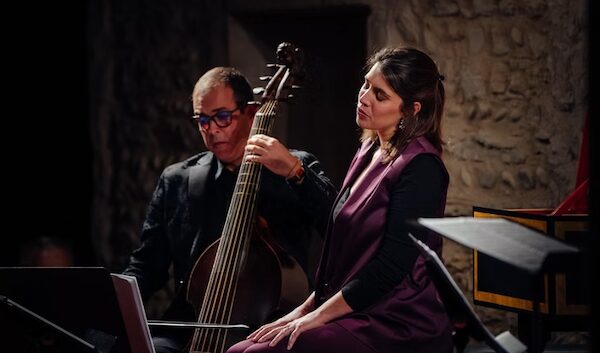
Gwendoline Blondeel and Quito Gato: Amor Eterno collects songs of love from the Renaissance through the Baroque.
When this wonderful collaboration between French soprano Gwendoline Blondeel and multi-instrumentalist Quito Gato came out in late 2025, I made a note to write about it. Life and other work got in the way, but I’m very glad I came back to it. This glowing collection of songs about love traces the tradition of monody (a solo voice with light instrumental accompaniment) from the Renaissance through the Baroque. In doing so it draws on music in a variety of styles and from several countries.
Blondeel’s singing encompasses multiple traditions – a touch of Italian coloratura, folk music both soft and fiery, madrigals and villanelles. Even when singing in a language the listener doesn’t understand, she can convey moods from gentle despair, as in Monteverdi’s “Sì dolce è’l tormento,” to passion unleashed, as in “Damigella tutta bella” by Vincenzo Calestani and “Belle rose porporine” by Giulio Caccini.
Soulful instrumentals also dot the program. Gato’s lute skills are on magnificent display in a “Chaconne” by Alessandro Piccinini. Harpist Pernelle Marzorati, gambist Mathilde Vialle, and percussionist Laurent Sauron also contribute, with Vialle’s viola da gamba prominent in selections from Marin Marais. International flavors inject variety, with numbers from several European countries and by composers of great renown (Monteverdi, Marais, Josquin Desprez, Charpentier) and others somewhat less familiar.
Blondeel’s incandescent voice knits it all together. She embodies warmth as well as reserve, excitement but also resignation – emotions across the gamut. Some of the most impactful tracks are those where she holds back the most, wielding her talent and skill with subtlety and supreme focus, as in “Figlio, dormi” by Giovani Girolamo Kapsberger. Lively numbers like “Ce moys de may” by Clément Janequin and “Fata la parte” by Juan del Encina bring energy and vitality. And Blondeel is not afraid to veer into sprechgesang (speech-singing).
The whole album is a huge pleasure. Amor Eterno is out now on Harmonia Mundi.
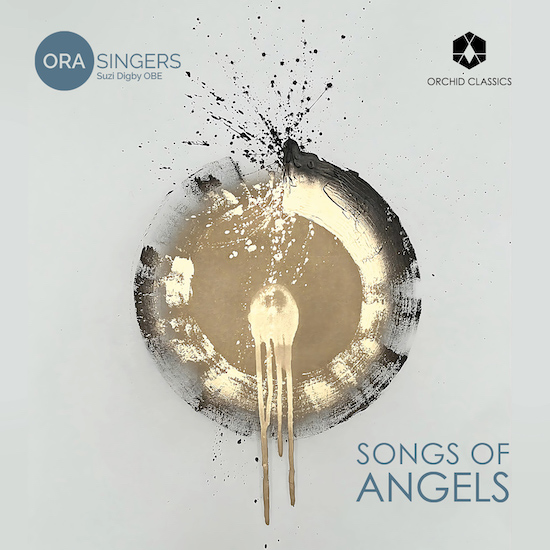
ORA Singers: Songs of Angels marks the 400th anniversary of Orlando Gibbons’ death with Renaissance masterworks and musical responses by living composers.
It’s a tradition almost as old as music itself: composers across genres explicitly acknowledging inspiration from their predecessors. From Marin Marais‘ “Tombeau pour Monsieur de Sainte-Colombe” and Maurice Ravel’s Le Tombeau de Couperin to contemporary composer Richard Carrick’s l’Algérie and jazz pianist Dimitri Landrain’s homages to Astor Piazzolla and Latin jazz traditions, the urge to pay tribute can be as strong as the urge to create. Songs of Angels pairs music by late-Renaissance English composer Orlando Gibbons with modern tributes to Gibbons.
These 23 tracks include the complete surviving full anthems by Gibbons as well as some of his Songs. The album also includes new arrangements commissioned by ORA Singers and “re-imaginings” of and original “reflections” on Gibbons’ music. The lively performances feel in-the-moment, not studied and solemnly reverential as choral recordings of devotional music sometimes can.
Artistic director Suzi Digby OBE writes that “it was not until we put together this album to mark the 400th anniversary of [Gibbons’] death that I fully appreciated his unique genius.” Along with popular choral pieces like “O Clap Your Hands Together” the album features what she calls “mini masterpieces” by Gibbons that are heard much less often.
You couldn’t mistake the modern harmonies of, say, Marco Galvani’s “reflection” on Gibbons’ hymn “Hosanna to the Son of David” with the musical language of the early master himself. But some of the modern compositions glow with their own kind of inspiration: the lush “O Clap Your Hands Re-imagined” by Cecilia McDowall and the two spare, captivating James Weeks arrangements, for example. Filled-out arrangements by Harry Baker of pieces for which Gibbons provided only soprano and bass parts are chorally satisfying, though Baker’s jazzy piano accompaniment can get a little intrusive.
Songs of Angels wasn’t the most resonant of album titles for me. I have little patience for angel iconography in popular culture. But religion has been responsible for much of the world’s most glorious music over the centuries, and one exemplar gleams brightly on this album. The release also marks ORA Singers’ 10th anniversary and 100th commission. Songs of Angels is out May 15, 2026 on Orchid Classics.