 Blogcritics The critical lens on today's culture & entertainment
Smoke
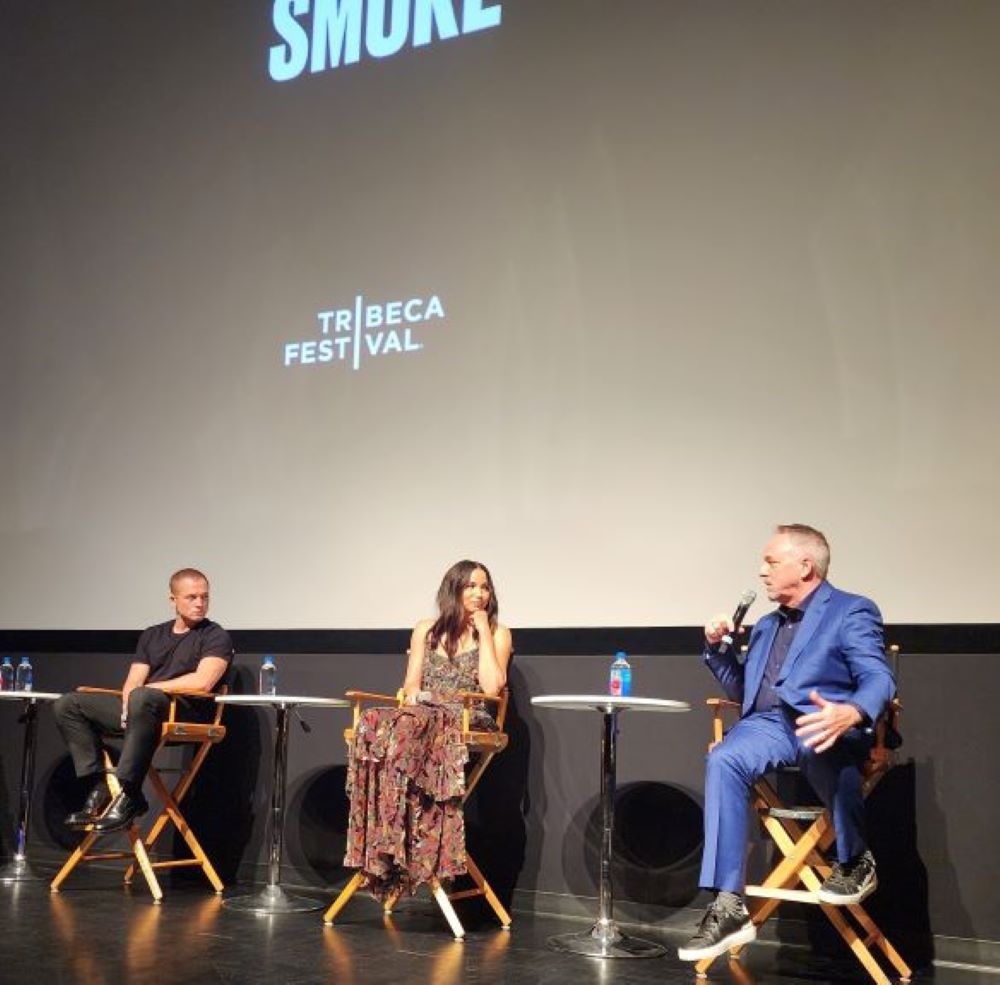
Smoke usually precedes fire. It’s especially so with Apple Studios’ episodic TV series Smoke. Realistic visuals of fiery conflagrations strike fear, but first comes the tell-tale smoke. Then follows the explosion into an inferno. And one wonders “How did they do that?” it doesn’t appear to be CGI…” In the Q&A after the screening of the first two episodes of Smoke at Tribeca Film Festival, creator Dennis Lehane (Black Bird) assured the audience of the realities of the show’s pyrotechnics. Since CGI effects look artificial and reduce the terror/thrill factor, Lehane avoided their overuse.
Captivated by truth.media’s acclaimed “Firebug” podcast, hosted by Academy Award and Emmy Award winner Kary Antolis, about arsonist Jon Leonard Orr, Lehane thought up the series with specific characters in mind. Because Smoke has its basis in true events, Lehane, who serves as writer and executive producer, mines fascinating information about fire. He also explores the dark psychological impulses evoking irrational behavior. Why would anyone seek to expiate their inner conflicts by torching buildings and endangering, even killing people? In the first two episodes Smoke raises these questions as investigators track down two arsonists whose fires have destroyed and killed.
A Pacific Northwest Setting
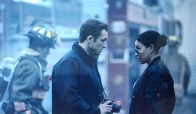
Instead of a large urban environment, Smoke takes place in an area whose people are shocked by the fiery events as unusual and unlikely. Not only does the investigation require the best and the brightest, an additional investigator has been called to help Dave Gudsen (Taron Egerton). A former firefighter appointed lead arson investigator, Gudson bristles at the addition of new partner Detective Michelle Calderone (Jurnee Smollett).
Clashes
Foils for each other, their characterizations offer complexity, nuance, subterfuge, and enough inner troubles to create friction. But both hide behind fronts of bravado and their own brands of charm.
Egerton’s Gudsen looks stunning in his closeups, with a gleaming smile behind which dark impulses rise. The series opens with fire expert Gudsen’s narration, discussing his personal experience as a firefighter and the nature of fire. He thus gains our confidence and trust.
On the other hand, Smollett’s Calderon lacks experience in arson investigations. Sensitive to this in the face of Gudsen’s apparent overconfidence, she appears aggressive. Though she suppresses troubling thoughts which we get to see in flashback scenes, she smolders underneath. But despite her difficulties with men, she asserts her autonomy. Indeed, she must in this machismo world of firefighters. Having earlier mishandled her position, with her crackerjack investigatory tactics ruffling male feathers, she has been demoted to her current co-investigator role. Because she came from straight police work, the fit with arson investigation seems questionable.
The Investigators and the Arsonists
In the first two episodes the series provides just enough information to reveal troubling details about both Gudsen and Calderon. Constantly shifting scenes back and forth with revelations about the investigators and arsonists, a pattern forms. Though the narrative twists and turns, defying the crime procedural genre, the actors’ terrific performances sustain and engage us in this hybrid where nothing seems clear, certain, or regular.
For example, Lehane reveals the identity of one arsonist. Buffeted about by society into invisibility, he is perhaps seeking a new identity and attention as a firestarter. The second arsonist’s hooded swaggering figure remains a mystery. Where the first arsonist uses deadly but prosaic milk containers filled with gasoline to spread terror, the second starts small tactical fires in middle-class grocery or convenience stores’ snack aisles. These distract from devastating conflagrations he sets elsewhere.
Shifting Focus
The contrast between arsonists and investigators then muddies. At the same time, the Gudsen and Calderon partnership begins a gradual boil. The two couldn’t be more disparate. By the end of the second episode, we realize they carry danger with them, exceeding their boundaries and roles. And in this mix, one of the arsonists may be seeking rehabilitation and redemption.
Smoke reflects our current chaotic times of Orwellian reversals where truth and lies show little differentiation. The series emphasizes the folly of not looking beneath the surface, a failure that leads to wrong assumptions and decisions. Additionally, the show emphasizes the psychological. People’s suppressed interior lives burn with torment. If not reconciled, the hurts produce individuals who act out their trauma without seeking rehabilitation or resolution. Both arsonists and investigators reveal their inner conflicts. At some point the hunted become the hunters who hunt themselves and each other.
Intriguing, mesmerizing, and frightening thanks to the superb cinematography and performances, Smoke is one to watch. The series premiers globally on Apple TV+ on June 27, 2025, with new episodes released every Friday until August 15. It screened at the Tribeca Film Festival.