 Blogcritics The critical lens on today's culture & entertainment
Nobu
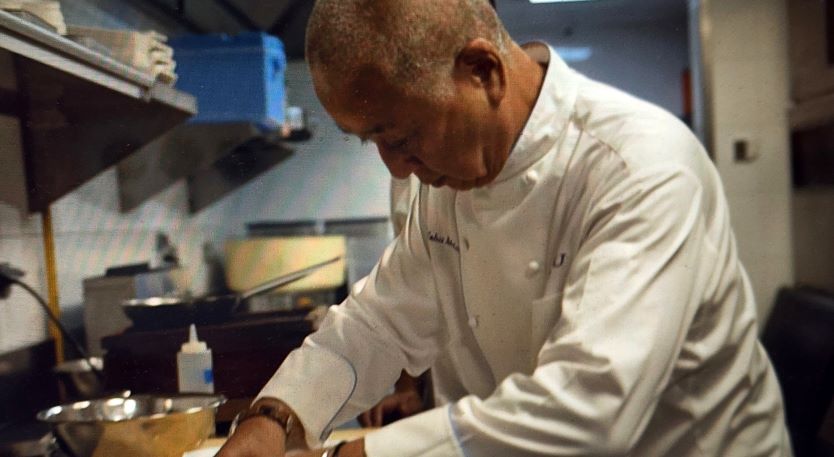
Director and producer Matt Tyrnauer features as his subject Nobu Matsushisa in Nobu. In a partial cinéma vérité style the documentary uses video of the chef at home, preparing gorgeous dishes in his various restaurants, in meetings with Robert De Niro, and more. As we watch we begin to understand the spirit that guides the success of this amazing Japanese entrepreneur.
Nobu’s restaurants have waiting lists to get in. He and his partners have expanded to create a global luxury dining empire that rivals restaurant empires like that of Jean-Georges Vongerichten. But if one had asked Nobu decades ago about his dreams, his simple wishes didn’t include world-wide renown. He just wanted to wear the cap of a sushi chef.
Unfettered Access
Tyrnauer received unfettered access to interview Nobu and his partners. The director also said in a Q&A after a screening at the Tribeca Film Festival that De Niro and the partners had no control over his edits. Because of that freedom to highlight Nobu at various emotional and tense moments, Tyrnauer’s documentary paints an unparalleled portrait of the icon.
More important than money or success, Nobu holds up enjoyment and excellence as the foundation of his experience as a chef. As his life unfolded, he moved step by step whenever he felt prepared to take the next. This chronicle actually shows one way to succeed “without really trying.”
Following Nobu’s memoir, the documentarian chronicles the chef’s backstory in extensive interviews with Nobu, his wife, his family, his friends, and other chefs. He takes us to where Nobu grew up. We learn of his first loss, of his father. He seeks apprenticeship under a sushi chef and learns the proper techniques of perfect presentation and quality.
Eventually Nobu breaks away and establishes his own restaurant, which succeeds – until disaster strikes. When a worker calls to tell him the restaurant is burning, he rushes to the site to see his dreams and his money, in fact everything precious to him, in charred ruins.
A Low Point
At that point, Nobu considers suicide. However, reviewing his life, he comes to his senses. He sees the support of his loving wife and children and decides he will rebuild his life and start anew. Here the film dramatizes Nobu’s emotionalism. In fact, throughout the film neither the filmmaker nor Nobu holds back his emotions or sensitivity. Importantly, this reveals Nobu’s strength and humility as a man, defining timeless virtues for all of us to live by when adversity strikes.
Nobu travels to gain new culinary experiences in Peru and Alaska, where he learns cultural diversity and adds the different flavors, ingredients, and spices to traditional Japanese dishes. This culinary fusion birthed by his openness to all cultural experiences thus gets its start. By rejecting the rigidity of one culture’s food choices, he expands and enhances his style, a practice he follows today as he continually evolves his culinary fare.
California and New York
Learning from trial and error and other failures, Nobu improves and takes heart. Finally opening a restaurant in Los Angeles using his surname Matsushisa, he gradually brings success to his family and himself. A turning point comes slowly when Robert De Niro has dinner with a director at Nobu’s restaurant and says that if Nobu he ever comes to New York, De Niro will help him. The actor affirms that Nobu’s unparalleled food would succeed in one of the culinary capitals of the world.
Interestingly, Nobu declines. Only years later, when he believes life has prepared him for the great turning point of opening a restaurant in Manhattan with Robert De Niro and his partners, does the chef act. What ensues can only be described as extraordinary. However, as each new restaurant opens up and a hotel business burgeons around it, Nobu remains focused on enjoying his artistic food creations and making his customers happy.
Explaining the Growth of Nobu’s Empires
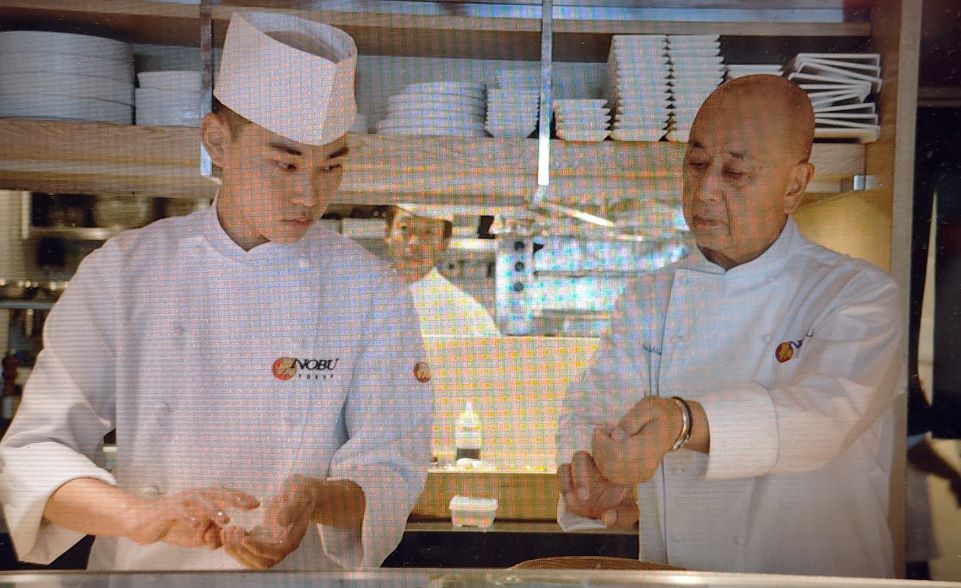
Using video snippets of restaurant customers and Nobu in his element teaching other chefs and even cooking for friends at home, the film reveals why Nobu’s restaurant empire continues to grow. With triumphs but also failures and setbacks, Nobu’s wife predicts that he will still be working at 90. Why not, if he receives joy and health making others around the world happy with his food?
The film offers an intimate look at this formidable chef who once considered suicide. What a loss that would have been. Instead, gratefulness, resilience, vision, and love put to good use allowed him to triumph first over himself, then over other obstacles. He has created a food revolution based on melding diverse culinary traditions beyond the world of sushi. And with the evolution of the Nobu restaurant group into a global symbol of luxury and hospitality, Nobu continues to push gastronomic limits.
Nobu’s success story began with dreams. It’s easier said than done to keep focus until one achieves them. But for those who strive, success and failure are two sides of the same coin. Pushing through steadfastly at one’s craft answers all things, especially if one seeks the joy in the process. Nobu fixated on the joy of creation and making others happy.
Look for celebrity sightings in Tyrnauer’s interviews, including Wolfgang Puck and Jean-Georges Vongerichten, who offer opinions and acute commentary with a smile. See this fine documentary especially if you are a foodie. Nobu begins screening June 27, 2025. Check your local listings.