 Blogcritics The critical lens on today's culture & entertainment
Dear Ms.: A Revolution in Print
After the women’s movement arose from various activist movements and cultural and social changes after WW I and WWII, feminism divided into four coherent waves. Looking back, they reflect the peaks and valleys of women’s progress through the decades. Without taking that overall perspective, one might believe nothing really advances for women. The documentary Dear Ms: A Revolution in Print surveys feminism via Ms. (the iconic magazine) from the 1960s to the 1980s. Exploring Ms.’s founding, its articles, and the problems, divisions, and advancements of the magazine through three iconic covers, the film reveals the great contributions Ms. made to move women’s rights forward.
A Needed Documentary
Only by such periodic reviews can the women’s movement gain the power and perspective to continue to advance, including overcoming political adversaries who only care about power and money.

Beginnings
After a preview in a 1971 issue of New York Magazine, the first issue of Ms., published July 1, 1972, features Wonder Woman on its cover. Ms. quickly affected media trends and the print media landscape. By bringing women’s issues into the headlines, Ms. created controversy, and of course confronted misogynist criticism. For example, CBS’s Harry Reasoner voiced his opinion that Ms. wouldn’t last six months. Later, seeing that the magazine regularly sold out, he apologized.
It was in-your-face taboo subjects that women wanted to know about, e.g. domestic violence and sexual pleasure. The magazine helped these previously verboten topics gain normalcy for a majority of women. As women felt brought into the light, the magazine forged a sense of community where isolation and silence had reigned. For these reasons, Ms. quickly caught on and became one of the decade’s success stories.
Founders
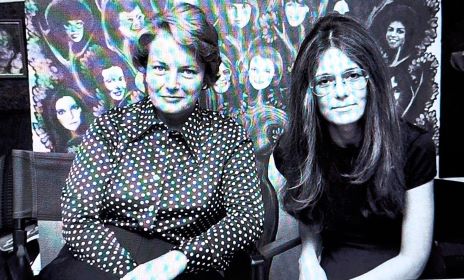
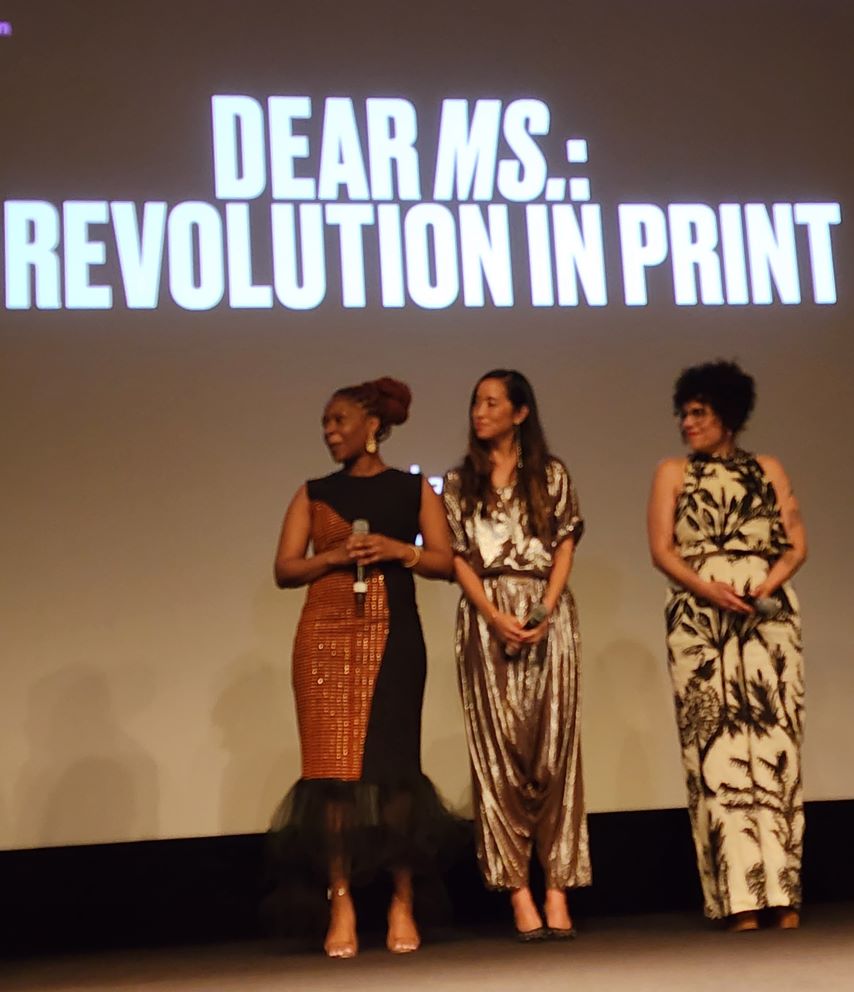
Documentary directors Cecilia Aldarondo, Alice Gu, and Salima Koroma start by exploring the early years of the monthly magazine and challenges and hurdles it faced. A wide selection of archival footage (audio, photos, videos) and the magazine’s most iconic cover stories pointedly uncovers key turning points. To add retrospective views, the documentarians present contemporary interviews with the women who wrote, contributed, fundraised, sold ads, and accomplished so much more for the magazine.
The film gives much screen time to founders Gloria Steinem, Patricia Carbine, Letty Cottin Pogrebin, Lindsy Van Gelder, Marcia Ann Gillespie, Susanne Braun Levine, and others. These dedicated, talented, ingenious women made Ms. a triumph. But while highlighting its most powerful moments, the documentary also clearly reveals the magazine’s mistakes.
Three Iconic Covers
Each of the three director uses an iconic cover to reveal the magazine’s ethos over the two decades under review. Salima Koroma’s Part One is “A Magazine for All Women,” Alice Gu’s Part Two is called “A Portable Friend,” and Cecilia Aldarondo labels Part Three “No Comment.” The three distinct stylistic approaches provide visual interest. More importantly, we note the changing cultural influences as the film follows the founders, writers, editors, and other contributors through the period of Ms.’s most trenchant influence. Archival photos show the Ms. staff grappling with ideas and evolving their own emotions and perspectives.
Overall, Ms. created a sense of community and common purpose for women, drawing them together over distinct gender issues. Not only did Ms. introduce unprecedented national conversations on women-identified topics like domestic violence and pornography. It also affirmed various points of view, with women weighing in to contribute their opinions. And if it seemed initially to come from a “white woman’s perspective,” Steinem and others attempted to make change inclusive.
The Complicated History of Ms.
The magazine’s history is complicated, especially when it comes to two issues: race and pornography.
Throughout the women’s movement which Ms. reflected, feminism was dominated by white female voices while Black women’s distinct priorities took a back seat. Despite the editors’ intentions to maintain a diverse staff, Steinem’s sisterhood with civil rights activist Dorothy Pittman-Hughes, Black guest writers, and Alice Walker on staff, complete inclusion didn’t happen. In fact Walker left. According to her, it was difficult to give voice to issues related to Black women. The staff dismissed her voice, her position. Alice Walker separated herself from Ms. principally because she didn’t believe that Ms. could positively influence or be a place for her daughter.
Even today a racial divide persists, with conservative adversaries stoking the division. For example, the greatest removals of people of color from voter rolls occurs in Southern states with large Black populations. Voting equity never reached parity among the races and still doesn’t, perhaps even more so with MAGA politicos working to dismantle the Black vote.
Attacks from the Right
Debates about pornography and sexual intercourse as abuse harmed feminist unity. The Republicans’ “divide and conquer” approach diffused the movement’s power. Opportunistic conservative extremists like Phyllis Schlafly, seemingly against their own self-interest, fought against the ERA, the women’s pay gap, elimination of sexual abuse in the workplace, and more.
Nevertheless, Ms. made incalculable contributions. These included decreasing the gap between women’s and men’s pay and spotlighting domestic violence so as to promote the creation of women’s shelters and safe houses.
In a fascinating twist, while feminists like Andrea Dworkin and Catharine MacKinnon advocated banning porn as anti-woman, others advocated sex work and pornography as female empowerment. Exploiting the divisions, Republican conservatives jumped on the anti-porn bandwagon with feminists and created chaos and more division. Once again, the feminist movement’s progress slowed politically.
Dear Ms.: A Revolution in Print reveals the vital importance of Ms. to the feminist movement’s forward momentum despite setbacks like the recent reversal of Roe v. Wade, which was 40 years and billions of conservative collars in the making. Feminists got Roe passed because the unities among various activist movements required much less funding. In unity and community is power. However, those who enjoyed the benefits of Roe for decades came to take it for granted. Today, in a watershed moment, radical conservatives are working hard to destroy people’s rights, the Bill of Rights and all constitutional freedoms, due process, the courts’ power of judicial review, and the principle of one person one vote regardless of race, creed, or color.
These developments reveal the importance of community. Indeed, the themes of unity and community that Ms.: A Revolution in Print reminds us of speak loudest for today’s resistance and supporting our democracy. Division benefits the adversary, and unity at all costs helps a group stand firm. Daily, MAGA Republicans unite to support a convicted criminal, insurrectionist, unfit and derelict non-leader during COVID, sexual predator many times over, and exploiter of the leverage and technical know-how of the richest man in the world. No rancor or divisiveness harms the GOP’s goal of power and monetary domination, especially at the expense of the “weak and vulnerable,” in other words, everyone else. When feminists united with one voice, their power maintained their purpose, as the film reveals. Unity works.
Ms. Then; Social Media Now
Unlike social media today, which casts topics as right or wrong, belief or disbelief, thesis/antithesis, Ms. opened up conversation. The magazine fostered dialogue and looked to bring parties to the table. It encouraged community, not the isolation and loneliness that social media encourages. The benefit of promoting actual thinking is the ability to work through controversies. The opposite, responding to bots and trolls there to increase social media platforms’ bottom lines, divides us and causes uselessness and hopelessness. Ms. readers understood they could disagree on particular issues. Unfortunately, Ms. reduced to four times a year around the time that Fox News started.
As a tribute to the power of print journalism and a heartfelt thank-you to feminist icons like Steinem and Pittman-Hughes, the film reminds us what can be accomplished with unity. It also reminds us of the power of the adversary to divide and conquer.
Dear Ms.: A Revolution in Print can be seen on HBO.