 Blogcritics The critical lens on today's culture & entertainment

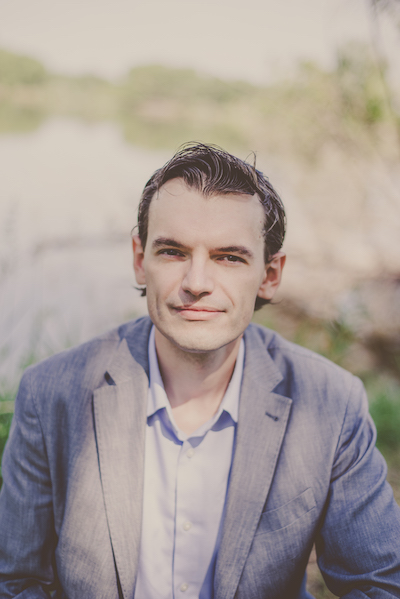
On May 18, 2025, the Boulder Chamber Orchestra conducted by Bahman Saless will perform at Carnegie Hall’s Zankel Hall in New York for the first time. The program will include the Piano Concerto No. 5 by Camille Saint-Saëns, with featured soloist Adam Żukiewicz – or Dr. Żukiewicz, to his students at the University of Northern Colorado in Greeley, Colorado, where he is Associate Professor of Piano.
A prize-winning soloist, chamber musician, and educator, the Polish-American pianist concertizes around the world, and is engaged in a multiphase Chopin project. He has also been a fixture in Boulder and environs, including with the Colorado Piano Trio, whose debut recording just came out in March 2025.
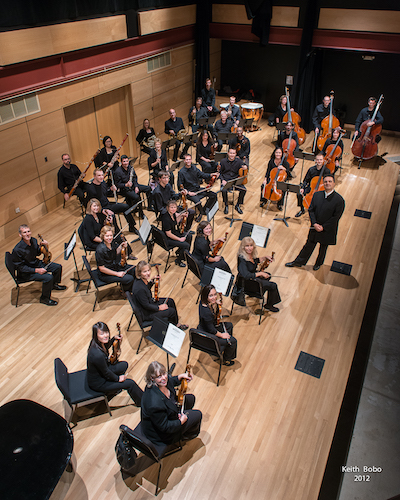
Żukiewicz spoke with me about the upcoming concert, his recording projects, and his life in music. Looking ahead to the Carnegie Hall concert with the Boulder Chamber Orchestra, he explained that his collaboration with the ensemble began with a meeting with Maestro Saless in 2022.
A Meeting of the Minds
“We discussed a wide range of topics – from history and music to theoretical physics – and quickly decided to embark on a collaboration,” Żukiewicz told me. The first event was a recital with the Colorado Piano Trio, part of a regular chamber music series called the Mini Chamber Concerts, which run alongside the orchestra’s main season in Boulder.
The next season they joined forces for a performance of Mozart’s Piano Concerto in E-flat Major, K. 449, and that “marked the beginning of an ongoing and deeply rewarding relationship. I feel privileged to have been invited back each year since, for both concerto and chamber music performances with members of the BCO.”
What does the pianist particularly love about this orchestra? It’s the “extraordinary chemistry among its musicians,” he said. “In addition to being first-rate artists, they are warm, generous, and kind human beings…It’s that familial spirit – shared not only among the players but also with their audiences – that keeps drawing me back.”
The Carnegie concert will include Saint-Saëns’ last piano concerto, No. 5 in F major, Op. 103, the “Egyptian.” This is fresh repertoire for Żukiewicz, who described Saint-Saëns’ music as “fascinating, marked by a natural yet distinctive sense of melody and accompaniment, as well as an original approach to form and genre.” He elaborated:
“The work is conceived in three movements, each one connected yet distinctly different. The first movement has a songlike quality, interwoven with virtuosic transitions and sudden outbursts, all framed within carefully controlled cadenzas.
“The middle movement is particularly intriguing – not only for its improvisatory character, but also for its unusual use of overtone sequences. These create sonic effects reminiscent of cymbals or bells, offering a refreshing and inventive treatment of the instrument (which is not prepared in any way).”
“The final movement is exuberant and playful. When I play it, I feel as though I’m on a carousel in the middle of a carnival. It’s filled with sudden changes of character and delightful moments, showcasing a virtuosic display of youthful joy.
“Saint-Saëns was an exceptional composer – deeply grounded in the traditions of the past, yet always curious and eager to explore new techniques and ways of shaping musical material. This blend results in music that is both intellectually engaging and emotionally rewarding. I feel privileged to share it with the audience.”
Chopin Rediscovered
I mentioned that some parts of the concerto remind me of Chopin, with whose music Żukiewicz has a lot of history. I asked him about his “Chopin Unknown” project, and he was delighted to talk about it.
The project originated in 2019 when the pianist discovered the “Three Learned Fugues after Cherubini,” which Chopin had transcribed late in his short life, beginning in 1841. Finally published only in 2017, the fugues offer what Żukiewicz describes as new insights into Chopin’s late compositional style as it developed in his final years.
“What struck me most was not simply Chopin’s use of complex contrapuntal techniques,” Żukiewicz said, “but rather his focus on the transparency of voices within denser textures. This quality is especially present in his later works, where intricate contrapuntal writing often emerges during structurally vulnerable moments – transitions, codas, and climaxes.”

The Chopin Unknown project includes performances of the Cherubini fugues along with original compositions by Chopin that were likely influenced by them. That context lends a fresh perspective on these long-familiar works. “It has been a deeply rewarding endeavor,” said Żukiewicz, who even received a federal grant to record the fugues (you can hear them on his YouTube channel) and perform them at venues including Carnegie Hall in New York and the Glenn Gould Studio in Toronto. The project has been so well received that he is now working on a second phase.
New Music from Eastern Europe
Transatlantic, the debut recording from the Colorado Piano Trio, includes music by Poulenc and Leonard Bernstein, but also by some composers who may be less familiar. I asked Żukiewicz how he put together the program for the album.
He explained that it began as an invitation to record Bernstein’s Piano Trio for Colorado Public Radio. It then expanded into a larger recording project that would tap some of the potential of this particular trio and also include “a rather unusual and captivating transcription of Poulenc’s Trio for Oboe, Bassoon, and Piano, one of our favorite works.
“We also wanted to include music by living composers from our countries of origin: the United States, Slovenia, and Poland. To that end, we commissioned new works from Blaž Pucihar (Slovenia) and Krystian Kiełb (Poland), and issued a call for scores from American composers.”
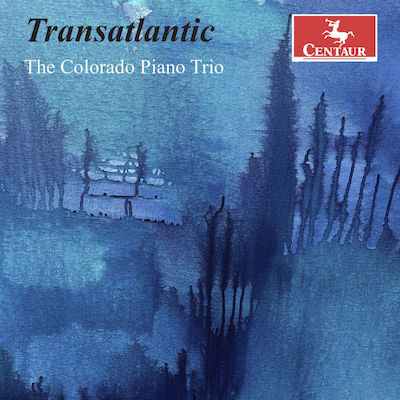
The hardest part was choosing from among the more than 30 submissions of American works. They ultimately chose the one they felt best complemented the rest of the program. They also wanted to include a composer from Colorado, so they enlisted their friends Jim Klein and Ian Jamison to write a trio for the occasion.
“We are very pleased with the program and the musical narrative it creates for the album, which has been well received since its release [in March],” the pianist said.
New Music, Old Keys
There’s more to come. In fact, Żukiewicz is planning several more recordings.
One spotlights “forgotten composers” from the pianist’s native Dolny Śląsk region of Poland. Another is a solo piano album of modern piano études.
He also has plans to record music by Ravel and Liszt on his original 1872 Érard concert grand piano. The instrument, he explained, was a gift from “a dear friend who has since passed away. This recording will be both a valuable addition to the catalogue and a heartfelt tribute to a wonderful friend – someone who would have been thrilled to hear his cherished instrument brought to life in a project like this.” No doubt the composers too, whether living or dead, would – or will – be pleased to hear their work played by this eminent pianist on a historic instrument.
Transatlantic by the Colorado Piano Trio is out now on Centaur.
Adam Żukiewicz’s May 18 concert at Carnegie Hall with the Boulder Chamber Orchestra will also include Beethoven’s Symphony No. 7 and “Ode to the Rockies,” a composition by music director Bahman Saless. Tickets are available online.