 Blogcritics The critical lens on today's culture & entertainment

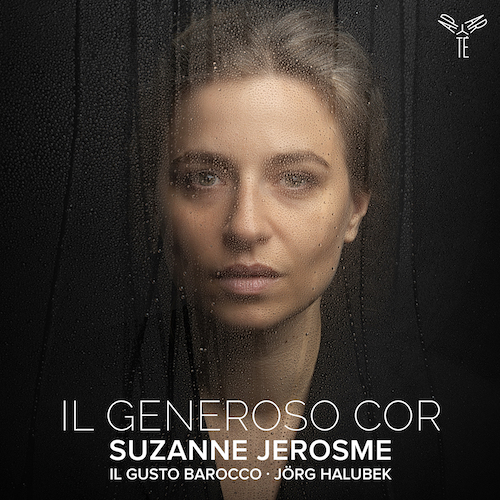
Female composers from before the latter part of the 20th century are often presented as singular figures. They emerge in our consciousness as outliers in a culture that mostly excluded their ilk. Ignored despite their hard and excellent work, they were overshadowed by more illustrious male colleagues (and sometimes relatives). But women were creating music as accomplished as that of their male contemporaries whenever and wherever they had the opportunity. On Il Generoso Cor soprano Suzanne Jerosme, backed by the ensemble Il Gusto Barocco led by Jörg Halubek, introduces us to Camilla de Rossi and Maria Margherita Grimani. These contemporaries of Alessandro Scarlatti contributed to the oratorio tradition in Vienna in the Baroque era. Some of the album’s tracks are world premiere recordings.
Biblical Oratorios
De Rossi and Grimani are two of seven or so female composers of oratorios active during Vienna’s “golden age” of the genre, from 1660 to 1740. They wrote for the same court, and the same audiences, as the much better-known Scarlatti. The album presents music by all three composers, giving valuable context for de Rossi’s and Grimaldi’s music. For anyone but a scholar of the period, it might be hard to distinguish one composer’s music from the others’, at least on a casual listen.
The selections by de Rossi and Grimani come from five different oratorios on religious subjects. (The Church was encouraging the oratorio form over the secular and sometimes ribald opera.) Jerosme sings with nuance and grace, with firmness and glowing energy, and without over-emoting. The subject matter of these religious tales can be just as passionate as secular romances. Jerosme’s sensitive approach lets the spirit of the music speak for itself.
While most of the tracks are soprano arias, the album also offers some Sinfonias, instrumental (usually) pieces that introduced an oratorio or a section of one. The Sinfonia from Grimani’s La visitazione di Elisabetta (1718) is an invigorating start.
The harp and the lute make themselves known in the aria “Sol fia pago” from the same oratorio. Jerosme’s silvery enunciation gives a sense of the character’s heartfelt humility in the face of a divine revelation.
Jerosme is also adept at sixteenth-note scales and melismas. These illustrate, for example, the North Wind about to roughen the seas in “Tu sei quella navicella” from de Rossi’s Il figliuol prodigo; and a striking call for revenge in the schizophrenic “Cielo pietoso” from Il San Alessio. Her skills in this area impress most of all in the showpiece “All’ armi, ò costanza” from Scarlatti’s Il Martirio di Santa Teodosia (which also calls for a climactic high B).
The Martyred – and the Forgotten
The Il Gusto Barocco strings sound beautiful accompanying Jerosme through the solemn Sinfonia from the same oratorio. Here the soprano’s mastery of a kind of lyrical softness shines to match the composer’s melodic gift. A similar delicacy of phrasing lends gentle pathos to Scarlatti’s settings of lyrics of penitence (“Sento all’alma”) and of mourning over Cain’s slaying of Abel (“Madre tenera ed amante”). The purity of emotion shines through, and especially over the leaps in the latter’s melody.
Grimani vividly depicted the beheading of John the Baptist in “Serenatevi miei lumi.” A plaintive rising chromatic scale infuses weeping (“lagrimar”) with a sense of hope. The aria ends with extraordinarily expressive unison passages, executed beautifully, and, I think, looking expressively over their shoulder at opera.
Jerosme conveys the desperate prayer of a martyred saint in Scarlatti’s “Soccorretemi cieli fedeli” with a smoky softness that’s achievable only through exquisite control. It’s a standout track. I was at first surprised to see Scarlatti on an album featuring the work of two lesser-known female composers. But the Scarlatti selections place the work of Grimani and de Rossi in helpful context.
Kudos to Jerosme and the ensemble for foregrounding these two composers’ work on this beautiful album. It has earned a permanent place in my playlist of Baroque favorites.
Il Generoso Cor is out now on the Aparté label.