 Blogcritics The critical lens on today's culture & entertainment
Chris and Martina: The Final Set brings together tennis superstars Chris Evert and Martina Navratilova in a spotlight documentary at Tribeca Festival 2026. Directed by Rebecca Gitlitz, the world premiere documentary follows each woman from her first initiation into tennis success. Gitlitz uses archived video clips with sports commentary voiceovers past and present, from the likes of Mary Carillo, John McEnroe, and Billie Jean King, people with knowledge of these champions of women’s tennis who helped put tennis on the map for average folks.
The film explores the contentious rivalry between Evert and Navratilova in the 1970s and 1980s. Part of what made them watchable was how they contrasted on and off the court. Evert was the All-American girl from Florida. Navratilova was from communist Czechoslovakia but acted as her own person, not something communist countries wanted in their sports legends.
The first successes
At first it was Evert who had the upper hand in the rivalry, winning nine of their first 10 matches and getting the lion’s share of fame and acclaim. But that would change. Navratilova became fanatical about her fitness and training. She eventually caught up to Evert, and they would compete fiercely in the ensuing years, taking women’s tennis to new heights.
In the most interesting segments, Gitlitz breaks from historical clips to show present-day Chris and Martina discussing their matches. This never-before-seen footage includes the women watching some of their classic matches together, a first for both.
Commentary from the stars themselves
It’s amazing to watch these women, who are friends, watch themselves play each other as young women. They sit next to each other on a sofa, make quips, and enthusiastically analyze their strategies. It can’t be emphasized enough how special this film is for tennis aficionados and fans alike to hear these champions share what they think about themselves and each other as they played decades ago.
As they narrate their intertwined histories, the film allows us to appreciate the history of the game in the 1970s and 1980s. Revisiting their intense rivalry, we acknowledge the skill that it took as they evolved the game, themselves, and each other.
Tennis back in the day
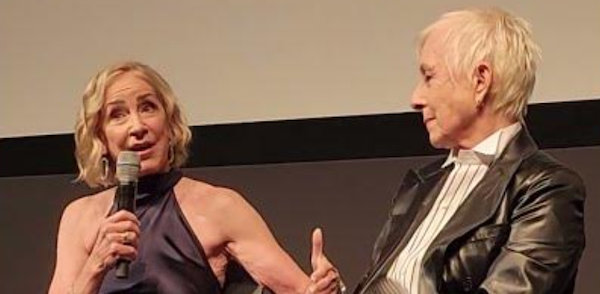
During the talkback after the screening, Evert reminded the audience that the equipment they played with was nothing like today’s. It was their own power and conditioning that revved up their strokes as they played with wooden racquets. She reminded us that today, the greats also have armies of experts helping them – coaches, managers, nutritionists and beyond. Back then they had their own will, and others on tour who generously supported one another. There was a different ethos.
Tennis wasn’t as commercial as today because tennis wasn’t really “a thing.” The champions’ competitive wills and ambition to be great helped to make women’s tennis “a thing.”
Women’s tennis grows up
The rivalry between Evert and Navratilova, their stories and successes, launched women’s tennis to another level, as Billie Jean King comments in the film. Donors added to prize money and advertisers employed the women to market their brands. All of this increased the importance and notoriety of the game for average folk, and reoriented tennis’ meaning, as tennis had been a sport of the elites since its founding by monks in France.
Evert was older and started winning as a teenager. Fans thought she was cute, while her opponents on the tour sometimes kept their distance. When she walloped those players, it was both terrifying and depressing for them, and exhilarating for her.
When Navratilova arrived a few years later, she was a total character, not as conditioned as Evert, but someone people looked to as a potentially great player. She started to win matches against Evert, and the rivalry ratcheted up.
Determined to continue on her own and not be told whom to play for, Navratilova ended up defecting from her country, leaving her family and all behind for tennis. She didn’t want to represent a communist country that monitored her every step. She loved the freedom of the U.S. But seeking asylum came with the price that she might never see her parents or sister again.
Evert didn’t know at the time what sacrifices Navratilova had to make in order to defect. Martina had to be her own best friend for a long while as she pursued success. She makes it clear that what she was up against wasn’t easy, and she felt alone.
Pushing each other
The two pushed each other towards the goal of being the number one tennis player in the world. As the rivalry wore on and they became friends, playing doubles, it became apparent that both were tirelessly committed to the sport.
The two allow the director to film their friendship and support during their battles with cancer. The same courage we saw on the court is what they relied on through illness and medical treatment. We see the help of family and their support for each other through a difficult time. This is the most uplifting part of the film as they celebrate their progress and announce they are cancer-free.
This story of triumph and friendship shouldn’t be missed. It will be streaming on Netflix at the end of June.
.