 Blogcritics The critical lens on today's culture & entertainment
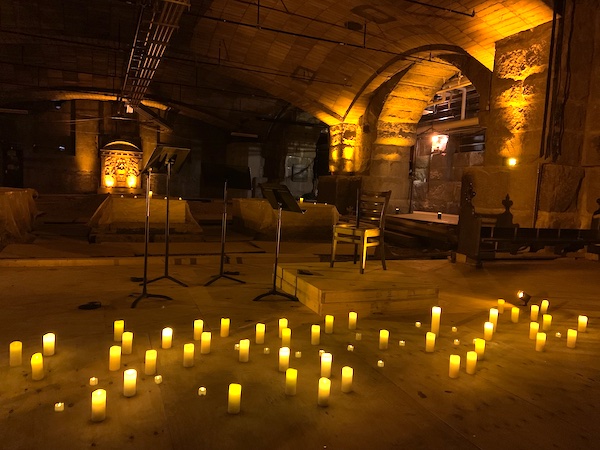
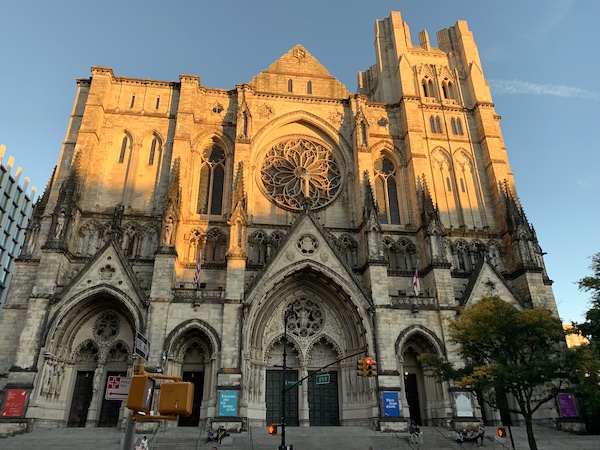
The vast expanse of the Cathedral Church of Saint John the Divine has seen a host of concerts, among countless other events, over its history. But never before has the never-finished edifice welcomed concertgoers to its crypt. Death of Classical has long presented live music in deathly settings like the Green-Wood Cemetery catacombs and the Crypt Chapel of the Church of the Intercession. Now the audacious presenter has invaded the underbelly of the nation’s biggest city’s biggest church, opening the crypt to a concert series that this past weekend presented musicians from NOVUS, Trinity Church’s new music ensemble.
American Beauty, American Dream, American Struggle
The program, simply titled American, was itself rather audacious. Between the four movements of the popular String Quartet No. 12, “American,” of Antonín Dvořák, the musicians interposed works by three contemporary American composers that reflected on the present-day nation. Contrasts and parallels alike emerged from these twistings-back of time.
A lively first movement of the Dvořák revealed both the acoustical suitability for chamber music of this “virgin” space and the distinct skills of the musicians of NOVUS. At string quartet concerts I often play a game with myself, trying to distinguish the viola part (or sometimes the second violin) with no peeking. This can be difficult amid swirling harmonies where the highest and lowest tones are far easier to discern and follow than those in the middle. This setting and these artists made it almost too easy. True, the viola has a particularly strong melodic part to play in this movement. But during the passages with busier ensemble harmonies I found it unusually easy to hear each individual instrument. Such clarity gave the performance both an especial intimacy and a sturdy confidence.
Clarinetist Benjamin Fingland then joined the string players for “Lullaby for the Transient.” Michi Wiancko’s evocation of the turbulence of the immigrant experience begins with a lullaby-like melody. Ultimately, though, it reveals without subtlety what the composer aptly calls “the persistence of unrest.” First, disconcerting pauses interrupt the melody. Then a clocklike rhythm is established. The clarinet indulges in jazzy figures and shrieks, the cello in muscular guitar-like strumming. For a surprisingly long stretch, the second violin persists in an extraordinary fit of string-scratching. Altogether it was a difficult listen – and stunning.
Wave-like figures in the “Lullaby” flowed almost seamlessly into the second movement of the Dvořák, which has its own soft rhythm. At the same time, the memory of Wiancko’s piece forced me to perceive, or imagine, small strangenesses in the Czech composer’s 1893 opus. Maybe “strangeness” isn’t the right word – what I really mean is Dvořák’s reachings for the new, which he found ironically in the folk and Native American tunes he borrowed. Every movement of this string quartet bursts with the composer’s evidently joyful reactions to the music he heard on his U.S. travels in the early 1890s.
A Dark America
Carlos Simon dedicated his “An Elegy: A Cry from the Grave” to Black victims of police killings. It’s a sorrowful piece, more “accessible” to the ear than the Wiancko. The musicians leaned heavily into dense harmonies that resonated cleanly to strong emotional effect. Was it under this piece’s influence that they then found the lyrical side to the “Molto vivace” third movement of the Dvořák? Whatever the cause, the latter emerged as expressive as it was snappy.
The final contemporary piece, Jessie Montgomery’s “Source Code,” sees the composer reckoning with her identity as an African American, melding blue notes sourced in spirituals into a fabric of forceful, often dissonant harmonies that grow quite cavernous in a way that the fit the acoustics perfectly. This is Montgomery at her most wrenching. The dominant feeling is one of pain, as the music grips the soul and doesn’t let go until the final unison note harks back to the bagpipe-like opening.
The evening wrapped up with a bright, bracing rendition of the Dvořák finale. The performance carried a slight prickliness, perhaps an aftereffect of Montgomery’s soul-search. It capped a brain-awakening program delivered by musicians who frost their deep skills with some pizzazz, and whose enthusiasm for top-tier contemporary music equals their mastery of popular classical repertoire.
Visit the Death of Classical website for tickets to upcoming Crypt Sessions concerts.