 Blogcritics The critical lens on today's culture & entertainment
In 1992, transgender activist Marsha P. Johnson was found dead in the Hudson River – murdered, many say. Twenty-eight years later, with recognition of LGBTQIA+ rights on the increase (if ever precarious), a state park just miles away on Brooklyn’s East River waterfront was renamed for Johnson. And on the 9th through the 11th of July 2026, in another part of Brooklyn, Marsha P. Johnson will be remembered again, along with three other activists, in the New York City premiere of Tapestry of the Beloved Beatified for string quartet, by composer Jeff Scott.
Only one of the piece’s four dedicatees, PFLAG co-founder Jeanne Manford, lived to old age. A gunman assassinated San Francisco politician and gay rights crusader Harvey Milk in 1978. A branch of Al-Qaeda murdered Bangladeshi activist Xulhaz Mannan in 2016. So in one sense it’s perhaps fitting that the Green-Wood Cemetery catacombs will host the NYC premiere of Scott’s opus.
But the concert series presenting the program – which also includes Beethoven’s last string quartet – is apropos in another way. Death of Classical presents classical and contemporary music in death-themed settings partly as a thumb in the eye of pessimists who bemoan the decline of classical and “serious” contemporary music. The success of Death of Classical and presenters like it (though there’s none quite like it) proves that great music lives – both through tradition and through vital new work by composers like Jeff Scott.
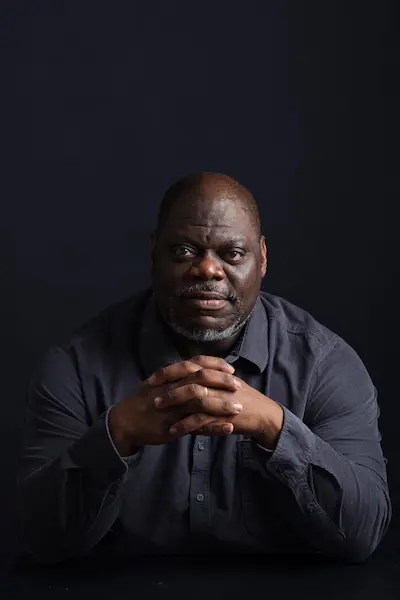
Scott was a member of Imani Winds for over 20 years, touring and performing 125-150 days a year on average. The intense schedule and programming didn’t allow him much time for composing, “though somehow I managed,” he told me. “Youth likely had much to do with that!” Now he’s a full-time professor of composition and French horn, teaching at the University at Buffalo and at some annual summer music festivals. Composition, rather than performing, has become his main focus. He took the time to speak to us about Tapestry and some of his other work.
String Quartet, Activist Quartet
As the Death of Classical event web page puts it, in Tapestry of the Beloved Beatified the lives of the four honorees “rise here not as symbols of struggle, but as radiant, deeply human presences – defiant, compassionate, and enduring.” I wanted to know how Scott approached the task of remembering all four pioneers through music. It seemed like a big responsibility. How does the piece reflect these personalities, their lives and accomplishments?
“It’s a huge responsibility indeed,” he confirmed. “And for that reason, my intent was never to create an aural biography of their lives but to honor their memories. Each of these four figures, Marsha P. Johnson, Harvey Milk, Jeanne Manford, and Xulhaz Mannan, carried a kind of radical tenderness into a world that often met them with hostility. And in two cases, unfortunately, the ultimate hostility.”
Scott didn’t try to tell their stories in any literal or programmatic sense, but by “creating a musical ritual spacious enough for their courage, vulnerability, and spiritual resonance to be felt, and to honor that courage with the ultimate in spirituality.” So the piece “reflects their personalities through gesture, texture, and ritual structure rather than through narrative depiction. Each movement is a kind of sonic beatification, a moment where the quartet becomes the vessel through which these four spirits are lifted, acknowledged, and held.”
He gave the movement about Harvey Milk as an example: “It opens in turmoil and dissonance, but the music doesn’t attempt to reenact events, it instead creates a sonic environment where his bravery and clarity of purpose can rise. And ends with what I hope the listener will recognize as a canonization.”
The “tapestry” of the title “is the cumulative effect: four strands of courage woven into a single musical act of remembrance,” he added. “My hope is that listeners don’t hear a history lesson, but rather feel the presence of four beloved ancestors whose lives continue to shape our collective sense of justice and humanity.”
Poiesis
Scott is a French hornist and many of his works highlight brass and winds, so I was curious about his collaboration with the Poiesis Quartet, the young string quartet that’s premiering the piece.
“The wonderful humans that make up the Poiesis Quartet,” he explained, were students at Oberlin Conservatory while Scott served as French horn faculty from 2020-2025. The Oberlin community knew him as a composer as well as a musician and instructor, and not just for winds and brass. In fact, Sibbi Bernhardsson, Poiesis’s coach and mentor, commissioned him to write a violin and orchestra work to serve as part of the prize package for Oberlin’s prestigious Cooper International Violin Competition.

Jeff Scott and the Urban Classical
As a composer of color, Scott also focuses on the intersection of Western art music with what he vividly describes as “the rhythmic vitality, emotional depth, and communal spirit of Black American life.” The result is his concept of “Urban Classical Music,” which manifested, for one example, in his Grammy-winning oratorio Passion for Bach & Coltrane. Imani Winds’ recording of that piece won the Grammy Award for Best Classical Compendium in 2024.
Of course, composers have been combining classical music with music rooted in Black culture for a long time, going back to Duke Ellington and George Gershwin and Florence Price, to name just a few. But there’s something notably up-to-the-minute in Scott’s music. So I asked him if he was consciously striving for something that’s lacking in most of today’s music scene.
“This is a wonderful question that is often posed to me or many of my colleagues in one form or another,” he said. “My feeling is that creative art is and will always be critiqued over generations. What is disregarded now may be considered amongst the greatest of contributions in the future. And vice versa.”
So he’s striving not so much for something that’s lacking in classical music, but rather, “like all composers, to have my individual voice added to the canon in a meaningful and hopefully lasting way. History will decide if my voice contributed something that filled a void for our musical community.”
Cross-Cultural Love
Another major work of Scott’s that engages with his “Urban Classical Music” theme is an opera titled Titilayo and Yona. It’s described as a forbidden-love story in which “against the foreboding backdrop of the Indian Removal Act, a passionate love ignites between a Cherokee warrior and an enslaved West African girl.”
The opera began, Scott told me, with “a conversation with three of my aunts from Georgia in 2019 as we were reminiscing about our family history. In that moment I learned, for the first time, about our deep ancestral ties to the Cherokee Nation. That revelation became the spark for what ultimately grew into a six‑year study of the intertwined, often tragic histories shared by African Americans and Cherokee people.”
Almost immediately he conceived the idea of turning this material into an opera. For the libretto he teamed up again with A.B. Spellman, his collaborator on the Passion for Bach and Coltrane.
“I can think of very few operas that address either of these histories, let alone the ways they converged in early America,” Scott said. “It’s a work rooted in historical truth, but driven by the emotional and spiritual resilience of two young people who should never have found each other, yet did.”
Also on Scott’s project board is a work for the the great clarinetist David Shifrin, who next year will celebrate his 50th and final anniversary as director of Chamber Music Northwest in Portland, Oregon. Shifrin has commissioned from Scott a work for clarinet and string quartet. Look for that in 2027.
Tickets for Death of Classical’s Jeff Scott/Beethoven program are available online.