 Blogcritics The critical lens on today's culture & entertainment
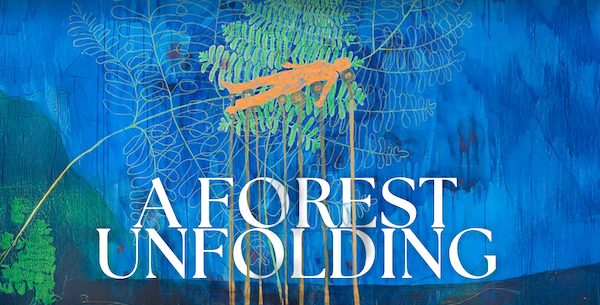
A Forest Unfolding
Discoveries about the interconnectedness of trees, and of how, more generally, “everything in the forest is the forest,” add up to what has to be, both for the general public and for scientists who study biological systems and the environment, the 21st century’s most consciousness-expanding scientific development. The Buddhist concept of “interbeing” posits connections among all beings, not just humans; similarly, we’re learning that indigenous trees and other plants in a forest are, in a profound sense, not individuals at all, and that even different species form complex communicative webs.
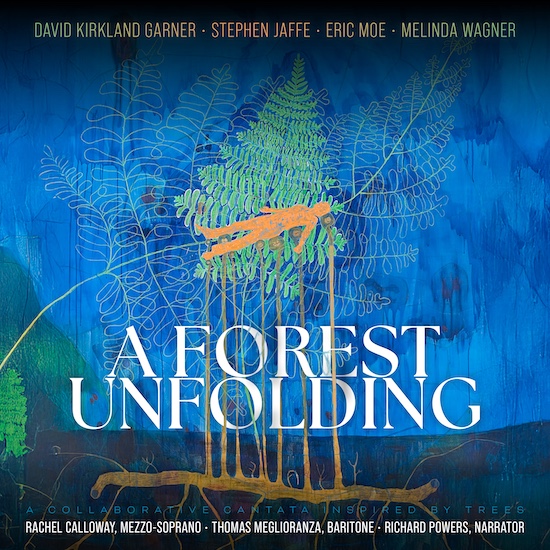
It’s no surprise when such discoveries inspire poetry and music. A Forest Unfolding reflects this newfound awareness of the depth of plant connections and behavior, not only in its content but in its genesis and method. Four composers – David Kirkland Garner, Stephen Jaffe, Eric Moe, and Melinda Wagner – collaborated on a 21st-century cantata, setting to music words about the relation between humans and trees and by extension, among all beings.
The texts are by W.S. Merwin, Wendell Berry, Anne LaBastille, and Henry David Thoreau as well as project narrator Richard Powers. The suite came together in 2018 but has only now been released by New Focus Recordings.
The four composers worked in related modes for continuity. They wield modernist vocabularies to construct accessible music that might not engage every listener but will appeal to many, even those with little experience of what is confusingly called “contemporary classical” music.
Rough Beginnings
Interestingly, the first and second movements each begin with some of the cantata’s harshest music. Yet these hard-hammering passages are both musical and, like the texts, meaningful.
Violently attacked strings, roughly blown winds, and grinding dissonance mark the instrumental introduction to “Native Trees” by Eric Moe, the first movement. The body of this flowing piece features mezzo-soprano Rachel Calloway singing the quietly bleak words of Merwin’s exquisite poem of that name.
Complex webs of harmony and searching melody tie the instrumental and vocal passages together. The poem depicts human ignorance of the forested lands that development has erased, along with obliviousness to the trees that do remain. But fluttering woodwinds in the background along the way suggest lingering forest spirits, and a more consonant if sharply articulated coda leaves room for hope.
In the second movement, David Kirkland Garner sets threatening verses from the Book of Job to a tense, stretched-rhythm theme that feels almost lighthearted at first, but restlessly repeats with subtle variations without ever finding a real home.
Shrub Oaks and White Pines
A lush pastoral interlude by Stephen Jaffe then relaxes the mood before softening into an almost atonal coda. This leads smoothly into a sparse Garner setting of a text by cord-cutting environmentalist Anne LaBastille, a piece titled “Woodswoman Etude.” Calloway speaks the lyrics over a wandering series of woodsy bass-clarinet arpeggios. The instrument effectively evokes the sturdy “big white pine” the writer aspires to become like.
“Trees,” another Merwin poem, is set by Jaffe and sung pipingly, with musical-theater clarity and over many descending intervals, by baritone Thomas Meglioranza. The poet has “never been able to speak with” a tree but “I listen to them tenderly” – just as hikers and forest bathers do, with scientists now learning to follow suit.
Garner’s setting of Thoreau’s paean to a shrub oak evokes birdsong and the overall connectedness of beings in the woods. Motifs and gestures wind around one another like roots and vines, combining with Powers’ narration to evoke a jazzy beat-poet reading. A rising flute melody at the end suggests a tree growing upward toward the sun, as well as Thoreau’s image of being “sound as a partridge.”
Melinda Wagner brings Calloway and Meglioranza together for another musical depiction of denuded forestland. In the yearning “In a Country Once Forested,” Wendell Berry describes “the soil under the grass” as “dreaming of a young forest” while “under the pavement the soil is dreaming of grass.” Wagner’s piano-heavy score has a devotional flavor even in its climaxes.
An Unbreakable Bond
Jaffe then steps in with a wake-up call in the form of a rhythmic, scherzo-like instrumental. Its meditative coda winds into “Eternal Song” by Garner, with text from a prosy poem by Powers read by the author. Defying the old Tennysonian canard that “nature is red in tooth and claw,” Powers concludes that “If trees / share their storehouses, then every drop of / red must float on a sea of green.”
Incanted in Powers’ relaxing voice, this evocative if jumbled metaphorical imagery trails off into a gentle, somewhat new-agey instrumental ebb and flow. In the closing wordless minutes Calloway’s voice follows the flute a beat behind. This signals – at least this is what I intuit – the need for, in Powers’ words, “a shared community between us and the other living creatures that make us possible” – the unbreakable bond between the human race and its planet.
Some of the cantata’s messaging feels a smidge over-earnest. But few messages can be more important for environmentalists, scientists, and – just as important – artists to be conveying. When they do so through serious, appealing music like this, it’s a small but meaningful push toward environmental preservation, together with a reminder of the deep reserves of beauty in the collective human spirit.
A Forest Unfolding is out now on New Focus Recordings and available at Bandcamp.