 Blogcritics The critical lens on today's culture & entertainment
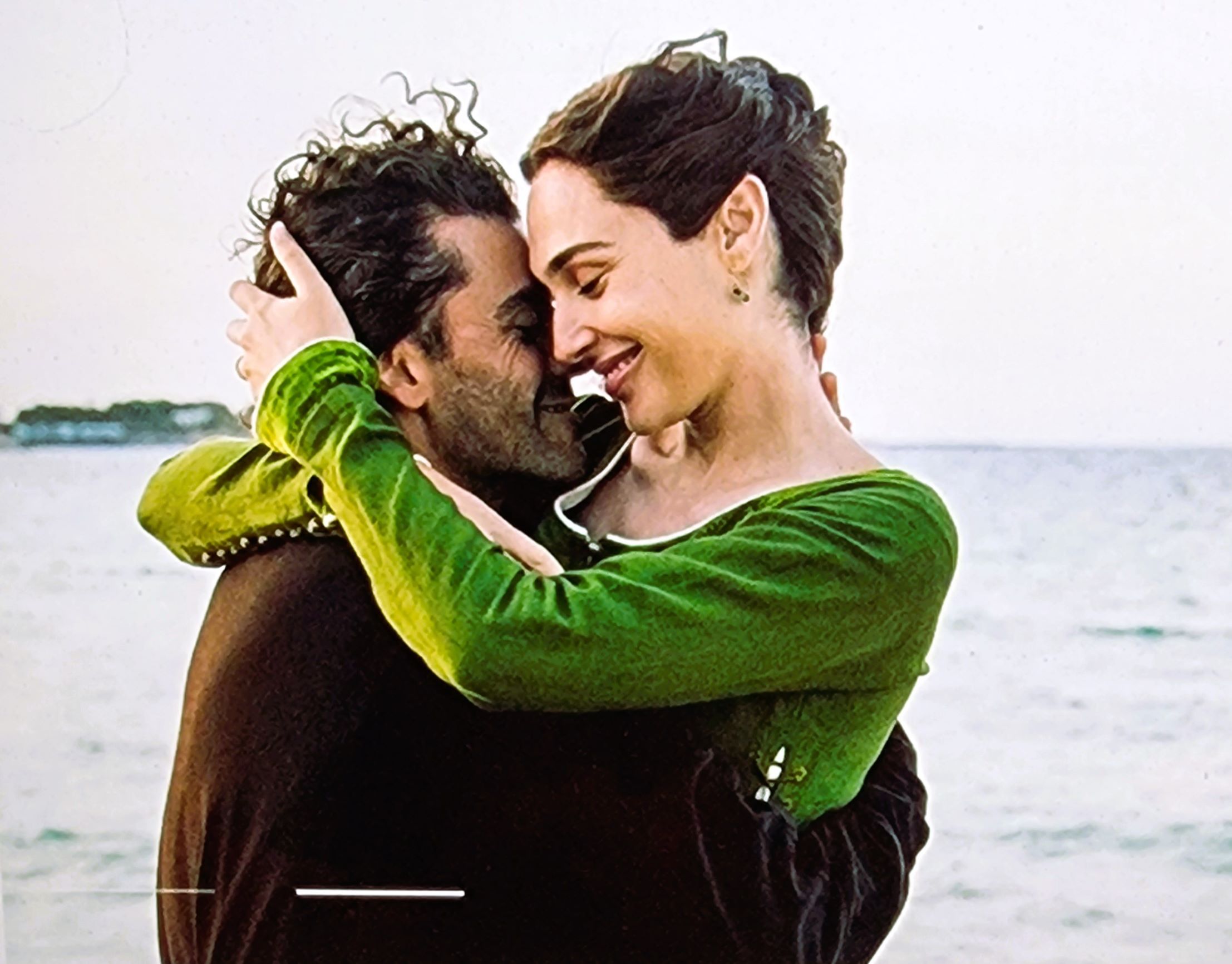
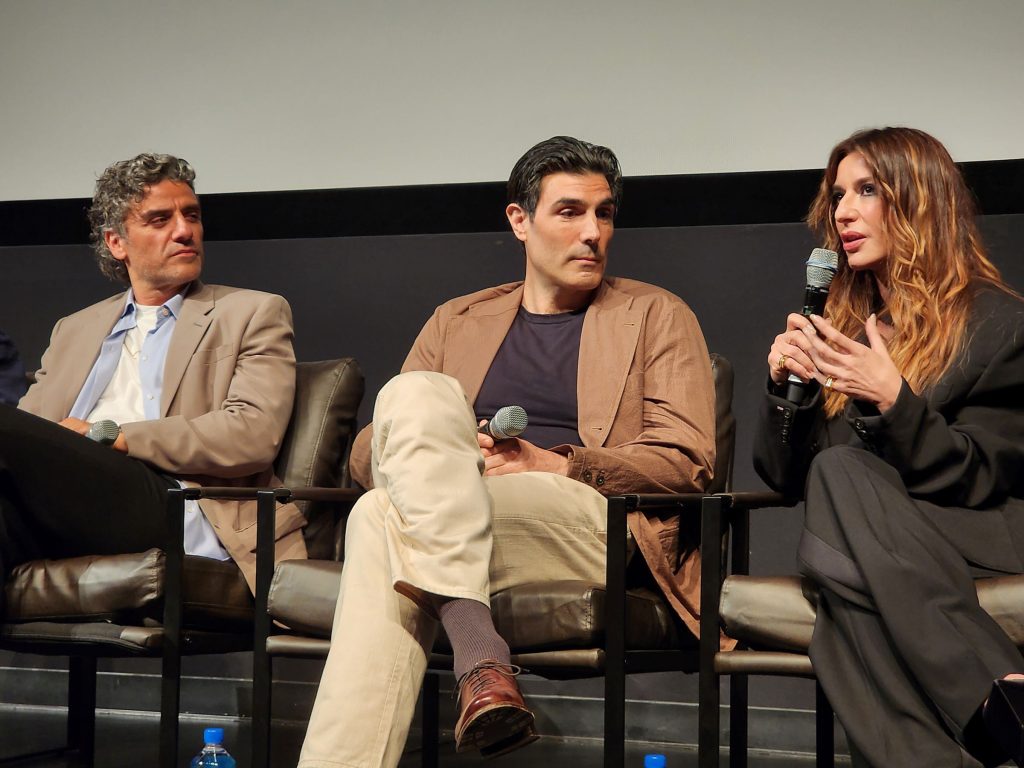
In the Hand of Dante, Julian Schnabel’s poetic, darkly ironic and seemingly quixotic film, gives nods to both Dante Alighieri and author Nick Tosches (1949-2019). The film had its New York City premiere at Tribeca Festival in the Spotlight Narrative category.
According to the filmmaker during a Q&A after the screening, Tosches was a fan of the 14th-century genius and a self-proclaimed expert on Dante and his work. Tosches fictionalized himself as the protagonist of the titular novel, which Schnabel adapted with co-writer Louise Kugelberg.
Like Dante Alighieri’s Divine Comedy and Nick Tosches’ novel, Schnabel’s unique and mesmerizing film does not lend itself to facile understanding.
As in his previous cinematic outings (At Eternity’s Gate, Basquiat), Schnabel teases out phenomenal performances from his lead actors. In this instance, the magnificent Oscar Isaac in the dual roles of Dante and the fictionalized Tosches centers an extraordinary cast. Their authentic performances are sometimes to type, other times frightening and surprising. Gal Gadot, John Malkovich, Gerard Butler, Louis Cancelmi and Sabrina Impacciatore round out the main cast. Martin Scorsese shows up too, bearded and wigged but unmistakable as Isaiah, who mentors Dante.
Al Pacino’s Uncle Carmine spells out a key theme
Adding the pièce de résistance and with only a few lines, Al Pacino as Uncle Carmine at the film’s beginning counsels the young Nick (Ibrahim Elouahabi). After an event that Nick confesses to him, Carmine explains how to distinguish life-affirming spiritual holiness from religious hypocrisy, the way of death.
Pacino’s performance anchors the film’s themes of good and evil, sincerity and untrustworthiness. Uncle Carmine provides an important life lesson that adult Nick carries with him to measure whether his own actions are good or evil. Learning such discernment from his youth, Nick is able to confront the devils he meets with resolve and hope. Moving through their perfidy, he follows a path upward toward the light, affirming self-love so that he can recognize love when it happens.
In the Hand of Dante defies easy description
The thought-provoking film defies easy description. Schnabel uses a color scheme to differentiate present action in the 21st century from the 14th century when Dante lived and wrote. Using black-and-white for the gritty criminal underbelly, he symbolizes evil in the fiery infernos of human nature. Such infernos blaze globally from New York City to Venice, to Palermo and other cities in Italy. The wickedness in the black-and-white scenes confound Nick. He must use his lifelong learning and the wisdom from Dante’s glorious work to get out alive.
In contrast to the black, white and grey of modernity, the Renaissance scenes feature the vibrant colors of the sky, clouds, ocean, rock formations and other Italian settings filmed so as to represent the 14th century when Dante lived in Florence. The sets (interior and exterior), period costumes, hairstyles, etc., exquisitely capture his time also.
After the government exiles Dante, he receives counsel, and gets help and inspiration to write his masterwork, The Divine Comedy. The sage Isaiah (Martin Scorsese) directs, inspires and guides Dante. And his friend (Louis Cancelmi, who also portrays 21st-century Lefty) provides the money to sustain Dante to write during his exile. Thematically, these vibrant scenes represent light, hope, goodness and the exaltation of artistic creation to redeem human nature’s brutality.
Life, art and the melding of the two
Using Tosches’ novel as a springboard, Schnabel and co-writer Kugelberg interlace concepts about life, art and the melding of the two in Schnabel’s historical thriller-romance. Clearly, Schnabel delights in the philosophical and esoteric, represented by the characters Dante and his mentor Isaiah. He contrasts their heavenly notions with the bleak, vile behaviors of criminally monstrous characters like the brutal Louie (a fantastic Gerard Butler) and the treacherously smiling Joe Black (Malkovich).
Nick lives Dante’s poem when he entangles himself with Black, a mobster who buys and sells valuable artworks on the black market. Joe owns a Rembrandt self-portrait because of its value. But he hates it. Learning of Nick’s expertise, Black tasks him to accompany Louie on an adventure to steal Dante’s original manuscript, reputed to be with a Palermo mob boss.
A journey across time
Elegantly alternating between Nick’s modern-day New York and Dante’s Renaissance world, In the Hand of Dante reveals Nick/Dante’s journey across time. From torments to the heavens, from brutality to gentility, the appreciation and mystical understanding of oneself comes through love’s guidance. Because Nick authenticates the manuscript successfully, he receives revelations about the meaning of love, truth and morality. Consequently, he establishes a relationship with Julietta (Gal Gadot), his assistant.
In parallel, Dante, who had ignored his wife Gemma (also played by Gadot), takes her into consideration after their exile. As Dante did in writing his masterpiece by risking all to then return to Gemma, Nick risks his life to arrange a new life with Julietta. Separated by 700 years, both men realize the intimacy of The Divine Comedy as a reflection of their own lives. When Dante created the work, Schnabel suggests, he embraced his own life in the poem. In pursing the manuscript’s authentication and the chaos that follows, Nick emerges from a hellscape with mob monsters to receive a similar revelation.
The Hand of Dante streams on Netflix at the end of the month.