 Blogcritics The critical lens on today's culture & entertainment
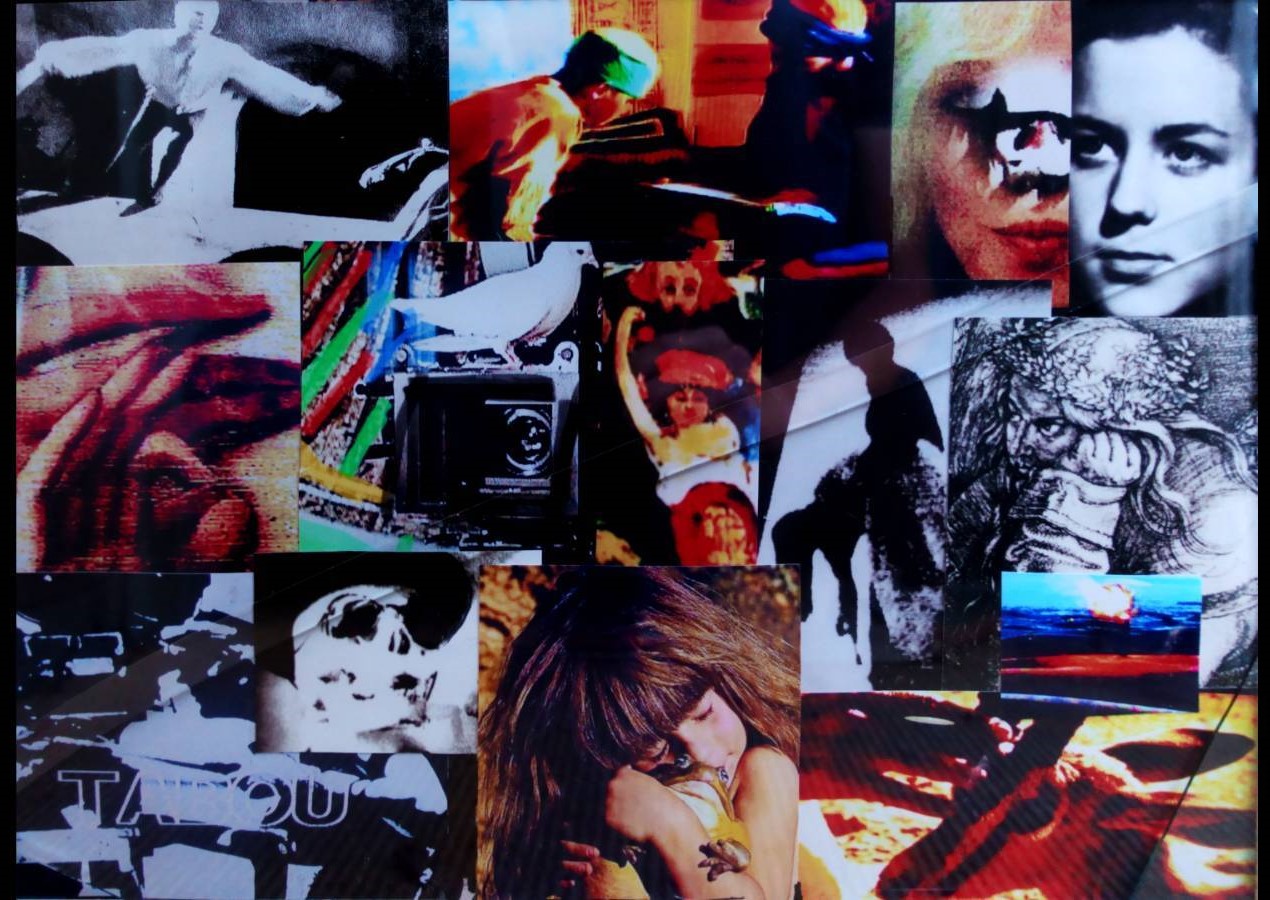
“Scénarios” + “Exposé du Film annonce du film ‘Scénario’” and Dahomey
Two documentaries screened in the Spotlight and Main Slate sections of the 2024 New York Film Festival. One features the raspy voice of renowned filmmaker Jean-Luc Godard, the day before his assisted death. In the second film, we hear the mystical whispered thoughts of an anthropomorphized statue of King Gezo. The statue, one of hundreds of artifacts stolen from Dahomey by France in the late 19th century, has been selected for return to its homeland.
On the one hand, the first documentary shows Godard’s life’s apotheosis, his work process. The film reveals a satisfying end. On the other hand, Dahomey signifies a return and new beginning. In their depth and profound philosophical perspectives, both films make critical points about life and culture revealed through art, its process and meaning.
Jean-Luc Godard’s Masterworks
Jean-Luc Godard created extraordinary cinematic masterworks, in the process birthing the influential French New Wave together with other filmmakers. Though he faced controversy in the last years of his life, his impact and iconic stature remain. In this, his last project, he says his poignant goodbye. In one fell swoop, a legendary filmmaker who never lost his creative fire during his seven-decade career encapsulates his legacy.
The subject of Scénarios is Godard’s life, and he appears in it, giving instructions for his final film to his collaborators Fabrice Aragno and Jean-Paul Battaggia. Using index cards as storyboards, he discusses how the shots should be composed. For example he discusses how one section of the screen should have a clip from a movie. Another section at the bottom should have a still photo. Then he suggests a philosophical quote. Thus, we watch the master’s mind at work, a day before he checks into the clinic to end his life.
Not only does Godard make literary references, he inserts memes like “Fake News” and the names of leaders like “Macron.” Referring to Macron, he suggests, “He is much less lucid that I am.” Though we watch fascinated as the legend’s creative energy burns with passion, we realize his weakness too. Others will be executing his vision, not Godard himself. In a long career that shone with resilience and self-control, even he must give up the reins to others. Poignantly, Godard recognizes his vulnerability and mortality.
Forecasts a Future Film to Fabrice Aragno
Assembling layers – of paintings, collages, film clips, stills – he includes quotes and text from Sartre and others. In these actions Godard uplifts his creativity as a life force. However, this is a mission to reveal his process – and encourage other filmmakers to “step out of their traditional comfort zone.” Only then can they hang on to the precipice of their imagination and find their own voice and artistry. So they allow the process to sweep them up with abandon.
In 2021, Fabrice Aragno completed Scenario, based upon Godard’s filmed process. The second documentary outlines a previous version of the project. As he says farewell, in these documentaries, the legend who moved millions globally memorializes his intimate relationship with cinematic creation.
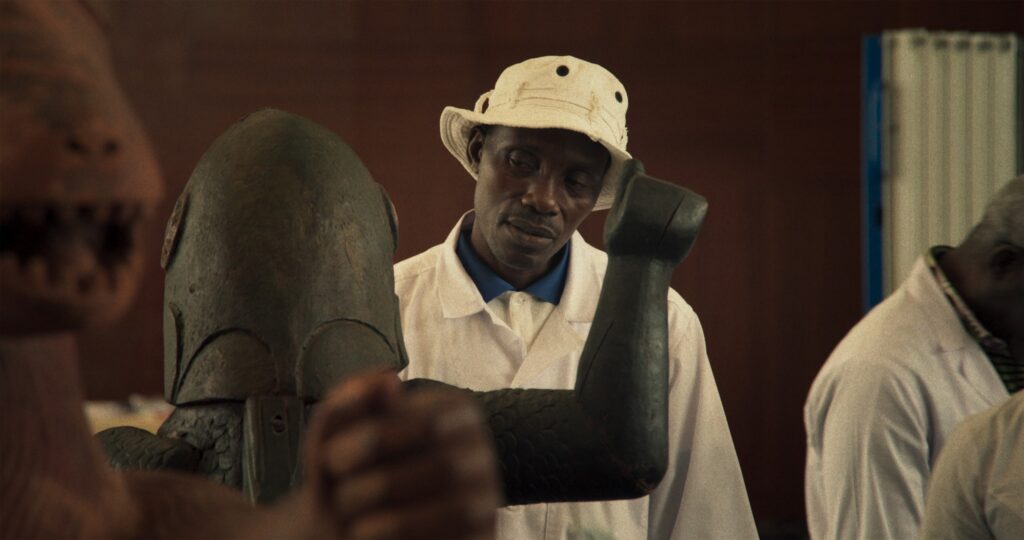
Dahomey, Directed by Mati Diop
Unable to resist the mystical on the great occasion of France’s return of treasure once looted from Dahomey, Mati Diop has a former great of the vanquished kingdom speak. As the film begins we see French authorities packing up the statue of King Gezo, who ruled Dahomey in the mid-1800s. Accompanying a total of 25 other treasures, the wooden king speaks into the wind about what his transportation back home might mean. In a voiceover by Makenzy Orcel that resonates with a whispering echo created by sound designers Corneille Houssou, Nicolas Becker and Cyril Holtz, Gezo considers his enslavement by the “western world.”
The looting of treasures symbolizes the power of France’s military might over Dahomey. France’s admission of its theft bears recognition but, more importantly, represents political gain. French president Emmanuel Macron achieves cachet with this gesture. However, no one in France discusses the numerous remaining treasures France holds that still must be returned.
How Must the People of Benin Confront the Artifacts’ Return?
How must the people of Benin confront France’s apology for usurpation and conquest? Diop reveals the confrontation in a university-debate-style discussion. Young people express contrasting views about the return. The treasures have gained their rightful place in Dahomey (now Benin). But they exist as treasures, having lost their meaning as symbols of power and conveyances of culture through art. In parallel, the French stole the language of Fon and supplanted it with French. Only one-sixth of Benin’s population speaks in Fon currently.
The young people wonder whether a proper restitution and apology can ever be made. If it can, what might that look like? Next, what about the other treasures France still holds in its museums? Shouldn’t it return these as well? Holding on to them solidifies the colonizing power’s rapacity and desire to retain some control. Indeed, one point of view holds that the return of the 26 artifacts makes the gesture an “insult.” They also point out that the focus should center on remembering the might of a people “descended from Amazons,” not the demeaning descendants of slaves owned by the French
The Ornate Dahomey Throne
Last, Diop includes discussion of an ornate Dahomey throne. Adorning the object, numerous figurines suggest Gezo’s compromised, unjust and power-mad reign as king. Gezo himself relied on the slave trade to provide him with wealth and power.
As a matter of cruel fact, the surrounding nations feared capture and enslavement by Gezo. Ironically, French colonization ended the “local” hell of slavery and began the transnational hell of slavery to another continent. Both negatively impacted the French and Dahomians. In blaming the French, citizens must acknowledge Dahomey’s past complicities in choosing to uphold the worst values of the colonial powers. Their country’s legacy of war represented by artifacts and art perhaps needs to have meanings other than to uplift war, power and wealth. Those very indecencies then and now fostered death and destruction. The same indecencies are human frailties, not strengths. Sadly we still confront them today in current global conflicts. To admire the legacy of war and its impact upon a culture’s heritage is questionable, even reprehensible.
Both documentaries raise philosophical questions about art and allow us to ponder the answers. They deal with art’s purpose and the meanings attached to artworks that represent life and legacy.
Tickets to these festival films are at the the NYFF website.