 Blogcritics The critical lens on today's culture & entertainment
Firebrand
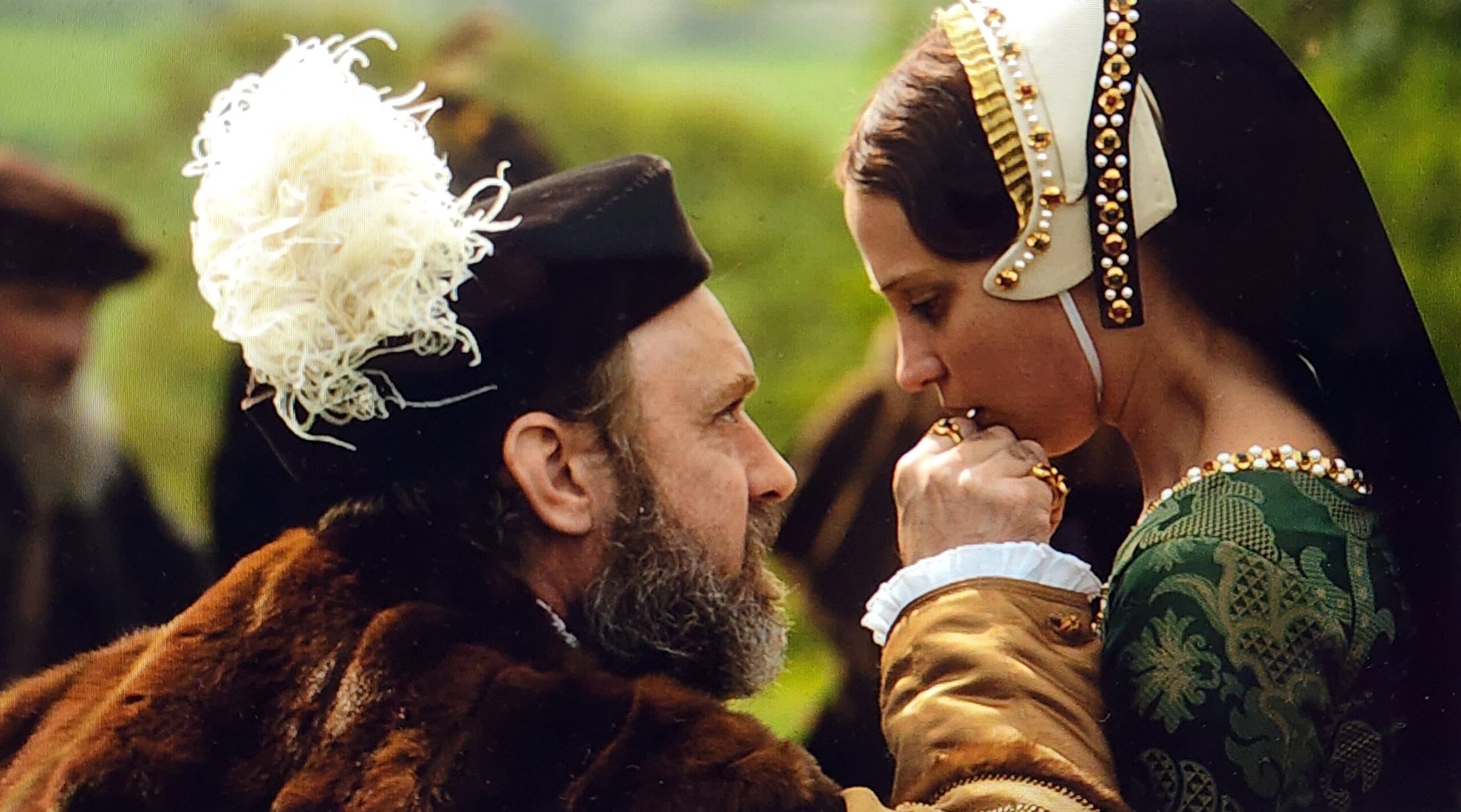
In the suspenseful Firebrand, starring Jude Law as Henry VIII and Alicia Vikander as the king’s sixth and last wife, Katherine Parr, director Karim Ainouz takes us into the heart of Tudor intrigue. Based on Elizabeth Fremantle’s historical novel Queen’s Gambit, Henrietta Ashworth and Jessica Ashworth fashion an update that aligns with our times. Employing both factual information and literary license, the screenwriters and director also create a unique, thrilling drama. In its North American premiere, Firebrand screened in the “Spotlight Narrative” category at Tribeca Film Festival 2024.
When we meet the striking and charismatic Katherine Parr, she impresses immediately with her presence of mind. Because Henry must attend to business elsewhere, he appoints the queen as his trusted Regent. Importantly for a woman at that time, Katherine conducts herself with diligence and sobriety. She successfully makes appropriate and wise decisions. Though the courtiers disagree, Katherine has Henry’s trust and she has the Regent’s mantle of power. Thus, all obey her. Finally, she wisely surrounds herself with her faithful handmaids, loyal to the death. Subsequently, she annoys the male courtiers even more with her perfection and intelligence. Most probably having assisted with the deaths of Henry’s previous wives, they jealously monitor her every move.

High Stakes as Courtiers Resent Katherine’s Power
Hoping for Katherine to slip up, the courtiers’ spying intensifies. In order to navigate their treachery, Katherine intuits the men she can and can’t trust. Meanwhile, Anne Askew (Erin Doherty), a zealous Christian friend from her past, sends messages to her. In more than a few instances, Katherine visits her at a women’s shrine, deep in the forest, out of her “monitors'” sight. There, she joins other followers to hear Anne’s preaching of non-Catholic scriptures. Interestingly, Katherine Parr publishes her own pamphlets. When Henry returns she shares them with him. Clearly, this woman is defying the restrictions of her time.
During one meeting in which they talk secretly, Anne challenges Kathrine to live for herself and come away with her. Katherine assures her of her pureness. But Anne challenges Katherine’s courage. Fearful for her friend, Katherine warns Anne that the church burns heretics, and Anne is preaching heresy. To encourage her to escape to safety, Katherine gives her a jeweled necklace. When Katherine returns home, she discovers Henry’s sickness has grown worse. He cannot stay abroad. Courtiers announce his return in the hope of his recovery.

Henry’s Daughters Love Katherine, Fear Their Father
All of the women understand the high stakes of what Henry has unleashed in the kingdom. Because of the king’s past infidelities and murderous “fickleness” with his wives, Katherine prefers his absence. Additionally, her care, education and love for her stepchildren speaks volumes. Stepdaughters Princess Mary (Patsy Ferran) and Princess Elizabeth (Junia Rees) especially love and trust her. Indeed, they love her more than they do their father. They reason that in a fit of rage he will kill them as he killed their mothers. Indeed, all dread his return.
When he does return, his sickness causes him tremendous pain. He refuses company and dinner. At this juncture, the conflicts intensify. Henry’s gout, infections and other ills have made him furious at his helplessness, and his depression increases too. But clever Katherine does make him happy, and when he impregnates her, she uses the child as her safety net.
Once more the courtiers look to break up her closeness with Henry. They and the churchmen come to believe rumors that Katherine has met with her friend Anne, whom they apprehend and attempt to extract a confession from. With the Catholic faction on the rise, the Church controls through fear. Burning heretics at the stake strengthens their power. When the Church burns non-compliant Anne, Katherine must hold her tongue and suppress her emotions.
An Unguarded Remark
But in an unguarded moment, she comments about the King’s life. Henry confronts her harshly. As the courtiers create doubts in Henry’s mind, Henry becomes physically and emotionally abusive. Katherine forcefully reminds Henry that she carries his child. Privately grieving for Anne, she finds the courtiers’ web closing in. Knowing that even a whisper of scandal might lead to her downfall, Katherine creates a scheme to fight for survival. Meanwhile, Henry’s sickness places him closer and closer to death.
The race agaist time creates the drama, with plot gyrations throughout. Law’s Henry and Viklander’s Katherine infuse their love and antagonism with authenticity. Director Karim Ainouz’s attention to detail in the lush set design and costumes and general pageantry helps intensify the stakes. Interestingly, Henry’s wounds and the stench they cause immerse the audience so we can embrace the truth of the grotesque illness which brings him toward death. Indeed, we long for the villainous Henry to die, as much as Vikander’s Parr does.
In the Q&A after the screening Ainouz discussed his prodigious attentiveness to all aspects of the film. He made sure to closely research the individuals, the Tudor period costumes, and more. Because of his Brazilian heritage, he believed criticism would fall heavily on him if he made mistakes. Thus, he had to get everything right. In the Q&A the actors discussed how they enjoyed “unleashing” Henry’s anger and Katherine’s response to it.
Clearly, the cast and director’s investment of time and obvious effort paid off. This is a must-see, especially for how it portrays the women’s point of view. Indeed, Katherine Parr escaped what Henry’s other wives could not. Look for it on streaming platforms.
For information about Firebrand at the Tribeca Film Festival Guide visit the website.