Blogcritics The critical lens on today's culture & entertainment
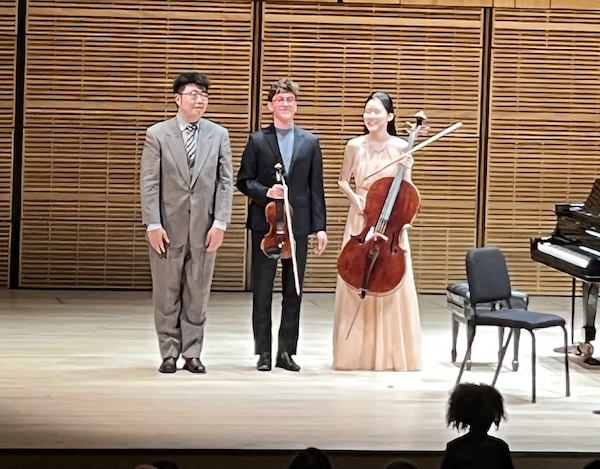
Young Concert Artists (YCA) has been helping launch exceptional musicians into classical music careers since 1961. If the organization were a person, it would be eligible for Medicare! Today the YCA board remains a vital force in spotting and promoting unusually talented young artists. That’s exemplified by Trio Azura, winners of the 2025 YCA International Auditions.
The Peter Marino Concert presented Trio Azura in its New York City debut at Carnegie Hall’s Zankel Hall on October 14, 2026. Their challenging and crowd-pleasing program included Piano Trios by Ravel, Mendelssohn, and contemporary composer (and Blogcritics favorite) Jennifer Higdon.
Trio Azura
Violinist Duncan McDougall, cellist Yejin Hong, and pianist Yanfeng (Tony) Bai met a few years ago as students at the Colburn School in Los Angeles. Today, as they continue their studies, they are ensemble-in-residence at Colburn and the YCA’s first ensemble-in-residence. From the audience reaction last night, I’d say New Yorkers would be eager to have them in residence here too.
The program gave the trio ample opportunity to express their expressive and technical skills. Their personal charm came across too, in both their playing and their spoken introductions. This is an ensemble that could develop some real star quality if they remain a unit.
Ravel
Glasslike clarity and a silvery tone lit the first movement of the Ravel Piano Trio in A minor. The cello-and-violin unison passages shone delicately, and the trio’s overall sensitive playing made the striking key change after the recapitulation all the more eye-opening. A buttery texture emerged as the movement approached its end.
The “Pantoum” movement glittered with a yearning, somewhat prickly sweetness that made the buildup toward the end especially effective. But it was the “Passacaille” (Passacaglia) that impressed most of all, fleecy at the start, with limpid simplicity from the piano. The intensity developed as the violin and cello climbed to their upper reaches. The performance exuded gutsy emotionality that in this music is achievable only with mastery of the underlying musical bones.
The finale was scintillating too, shimmering webs erupting in grand tumbles of virtuosity. Here the musicians’ technical skills came to the forefront.
I’m pretty sure this is the first time I’ve heard this Ravel Piano Trio in concert. As such, the Azura Trio’s performance revealed to me a whole new world in it.
Higdon
We writers on music often use the word “color” to metaphorically indicate variations in timbre, depth of sound, and perhaps attack as we try to convey the ineffable in words. For Jennifer Higdon, color has been a literal part of her musical imagination. Her 2003 Piano Trio is one of the pieces where she expressly uses color as inspiration. Its two movements are titled “Pale Yellow” and “Fiery Red,” descriptions that likely ring true for many listeners.
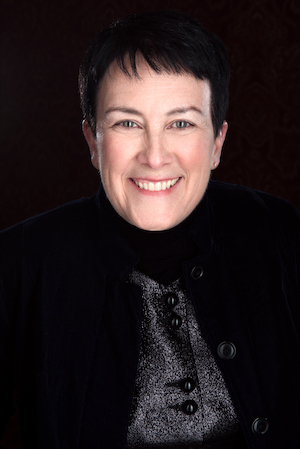
In “Pale Yellow” the instruments’ colors mingle gently, then more robustly, the mood remaining airy and optimistic. Throughout, and notably in the lovely flowing passages of counterpoint at the heart of the piece, I could sense the musicians’ feel for the music and confidence in their playing, both as a unit and individually.
“Fiery Red” called upon a truly virtuosic synchrony that the trio would display further in the Mendelssohn to come. The movement is just plain fun, too, a rhythmically complex onslaught of furious 16th-notes broken only by one intense choppy section and a few sparer passages where I marveled at the palpable tension. Fun to hear, obviously a devil to play, and brought off with a devil-may-care spirit.
Mendelssohn
Mendelssohn’s wonderful Piano Trio No. 2 in C minor showed that Trio Azura isn’t afraid to tackle the bigger challenges of the classical canon. The first movement showed remarkable agility, especially from pianist Tony Bai. But an elegant, almost dance-like feel persisted through the sturdy and stormy sections as well as the quiet ones.
Mendelssohn’s exquisite harmonizing shone in the slow movement. The musicians applied a velvety texture and soft colors while sustaining the music’s forward motion. In the Scherzo they again called on their impressive, and expressive, ability to breathe-play as one.
For me, the Finale summed up all their combined skills. It’s a movement that has always stuck with me and is probably my favorite. Trio Azura’s vigorous and thoroughly thought-through rendition was a joy to hear. I rocked with the scales as they pushed and pulled against each other, the timing just flexible enough, the expression continuously charming.
And there was a surprise in store. After a small and, I have to say, funny equipment mishap was cleared away, the trio delivered as a superb encore their own arrangement of Gershwin’s “I Got Rhythm,” complete with a lyrical prelude. Hong’s bass lines from the cello supported melody and comping from violin and piano. In a central section, the three joined in powerful ensemble passages. The piece was a pure delight and showed yet another skill that these award-winning young musicians seem to abundantly possess.
Trio Azura is appearing around the U.S. this fall. Visit their website for their schedule. As for this year’s YCA Auditions, the final round takes place November 8 in New York.