 Blogcritics The critical lens on today's culture & entertainment
Drummer, Engineer, Scholar, Visual Artist–and Author
The Grammy Award–winning drummer behind legendary rock band Living Colour has written an excellent new book. Called The Secret Life of Beats (Permuted Press, February 2027), it transports readers from the streets of the Bronx to the New York music scene of the ’80s and across the globe, introducing them to the extraordinary artists and cultural figures with whom he has worked for decades.
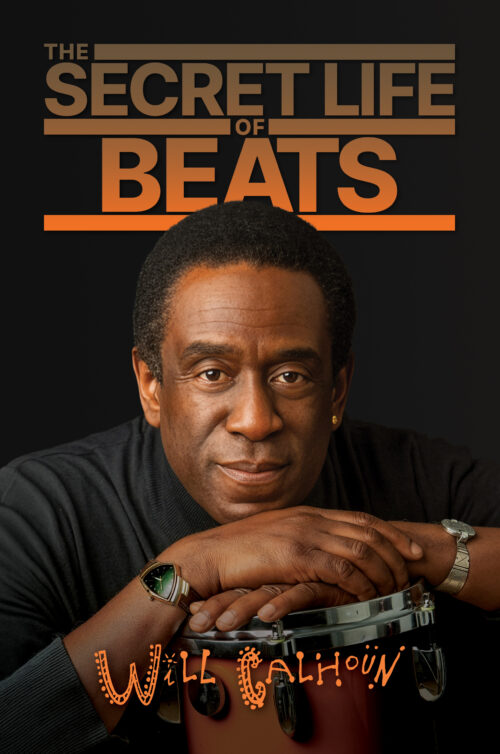
Blending memoir, travel, music, and spirituality, The Secret Life of Beats is about curiosity—about what happens when you walk into every room, every culture, and every tradition genuinely open to what it has to teach you.
A Bronx native, Calhoun was a high school athlete long before he became a professional musician, but music was always his destiny. He studied recording engineering at Boston’s prestigious Berklee College of Music, graduating with honors. The discipline has served him well throughout his career.
Not long after Berklee, guitarist Vernon Reid recruited him into Living Colour, alongside singer Corey Glover and bassist Muzz Skillings. The band’s 1988 debut, Vivid, made Calhoun one of rock’s most celebrated drummers, with honors in both Modern Drummer’s readers’ poll and Rolling Stone’s critics’ poll. He has won two Grammys with the band, including Best Hard Rock Performance for “Cult of Personality.”
But rock was never Calhoun’s only musical language. He has recorded or performed with Harry Belafonte, B.B. King, Wayne Shorter, Ornette Coleman, Paul Simon, Pharoah Sanders, Joe Lovano, Lauryn Hill, Herb Alpert, Public Enemy, and Mick Jagger. His solo albums include Housework (1994), Drumwave (1997), and Live at the Blue Note (2000).
And while performance has been at the forefront of Calhoun’s career, his horizons are far broader. For more than 25 years, he has traveled through Africa, Brazil, Australia, and the Caribbean, studying indigenous drumming traditions, often with village masters who play for ceremony—not the roar of the audience.
Calhoun pays it forward, teaching at NYU and serving on the boards of the Bronx Music Heritage Center, which offers free community music programs, and The Way of the Rain, a performance-art project about climate change.
He has broadened his scope even further, experimenting with electronic percussion and visual arts, including photography. He has confessed that his idea of a late-night indulgence is to browse camera gear he can’t yet afford.
It is a life with no single beat, which is exactly how Calhoun likes it.
Speaking Up
Calhoun doesn’t think artists can stay quiet right now, whichever side they’re on. “You can’t expect things to go down in the world today and artists not open their mouths,” he told me in a recent interview. “Writers, poets, musicians, filmmakers, painters, sculptors, we have to really make our voices loud now.”
Living Colour has done its share. Bruce Springsteen has long supported the band, and Living Colour has covered his “American Skin (41 Shots),” written after New York police killed Amadou Diallo.
“Cult of Personality” was political from the start, and Calhoun is a little dismayed that it hasn’t dated. “It’s still relevant,” he says. “Unfortunately.” Touring Russia, Eastern Europe, and Italy gave its lyrics new weight. Singing about Mussolini in Italy, or about Kennedy after learning more about Cuba and the civil rights era, rang “a special bell” in his head. The names change with the decades and the geography, but the theme remains the same.
The song also reaches listeners the band might not expect. Touring during COVID, Living Colour played to fans in MAGA hats who didn’t believe in the virus, drinking beer and singing every word. Calhoun recalls encountering them at perhaps eight of twenty shows.
He understands how one song can mean different things to different people. Springsteen’s “Born in the U.S.A.” didn’t land with him when he heard it on the radio. Then his labelmate Stanley Clarke released a cover with a voice reading the lyrics over the groove, and Calhoun finally heard how strong the verses were. “I think a lot of people overlooked that song as just a hook,” he says.
A Democratic Music
Calhoun has called jazz “a sonic display of life,” even knowing that many older players, Miles Davis among them, disliked the word jazz as a set of handcuffs. To him, the music is “completely democratic, top to bottom.” A jazz tune can hold an Irish folk line, a hip-hop lick, or a classical phrase. He likes to mix Haitian, Senegalese, Bronx, and New Orleans beats into one pattern, the same way he might wear a Marley shirt, pants from Senegal, and socks from Greenland.
Jazz holds the whole range of feeling, too: anger, jealousy, hurt, depression. “Listening to some saxophone solos,” he says, “you hear people asking for help.”
That openness comes back to him. Vinnie Colaiuta once stopped him to praise his ride cymbal and hi-hat work on “Cult.” Tabla players, Cuban batá drummers, and djembe players in Mali, Senegal, and Côte d’Ivoire have told him they dig the drum part, including musicians who play not for entertainment but for religious ceremonies, weddings, and healthy pregnancies.
His willingness to listen shapes how he moves through the world as well. In Vienna, a friend’s wife once cooked him pork and sausage, which he doesn’t eat. He didn’t tell her. He ate a little, filled up on rice and sauerkraut, and let her enjoy having cooked for him.
There is room, too, for other people’s choices, even when they don’t go his way. He has been told not to play something, to get off a stage, or that someone else got the job. “It’s okay,” he says. “I want to be honest about my expression.”
The Kick Drum
Calhoun’s older brother taught him to see the drum set as a pyramid. The kick drum is the base, wide and solid enough that the hi-hat, snare, and toms can all dance on top of it. In jazz, the ride cymbal is king, and the kick sits back. In rock, it becomes the road itself. “The cars are the other musicians,” he says, “and the kick drum allows everything to drive over it.”
On stage, that foundation stays put. At a televised event, he keeps “Cult” about 97 percent true to the record, tempo included. He learned why at a huge festival in Brazil, when the band ran out of time with 100,000 people screaming for the song and a stage manager telling them no. They played it anyway, faster than usual. Listening back, he didn’t like it. “No one knew why it was faster,” he says, “but it was faster because we were dealing with other stuff.”
Technology serves the same goal. For the 35th-anniversary Vivid shows, he returned to the fatter, wider drum sound of 1989, after years of preferring shorter, tighter tones. He liked it enough to keep some of it. He has also sampled the drums from the original recording. In an arena, a small mic triggers those huge 1989 sounds, which he blends with his kit today. “It’s peanut butter and jelly,” he says. “If you want more peanut butter, you want more jelly, it’s up to you.” He doesn’t use technology to drift from the original, he says, but to contain it and keep it there.
Behind the Glass
Calhoun is quick to share credit with Ed Stasium, who produced Living Colour’s first two records. A single suggestion from Stasium transformed “Cult.” The band had been singing the title first and the lyric after; Stasium told them to flip it, say what they meant, and make “Cult of Personality” the hook. “It went from a candlelight to Broadway lights,” Calhoun says.
Stasium’s daughter, born deaf, came to the studio every day to watch the band record. Glover insisted they find a way for her to experience the music, and Living Colour released what Calhoun describes as a closed-captioned version of the record—something he says no one had done before.
Calhoun tells the larger story in The Secret Life of Beats—part memoir, part musical journey through an extraordinary artist’s life. It follows him from a music-filled childhood through the downtown New York scene of the ’80s and on to Brazil, Australia, and Africa, with encounters along the way that include Harry Belafonte, the Rolling Stones, Wayne Shorter, Public Enemy, Oumou Sangaré, and Nelson Mandela.
At its center is the curiosity that has driven everything else: the conviction that the music always has more to teach anyone willing to listen. The Secret Life of Beats is available for preorder now from Permuted Press.