 Blogcritics The critical lens on today's culture & entertainment
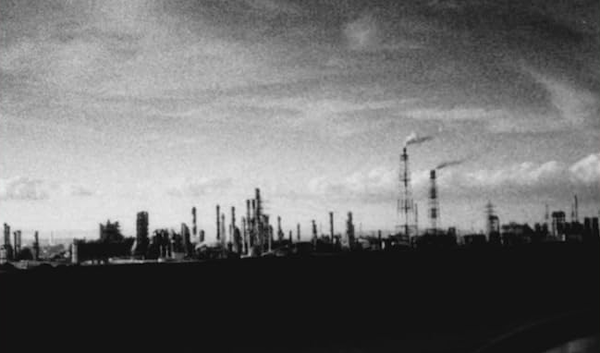
The short stories in The Black Box are likely the first works by Greek writer Mata Kastrisiou that English-speaking readers will encounter. These dreamlike pieces, some very short indeed, have the particularity and often the precision of poetry, preserved well in Kostas Kaltsas’ translations.
Kastrisiou’s stories view children and family from surreal angles. In “Snow Milk,” a mother keeps her child locked at home, fearful the girl will abscond into their supposedly dangerous town, a place whose name the child has never been taught. In the two-page “Video Game,” a boy fantasizes about disappearing into a game world where he and fellow players can conquer their enemies and “ascend over the city as great heroes.” In “The Garden,” a widow dreams of a beautiful personal apocalypse in which her husband is re-born as a child.
The Real and the Unreal
Whatever the setting – whether a humble home on Earth, an asteroid in space, or an inner world – dreamlike shifts in perspective and reality dominate. The reader must often drill deep to discover characters’ relationships and determine (or guess) a location. At times one must violently suspend one’s disbelief to accept statements like “And the girl gave birth to her mother.”
That line opens “Party on the Veranda,” which closes with typically fanciful and vaguely disturbing imagery:
So, the girl who gave birth to her mother, her child in her arms, sits now in a wrought iron chair, girl and mother pierced alike by the June night. In the strange summer of ’62, in this embryonic Athens, unaccustomed to its own bright lights, trying in turn to soothe, to dandle—if it can—the wilderness it inherited.
What is the “it” of that last sentence—the summer? Athens? the inter-being of girl, mother, and chair? We aren’t certain. In another story, a robot caretaker turns into a human spouse in the protagonist’s imagination – or was it the other way around?
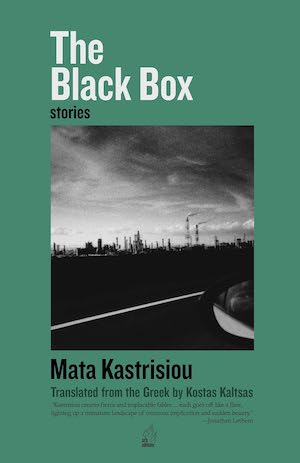
On the whole, the longer stories (though still short) are more fulfilling than the true miniatures. The title story is among the most compelling. Depicting the inner life of an elderly man with dementia as he walks a beach, Kastrisiou reflects on the role of the storyteller. The old man envisions seagulls tearing each other apart trying to survive a scarcity of food, but the image fades quickly. Though it was a distressing flight of fancy, he’s sad that he can no longer “tell a complete story.” He knows that things have a fundamental essence that’s not dependent on what we name them, that they’re “their own density, but this gives him little comfort.”
Yet in the end, after he envisions a plane crash,
What matters isn’t whether you can tell a story. There are always sources for the evidence of place and time…And there’s always the black box that holds captive inside it the plane’s exact course from takeoff to landing and is the only thing that survives a crash. / What matters is that you’ve lived a story.
The old man returns to his house, where “voices and laughter signal the start of lunch,” and resolves, it seems, to never speak again. The story is done, lived, even if untold and unseen.
“Inside the drawers, the calendar angels have hidden the years beneath the good silverware that shines and slashes through the darkness,” Kastrisiou writes in “A Balcony in the Sky.” Whether we’re stashed away somewhere or freely gazing at the stars, we live our stories.
Black Box is published by AK Press together with ARB Editions, a collaboration with the Anarchist Review of Books. It comes out September 1, 2026 and is available for pre-order.