Blogcritics The critical lens on today's culture & entertainment
I was nine years old when President John F. Kennedy was assassinated, 50 years ago. It was a rainy November day in Chicago, and we had indoor recess. Lunch was noon to 12:30, and, relegated back to our fourth-grade classroom for the balance of the hour, we colored in coloring books and watched Bozo’s Circus on our in-class TV. I was sitting on the floor in front of the TV when someone broke to WGN’s programming to announce that “shots had been fired” in Dallas, where President Kennedy was in a motorcade.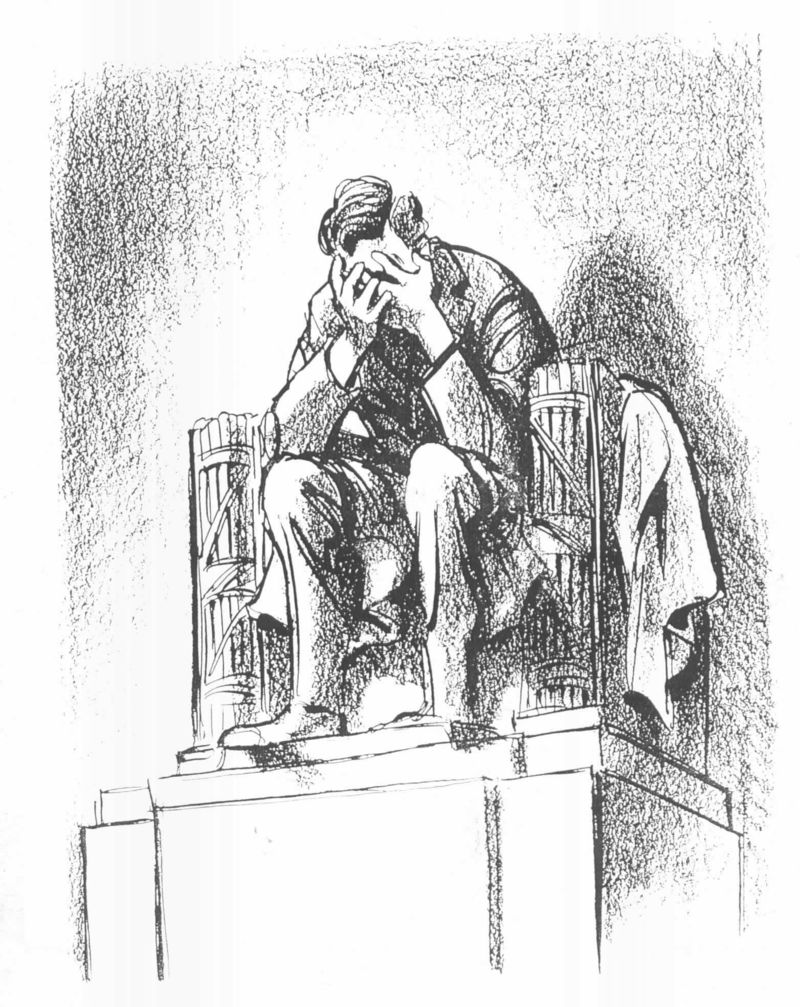
The moment registered with me enough that I still see it vividly whenever the Kennedy assassination is mentioned. It is the first thing that comes to my mind before the image changes to Jackie in her pink suit climbing out the back of the bubble-top limousine and John Kennedy Jr. (Jon-Jon) bravely saluting at the funeral. Those last two images, I am certain are indelible for having seen them so often in the intervening years: in Life Magazine, preserved in plastic by my parents, on television, on the Internet.
After lunch, I recall, we went to library. The librarian was reading to us when the school’s intercom broke in with its harsh buzz. The principal in tear-stained voice announced Kennedy’s death. Dismissed from school early, we all went home through the silence of the adults around us. We knew something terrible happened, but could not fathom what or how significant an event it was. Not in the moment.
Over the next four days, the entire nation stopped. Eyes glued to the television, whether watching Walter Cronkite or Chet Huntley and David Brinkley, or other coverage, the adults were numb or weeping. Even my father, a construction electrician, stayed home the next several days, work on a major Chicago building project halted until after the funeral. I recall it raining the entire time. People argued incessantly (it seemed) about the bubble-top of Kennedy’s car and whether he should not have ridden in the open air.
As kids, we were bored by all the television chatter, but some of it rubbed off. We knew by the time the funeral was over and Lyndon Johnson had been sworn in that the world had changed in some fundamental way.
My parents’ generation had lost much of its innocence during World War II, but the assassination of one of their own — the first president of that generation: young, idealistic, a naval officer turned politician — hit hard. There was much promise in Kennedy amongst my parents’ generation, hearing the call of “Ask not what your country can do for you, but what you can do for your country.” It was a call that formed the backbone of what my parents tried to teach me at the cusp of the New Frontier. And it wasn’t (only) about service and philanthropy. It was also about pushing our nation forward beyond its limits — pushing the outer edge of the envelope: space exploration, science, medicine, education, and (finally) equality for all.
The famous political cartoonist Bill Mauldin of the Chicago Sun-Times probably best captured the mood of the nation during those days with his indelible rendering of Abraham Lincoln sitting in his memorial, weeping along with everyone else. My father, the tough hard-hat came home from work one evening the next week after the funeral carrying with him copies — prints of Mauldin’s cartoon — one copy for each of us to remember the moment.
It’s hard to believe it has been 50 years, and I am that old. Older than Kennedy when he died, older than my parents who had to explain it to us. As I had to explain 48 years later to my then nine-year-old son how the world again changed catastrophically with the September 11 World Trade Center bombing.
As the nation remembers JFK 50 years later, I wonder what he would make of us now? I think he, like Lincoln in Mauldin’s famous political cartoon, would be weeping. Yes, we carried on with the New Frontier, we went into space and walked on the moon. An African-American now sits in the Oval Office. Yet, our highways and bridges are crumbling while in Washington, some try to discredit the President and dismantle many good programs began, and only dreamed of, back in 1963 when we were at the cusp of the New Frontier. Too many politicians endeavor to diminish, if not extinguish, the great good government can provide, and the greater common good for which we have a government at all, by choking off investment in education, infrastructure and the social safety net necessary to keep us moving forward.
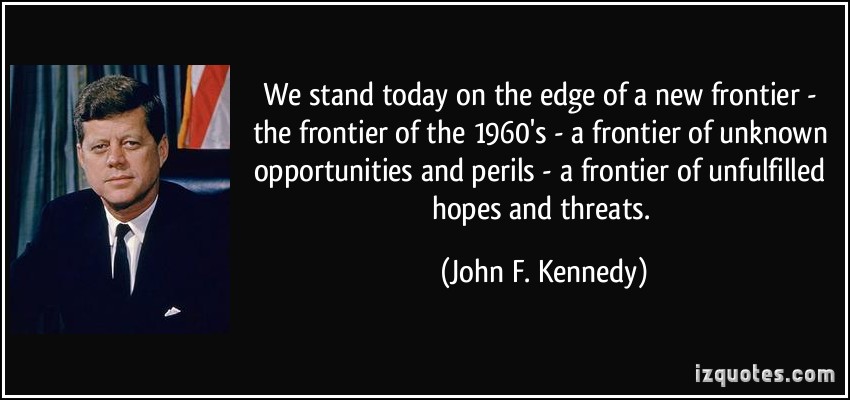
“We stand today on the edge of a new frontier…a frontier of unknown opportunities and perils; a frontier of unfulfilled hopes and threats.” How true and resonant are Kennedy’s 1961 inaugural words are still today. Do we relegate them the trash heap of a weary 21st Century or do we embrace them as a challenge for our age, and that of generations to come?