Blogcritics The critical lens on today's culture & entertainment
There are currently 23 U.S. states that allow the use of medical marijuana, 11 that allow limited use of certain products with lowered THC (the active ingredient in marijuana), and two states that allow the production, retail, and use of marijuana for recreational purposes. While legalization is creating a divide in the nation among advocates of legalization and those opposed, it raises good conversations about the impact of reducing the black market sale of marijuana and the effects of increased recreational use of the drug.
For decades, marijuana has been stigmatized as a “gateway drug” that will pull its unsuspecting victims into the depths of hard drug abuse if they’re not careful. And while a reported 9% of Americans do suffer from substance dependency on marijuana, compare that to 32% of the nation dependent on tobacco. We know the ill effects of cigarette smoke, from lung cancer to throat cancer and everything in between, but marijuana as a substance actually has benefits to our health despite its tarnished reputation of being a “drug” (as if caffeine, alcohol, and nicotine weren’t).
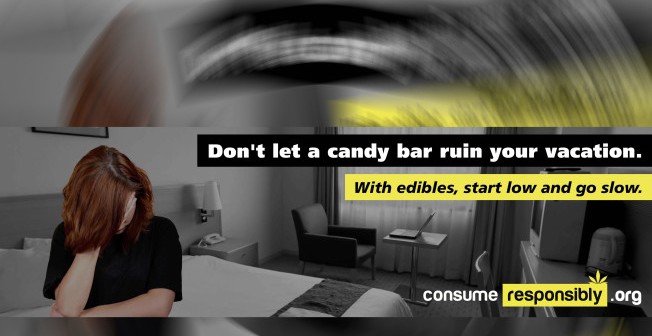
It seems the problem for many users and even advocates of recreational marijuana is that they simply do not understand the varying effects of marijuana on the brain that can make marijuana more easily abused as it becomes more widely available. One group, The Marijuana Policy Project, is taking action to educate the public on what it calls decades of “exaggeration, fear mongering, and condescension.” The Colorado-based group’s mission is to specifically target tourists visiting the state to enjoy the recreational use of marijuana. Since smoking is banned in almost all public places in Colorado, many people consume edible versions of marijuana, in the form of a candy bar for example, where the effects are quite different and longer-lasting than when smoked. Their campaign to educate the public on the law and the smart use of marijuana, called Consume Responsibly, will launch in Colorado with print and online ads and literature to be distributed to retailers. The group hopes to start advocating in Washington State in the next few months as well.
As marijuana in general becomes more mainstream, let’s clarify how it works, and how it doesn’t. First, consider marijuana’s effect on the brain through the main psychoactive ingredient in marijuana, THC. THC is the chemical that produces the psychological effects of cannabis, and the levels of THC are dependent upon how the marijuana plant is cultivated. THC works by attaching to receptors in the brain and stimulating the cells to release dopamine, a neurotransmitter that helps to control the brain’s “pleasure center,” giving users a feeling of happiness.
Many people do not understand that THC (tetrahydrocannabinol) can actually be removed entirely from marijuana, or even synthesized; take for example the drug Dronabinol, a man-made version of THC used to treat nausea and vomiting caused by chemotherapy. It takes at least 10 micrograms of THC per kilogram of marijuana to create any sort of psychoactive effect. The message is that not all marijuana is the same, and it can be regulated.
While many advocates for the legalization of marijuana are fighting to educate the public, many others are looking to capitalize on it; just take manufacturers of the popular vaporizers. Vaporizers are most notably known for smoking tobacco, but they are actually ideal for marijuana users. Vaporizers work by heating but not burning marijuana so the user does not consume the cancer-causing carcinogens of smoking. Marijuana vaporizers are even reported to be part of the gift bags at the Oscars this February, specifically a Haze Vaporizer, by Haze Technologies, the size of a small flask, plus two bowls to either mix substances or double the effects. And after Sara Silverman showed off her “pot-filled-e-cigarette” on the Emmys red carpet, we had just one more example of how marijuana use is becoming more accepted and more common, whether we like it or not.
So, what’s next in the great marijuana debate? States up for voting on legalization of marijuana this November are Alaska, Oregon, and Florida, as well as Washington D.C. Washington D.C. voters are voting on whether to allow possession of marijuana up to two ounces, Floridians will be voting on the legalization of medical marijuana, and Alaska and Oregon are taking the approach of Washington State, looking to tax and regulate the production, sale and use of recreational marijuana.
One major draw to legalizing marijuana is tax revenue. Since legalizing the recreational use of marijuana this past July, Washington State expects to collect “taxes of $3 million on sales of $12 million as of September 8,” as it currently imposes a 25% tax on all levels of marijuana retail and production.
Colorado hasn’t done too badly either. Strictly based on sales of retail marijuana, Colorado has made about $18.9 million in state taxes since legalization in January of 2014.
While, as Adrienne Lu puts it in Stateline, “advocates of legalization say that however much tax revenue legal marijuana generates, it is money that would have otherwise ended up in the black market,” those opposed to the legalization of marijuana have another argument that revenue raised by the sale and production of marijuana will not be sufficient to cover the costs to society of increased marijuana use. This debate has no solution as it stands today but it will be interesting to watch how more widespread acceptance and use of marijuana will affect not only state tax revenues but also the mindset of the general American public.