Blogcritics The critical lens on today's culture & entertainment
NAZA
Directed by two of the co-directors of the 2024 Oscar-winning documentary No Other Land, Yuval Abraham and Rachel Szor’s latest film, NAZA, places Israel’s responsibility for the mass murder of innocent Palestinians in Gaza front and center. NAZA won the Special Jury Prize at the Venice Film Festival earlier this month and had its North American premiere in the Main Slate section of the 64th New York Film Festival.
Though Israeli leaders like Benjamin Netanyahu have vilified the filmmakers and threatened to revoke their Israeli citizenship for treason, the Guardian announced that it will “make NAZA available for global audiences for free” after the film’s theatrical run, “releas[ing] NAZA via theguardian.com in late November as part of [the paper’s] commitment to fearless, independent journalism.”
What happens in Gaza stays in Gaza
The International Federation of Journalists report that the war or genocide in Gaza (the term depends upon whom you speak to) has been the deadliest conflict for media professionals ever. Reports state that the IDF killed 247-260 journalists since October 7, 2023. Israel affirms its decmocracy, but its strict policy of media censorship prevents information getting out. Journalists face jail or death for writing or photographing what goes on there.
Knowing their and their subjects lives’ would be in danger, Abraham and Szor decided to bring out the knowledge that global journalists and the global flotillas that have tried to bring aid to the starving Palestinians already possess. They risked their lives to get the information past Israel’s fierce media blackout. They did this knowing Israel’s leaders have banned the use of the word genocide and persuaded countries like the UK and U.S. to label as antisemitism anyone calling out Israel for its Gaza policy. Indeed, Israel’s stance has been that if massacres of men, women and children in the thousands have occurred, war justified their deaths.
Tackling the problem of going on the record
Thus, the filmmakers counted the cost as they canvassed individuals who corroborated and testified to atrocities happening in Gaza. They spoke to over 100 people to triangulate testimony. They wanted an insiders’ perspective to ring out loudly and clearly. They specifically wanted to hear from people who agreed to go on record.
Why? Because it would be much more difficult to dismiss and deny insider whistleblowers. It would be harder to propagandize elite military confessing their feelings about killing innocents they refer to as NAZA, a Hebrew military acronym for Nezek Agavi.
A euphemistic term
NAZA refers to “collateral damage” or the estimated number of civilian deaths accepted during a military strike. Rather than words like “baby,” “mother,” “children,” “old people,” NAZA became the preferred word, to desensitize those asked to give the go-ahead to bomb a building with numbers of civilians not in active combat against the IDF.
But how does one secure elite Israeli intelligence officials and military personnel to report on the AI technological systems and AI programs used to systematically hunt down, then bomb NAZA at night when they are at home?

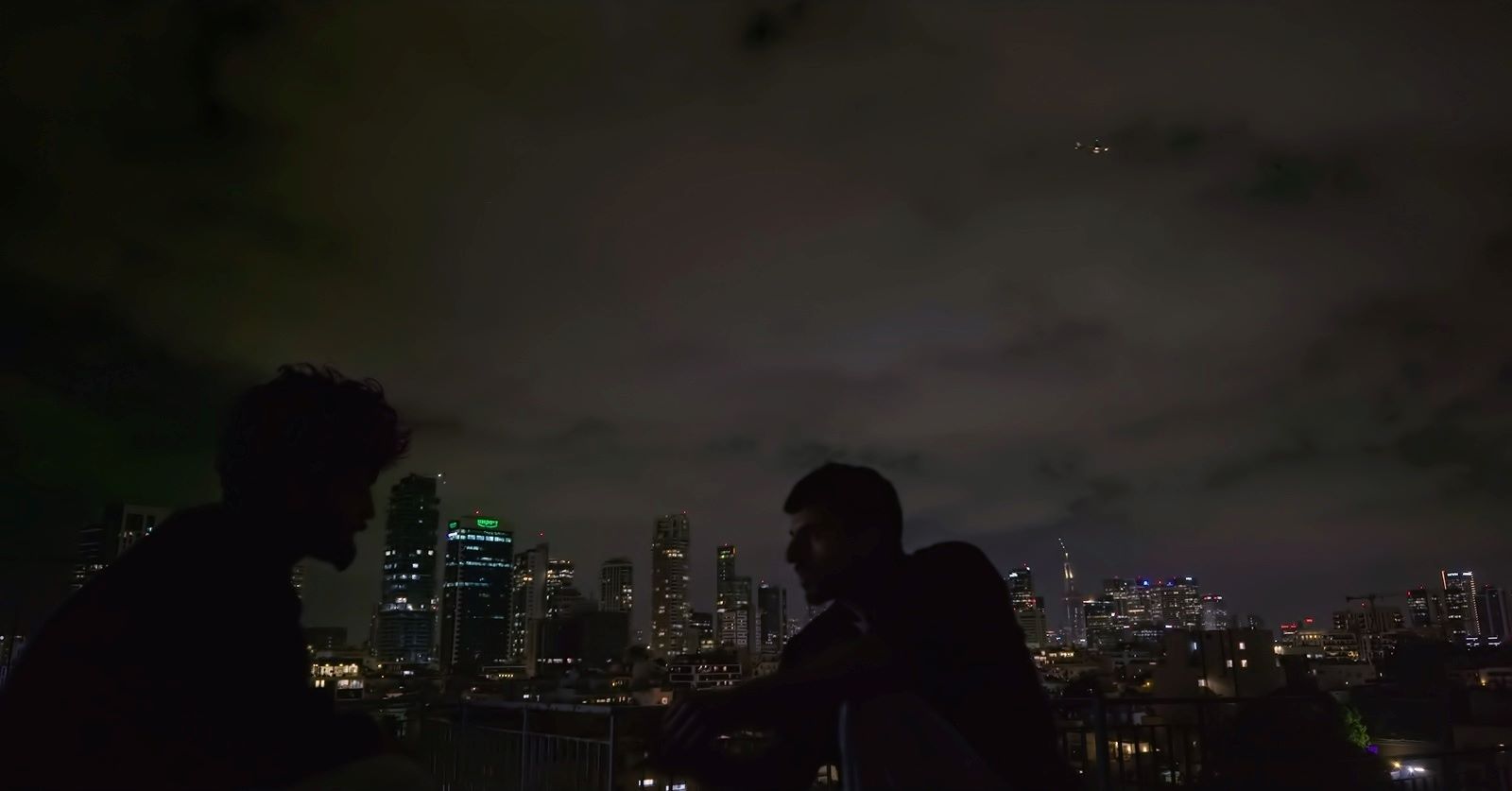
The film builds “on revelations first published by the Israeli-Palestinian publication +972 Magazine, Hebrew-language outlet Local Call, and the Guardian between 2023 and 2025.” Promising to protect their sources, Abraham and Szor elicited 24 elite Israeli military officers to become whistleblowers. Maintaining their subjects’ anonymity, the filmmakers disguised their voices and placed them in shadows and darkness with only their outlines showing. As a backdrop, Szor and Abraham filmed the perpetrators of war crimes as Abraham interviewed them on the rooftops of buildings in Tel Aviv.
Symbolically, they shoot the footage of these 24 confessors and their interviewer against the beautifully modern city lighted at night. Tel Aviv’s name in Hebrew means “white city.” The film includes archived clips of the city “built on the sand” founded in 1909 by the Rothschild family and others.
Why intel agents blow the whistle
The elite intelligence agents testified for various reasons. Some confessed out of curiosity, or to be in a film. Others answer Abraham’s questions to promote themselves. As you listen to their testimonies you hear their emotions and attitudes. Some boast about enjoying killing as part of an elite group with a vital mission.
Initially, right after the Hamas attack, the officers relished bombing Palestinians. Increasingly, they used AI technology. Elite Israeli intel officers surveil Palestinians 24/7 via their phones. They can trace Palestinians’ locations down to the floors of their apartments. AI also reveals the number of people who live in the apartments, down to their identities, genders, and ages.
According to the elite officers, Palestinians in Gaza knew and know that Israeli intel surveils them. At times the officers comment that from their screens, as they hunted down their prey, it felt like a video game. However, as time progressed and they became more aware of the consequences, their attitudes changed and some regretted what they did.
Some of these officers talk to expiate their guilt. Interestingly, in light of continuing deaths in the thousands, the subjects admit that they and the AI programs have made mistakes. For example, sometimes no one from Hamas occupied a targeted building, only NAZA. Still, whether 10 or five or 13, whether children or grandparents, aunts or uncles, the elite intel agent gave the order to bomb the NAZA, quantifiable as acceptable collateral damage. Daily killings happened regardless of the culpability of the people killed or the presence of Hamas fighters. At the end, one of the military whistleblowers calls what they did and are still doing a genocide.
Hard-to-ignore testimony
Having written articles for the Guardian and Palestinian outfits +972 Magazine and Local Call, Abraham felt that live testimony by those elite officials systematically bombing neighborhood by neighborhood, street by street would explicitly define what Israeli leaders refused to characterize as anything but self-defense.
At times Szor’s cinematography picks up interiors of Israeli homes where people enjoy dinner with family, or watch the TV news. They took this footage before Donald Trump illegally attacked Iran without a declaration of war. Since then Iran has bombed Tel Aviv and hundreds of Israelis have left the country, facts that Israel censors. But the film’s edits contrasting Israelis enjoying their evenings at home with the bombed Palestinians surrounded by rubble, their homes annihilated, are stunning. We see how the Israeli government affords peace and comfort to one group at night while these elite military officers explain that they go on night hunts to kill because that is maybe when Hamas fighters join their own families.
One elite official proud of his stature and mission says, “We bomb at night. That’s when they’re at home.” But we learn that often, they missed the Hamas individual. Identifying how many NAZA occupy the building, the elite squad kills anyway because they have held to an “acceptable” limit of NAZA. Regardless, Palestinians die; that is the point.
Importantly, the dispassionate, unloaded term NAZA objectifies children, mothers, aunts, fathers, family. Conveniently, it depersonalizes the empathy of elite intel officers. As part of supporting an expert, cold killing machine, the term NAZA works to dehumanize. It also works as a film title to expose a genocide from the perspectives of elite military officers willing to go on the record to explain the systematic annihilation.
Learn more about the film at the New York Film Festival 2026 website.