Blogcritics The critical lens on today's culture & entertainment
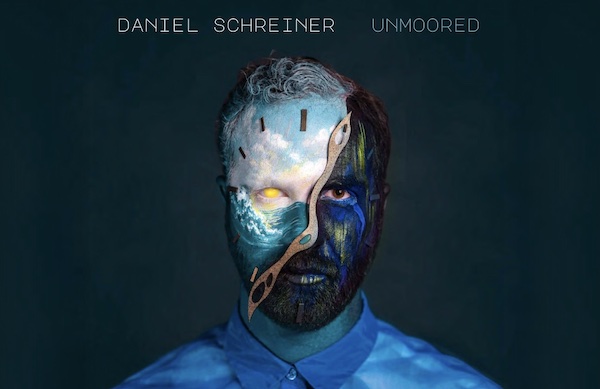
Pianist Daniel Schreiner’s concept for this portrait album began during the pandemic, with a pair of works by Sato Matsui, the new “Oiseau Solaire” and the pre-existing “Oiseau Lunaire.” Schreiner envisioned the two contrasting pieces bookending his album. They do that nicely.
The neo-Romantic “Oiseau Lunaire” could be a nocturne, except perhaps for a battery of piled chords that take it briefly to a more aggressive place. It oscillates between traditional and modernist harmony but remains intriguingly introspective. “Oiseau Solaire,” by contrast, is a sparkling composition of light and lightness, full of not-quite-surprises as it dances up and down the piano’s middle and upper registers. Close harmonies introduce complexities that always resolve, not via cadences but via unexpectedly soothing key changes.
The first of the “Three Short Dreams” by Ramin Rochandel strikes abruptly from the bass register. The three short pieces together have an introspective and somewhat improvisatory feel. Schreiner uses an interesting technique of striking a note hard without leaving the usual gradual decay, instead just a distant wisp of sustain. He also plucks the string, which sounds very much like a pizzicato accent from a violin or cello and produces a similar dim decay.
Stuttering high notes and deep plucks in the bass give the second piece a nervous sheen. In the third, doomy bass lines suggest definitive statements but support frothy sprays of higher notes. Over time the movement in the bass grows busier and more assertive, with long, growling sustains that together with the reedy upper-register figures gain a richness that evokes an orchestra or even a hearty choir.
Music for Art’s Sake
The abstract paintings of Joan Mitchell, and in particular a series inspired by music, touched off “Chords II, III, and VIII (Hommage à Joan Mitchell)” by Luciano Leite Barbosa, composed with Schreiner in mind. The most of the music on the album, it’s a quarantine-era piece. In it Barbosa evokes the stretchy sense of time that many felt during that period. Composer and pianist worked closely on it.
The drifting, impressionistic music does reflect something of the colorful and expressive abstraction of Mitchell’s art, and I do hear what Barbosa refers to as “a kind of flexibility of time in the piece that was meant to reflect the impression that some days would move faster than others.”
Still, I found the 12-minute piece only intermittently evocative and often bland. Chords and accents would appear and evoke in me only the question, “Why?” It strikes me that in this piece the composer neither finds something new in the piano’s manifold expressive possibilities (as Rochandel does in the “Three Short Dreams”) nor glosses expressively on existing traditions (as Matsui does in “Oiseau Lunaire”).
So to my ear it’s something of a relief when the “bluedream” of Brittany J. Green goes beyond the realm of pure pianism. The piece opens with rumbling deep notes along with clouds of field recordings from nature. A couple of minutes in, a contemplative prologue gives way to an active wash of rhythmic notes and chords enmeshed in coruscating electronics.
The result is a fusion of computer music, which could almost have come out of prog-rock, with sometimes jazzy acoustic piano and natural sounds, including subtle touches of the composer’s own whispered voice. The excitement grips and doesn’t let go. An epilogue wafts us back to the guarded energy of the intro, but what has come before continues to resonate. It’s my favorite piece on the album.
Vocal Chords
My last encounter with Nina Shekhar was on a Christmas album from The Crossing a few years ago. There she created a quite original composition out of words from Christmas carols. Here, in “Vocalise,” there are no words, and no human voice either. A “vocalise” is traditionally a wordless piece for voice, so applying the term to a piano work raises the question: Does this music for piano music relate to the human voice in a particular way?
It can spur the ear to imagine singing, and in places also humming, growling, and other sounds that can issue from a human throat. Hewing mostly to a major-scale mode also suggests singing, specifically the comforting sort, like a lullaby. Shekhar references songwriting in the liner notes, and some internal elements reflects song structure – another nod to the voice, you could say.
But most of the drama lies in the contrasts between the simpler dolce passages and the more strenuous ones. The piece stands on its own as a powerful piece of music without the need to reference any particular parallel or source.
Its ultra-simple ending seems to call for closure, and Schreiner provides that by finishing the album with Matsui’s glowing “Oiseau Solaire.” It’s a solid ending to an accomplished and often exciting first portrait album.
Unmoored from pianist Daniel Schreiner is out now on New Focus Recordings and available at Bandcamp.