 Blogcritics The critical lens on today's culture & entertainment
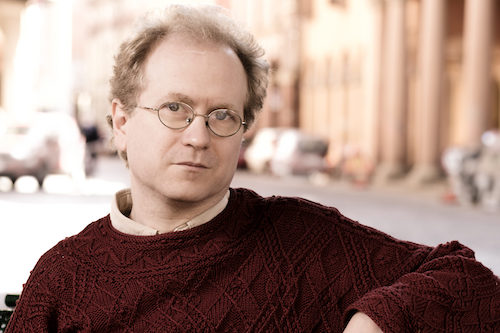
Pianist/composer David Salvage flavors his new album, Dreams of Love and Travel, with ingredients from modernism, jazz, the Lisztian Romantic, and even American-Songbook pop. But these intentionally evocative solo piano pieces create a distinctive world.
Musical Portraits from David Salvage
The quintile time signature of the opening track and the unrhythmic second help bring the listener immediately into that richly emotional yet quirky world.
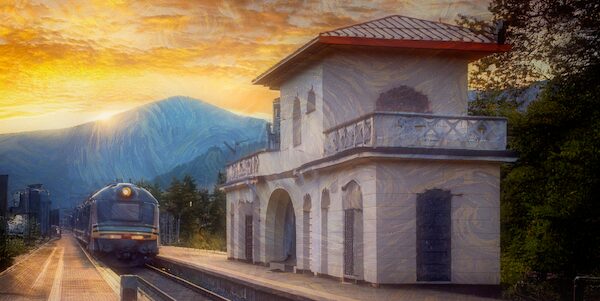
The roots of the pieces come from travels, mostly in Europe, and from reading Marcel Proust, whose work has inspired more than one composer. A wait for a train in the Apennines inspired the opening track (no pun intended). The cover art vividly depicts the scene, but devoid of human figures, perhaps reflecting the music’s purely instrumental nature. The piano is the voice.
Salvage’s compositions have an extremely communicative quality, quite apart from what they are meant to specifically depict. It sounds like a person is talking directly to you through the notes, even when the music is disembodied as on a recording.
The second and third tracks depict, respectively, a forest and high-altitude winds. You can easily imagine the waving of leafy branches in the mingling of consonant chords with dissonant punches, and then the wind as it moves from murmur to whistle and back.
When music is so baldly programmatic we should listen in two ways: with the context in mind, and purely musically. Both methods reward the listener here. Writers often use the vague word “evocative” in describing music even when the work in question doesn’t reference anything in particular. (I’ve been guilty of this myself.) The word applies here. On an abstract level the music both pleases and intrigues. But knowing the inspirations adds a level of appreciation for the composer’s skill.
Further along the album, the artist summits a mountain in Italy amid, the music suggests, chilly air. He alights in Virginia for a befuddled audio tour, where melody surfaces mutedly from a bed of pianistic static. He flies back across the pond to Germany for a slow barcarole depicting a mostly placid boat ride along the rivers of the Spreewald. Here as elsewhere in this collection Salvage makes good illustrative use of the keyboard’s full range.
A final travel piece, “Two Draughts from Lago Limbin,” takes us again to the mountains of Italy and a lake of apparently potable water. Obbligatos suggest a peaceful whiling away of a beautiful day, while scales and arpeggios seem to depict the slopes of the Dolomites as well as the drinking of the lakewater by a wordless narrator.
The album closes with a restless, indeed grumpy return to home and the everyday, titled “Rientry.” Like the other bookend, it churns along on an uncommon rhythm or time signature. Triplets alternate with straight notes in humming waves as Chopin-esque melodymaking floats overhead and underneath. An indecisive ending suggests the traveler is already looking ahead to his next journey.
In Search of Ticking Time
Salvage continues translating specific imagery into music with the seven-movement Moments from Proust. It’s a natural connection, both because of Proust’s famous preoccupation with small things touching off troves of memory and because of the importance of music in Proust’s (also seven-part) In Search of Lost Time.
The clustering of notes and selective sustains of the first piece, “Dreams of Travel and Love,” effectively convey the childhood imagination of the young author-to-be. Waltz rhythms sparkle in a movement set in a busy restaurant with live music. The spooky “Saint-Loup’s Watch” illustrates the ticking of a watch belonging to one of the sprawling novel’s key characters. Not surprisingly, Salvage couldn’t resist also musicalizing the supremely colorful Baron de Charlus, one of two characters reflected in the jolly, then hesitant fourth movement.
Throughout the Proust suite Salvage’s piano artistry reels characters into the keyboard like a roll into a player piano. Part two of the sequence begins with a sleeping scene depicted as both charming and impassioned, with a jazzy twist. It strikes me as especially French. A more fraught depiction of stillness follows with quiet theatricality as, harking back to the album’s opening track, Proust’s fictional counterpart Marcel listens to a street musician and hesitates, hesitates, before eventually dashing for a train. In this double-movement the composer’s muse seems to lose some focus. One just wants poor Marcel to quit woolgathering and get a move on.
Taken together, the scenes and stories from the composer’s travels and from Proust’s massive novel give the album the feeling of ballet music, full of stylized movement and accentuated emotional peaks. It’s a glowing and colorful journey.
The Road
Travels have inspired much music over the centuries, from Mendelssohn’s Hebrides Overture and Dvořák’s explorations of American music to Gabriel Kahane’s Book of Travelers and Cyrrca’s cross-genre epics. Dreams of Love and Travel is a worthy addition to that peripatetic tradition. It’s out now on New Focus Recordings and available at Bandcamp.