 Blogcritics The critical lens on today's culture & entertainment
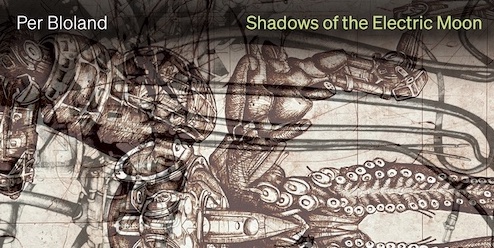
Composer Per Bloland is known for devising new ways to electronically generate sound from acoustic instruments. His inventions include the electromagnetically prepared piano and the MaxOrch app, which works with computer-assisted orchestration software. He applies these methods to music often inspired by literary works.
Understanding how the devices work can be thorny for the layperson. And which sounds the equipment is producing or processing is not always clear from listening to the music.
That could very well be part of the idea.
The thematic inspirations aren’t straightforward either. Exactly how the title track’s buzzings and clickings reflect or comment on the experimental prose of Norwegian writer Pedr Solis, for example, is something listeners so inclined can try to work out for themselves.
The average listener will be more likely to keep Bloland’s literary inspirations in mind as a kind of backdrop, if at all.
Regardless, the music offers solid rewards for a fan of experimental contemporary music.
The Dead Cry Out
The first piece, “Los Murmullos,” is a piano-and-electronics assault that uses a physical model of the electromagnetically prepared piano. Its industrial sound palette and aggressive score seem to contradict the eerie quiet of its inspiration: the town of the dead where Mexican novelist Juan Rulfo’s Pedro Páramo is set. (I admit I haven’t read the book; I’m going off my impressions of the movie version, which I have seen.)
There is a demonic quality to the music, though, that might suggest an underworld, or the nightmarish idea of dead souls unable to escape their earthly environs.
The piano, played by Keith Kirchoff, is mostly percussive. The electronics intrude with effects: fuzz, overtones, wails, glaring synthesizer sounds. Hushed interludes are no less menacing. The piece ends with a sustained vibration on what could almost be a violin or cello string, with a persistent high overtone.
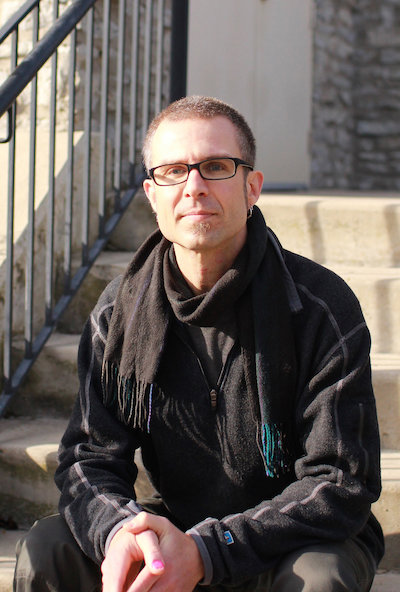
One of Bloland’s music’s most interesting characteristics is a seamless fusion of acoustic and electronic sounds. He mostly eschews melody and harmony. Rhythm emerges subtly, as in “Solis Overture,” or unexpectedly, as in “Displacement Pressure.”
For the latter Bloland uses electronically processed sound recordings of construction sites. But he also has the musicians of Unheardof//Ensemble (violin, cello, clarinet, and piano) imitate some of those sounds on their instruments. From those elements he threads together nine minutes of eccentricity that feel as if they carry an obscure internal logic.
Exciters and Shadows
“Points of Light in Shadow” and “Shadows of the Electric Moon” employ sound exciters, devices placed in contact with an acoustic instrument (cello and snare drum respectively). These gadgets do their best to acoustically reproduce, by vibrating the instrument, audio signals they receive from a computer. Obviously the limitations of the physical instrument ensure that this can succeed only up to a point. It pays to keep this technique in mind as you listen. The sounds fed to the cello through the exciters in “Points of Light” derive ultimately from recordings of a bass clarinet and a bassoon. The cello thus functions as both instrument and speaker.
The results are bracing and also at times bewildering. The same is true of “Shadows of the Electric Moon,” which applies the same techniques to a snare drum. A computer feeds a signal to an exciter. A cymbal and a crotale join the parade as Bloland riffs what he describes as variations on a theme that’s first established by snare strikes and static-y scrapes and whines initiated by the exciter.
The sounds feel mechanical, the music seemingly random. A drum is a speaker, of course, like an acoustic string instrument. But it’s harder to get your mind around this more repetitious and limited platter of bits and pieces than around the similarly generated work for the cello with that instrument’s inherent tonality and harmonics.
“Solis Overture” returns to the industrial vocabulary of “Los Murmullos,” this time derived from the instrument most associated with that genre, the electric guitar. Guitarist Dan VanHassel is accompanied by the other members of the group Wild Rumpus who play piano, percussion, violin, and cello, all conducted by Nathaniel Berman.
The piece was written as an overture for Bloland’s opera Pedr Solis, which is loosely based on the life of that author. It’s a harsh listen, tough to parse. What comes to mind for me is actually Neil Young and Crazy Horse in their prime, creating storms of feedback and dissonance as extended postludes to actual songs.
Shadows of the Electric Moon is out September 5, 2025 on New Focus Recordings and available at Bandcamp.