 Blogcritics The critical lens on today's culture & entertainment
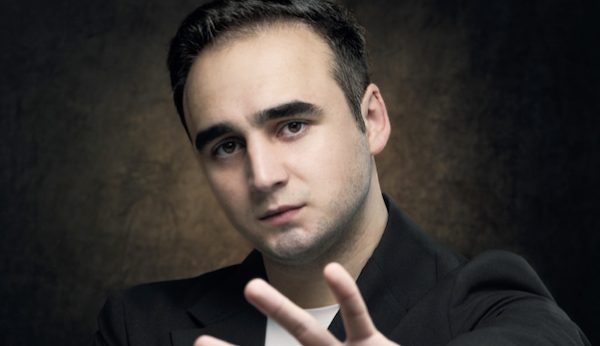
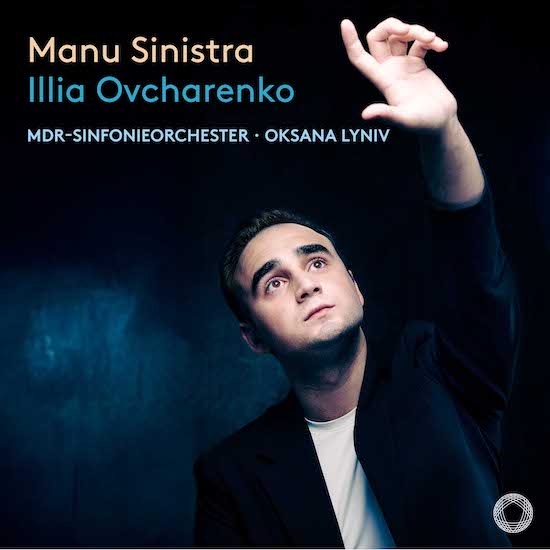
We first met Ukrainian-born pianist Illia Ovcharenko when he won the 2022 Honens International Piano Competition. He has added repertoire and plaudits since then, but for his debut Pentatone recording he subtracts something: his right hand.
On Manu Sinistra Ovcharenko and the MDR-Sinfonieorchester conducted by Oksana Lyniv perform concertos for the left hand by Ravel, Prokofiev, and Sergei Bortkiewicz (1877–1952). All were written for pianist Paul Wittgenstein, who had lost his arm in World War I. As if to assert Bortkiewicz’s parity with the more famous composers on the program, the album opens with the Ukrainian composer’s Piano Concerto No. 2, Op. 28. It is a powerful statement in the full-on Romantic tradition. While its harmonic expression doesn’t display a lot of originality, Bortkiewicz uses the well-loved progressions effectively, along with a penchant for chromatic themes.
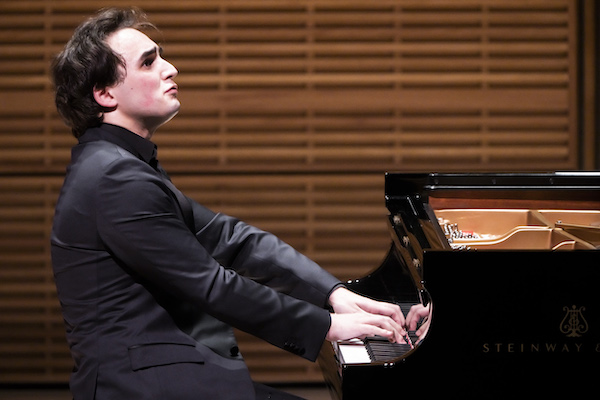
The left-hand-only piano writing feels full and rich, owing more to Chopin than to Brahms. The scale and passion, if not the complexity, of the music as a whole approach Rachmaninoff territory in places, and the high romance of the epic second movement feels very much of Tchaikovsky’s Russian milieu.
The movements flow one into the next, and the writing requires great nimbleness on the part of the pianist. Ovcharenko makes seemingly easy work of the difficult passages – flashy octave work and glistening navigations of the whole keyboard in the first movement, tumbling passagework in the “Allegro vivo” finale. And he brings delicacy and nuance to the more ruminative music, as in the finale’s solo interlude and the melodic effusions of the long “Andante cantabile” second movement.
Ravel, in his Piano Concerto for the Left Hand, which is also essentially one movement, seemed to revel in his ability to make a one-handed part feel like it’s two-handed. The astounding runs in the cadenza near the end are a prime example. But the phenomenon arises elsewhere from the seamless orchestration that makes so many passages feel like piano and orchestra are one organism. (Try to tease out what’s happening in the concerto’s final 45 seconds and you’ll hear what I mean.) Perhaps this is why Wittgenstein initially rejected the work as written (though he had commissioned it) and only later came to appreciate its great merit. Ovcharenko and conductor Lyniv show a fine affinity for the piece’s mysterious atmospherics and hypnotic rhythms.
Thanks, But No Thanks
“Thank you for the concerto, but I don’t understand a note of it, and I shall not play it.” That, according to Nigel Simeone’s liner notes, was Wittgenstein’s response to what is in some ways the most virtuosic of these “sinister” concerti, Prokofiev’s Piano Concerto No. 4. And it is at times pretty weird. The short first movement is rife with sixteenth-note passages for the pianist. The Andante has an elastic, wandering quality and touches the edges of Prokofiev’s experimentalism, though with an emotional charge that Ovcharenko makes much of.
I don’t think many pianists of today would share Wittgenstein’s nonplussed reaction. It’s lovely to hear one of our finest young pianists find the magic in it and give it such a thoughtful reading.
Manu Sinistra from pianist Illia Ovcharenko is available now.