Blogcritics The critical lens on today's culture & entertainment
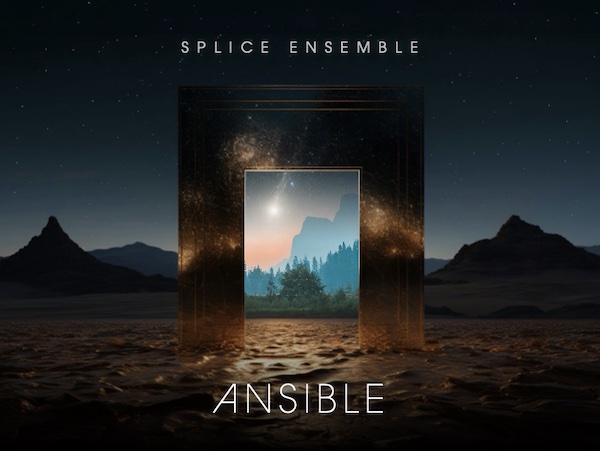
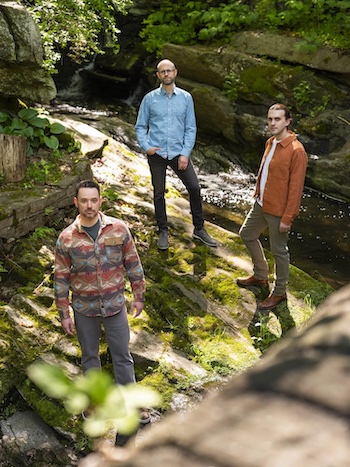
The science fiction novels of Ursula K. LeGuin, specifically the books of the Hainish Cycle (including the classics The Dispossessed and The Left Hand of Darkness), inspired Caroline Louise Miller to compose the four-movement Ansible. It’s the title piece of a new album from the trio SPLICE Ensemble, where the musicians embark on explorations of mythologies past and future with Miller and two other musical experimenters of daunting vision.
Walls of Ice
Pianistic messages wracked by interference run through the epic “Antiphony,” the first movement of Ansible. Quietly we hear old classical-music recordings, while Keith Kirchoff riffs on them on a very distorted-sounding piano.
Mournful wails from Sam Wells’s muted trumpet and ghostly electronic sighs and distant bell sounds suggestive of old sci-fi movies define the first half of “Gethen/Icecaps.” In the second half, the inspiration from the ice-covered planet in The Left Hand of Darkness becomes explicit, with sounds of a barren but living arctic landscape of creaking and melting ice and bitter wind.
“Urras/Walls” pairs snatches of recorded vocals and sounds of striking women chanting in protest with improvised drumming from Adam Vidiksis to suggest frustrated pounding at walls that separate us from one freedom or another – literal freedom, knowledge, certainly from peace of heart and mind. Wisely, Miller keeps this difficult listen to under six minutes.
The final movement, “Passacaglia,” has the instruments following one another (or themselves) scant seconds apart in various bits of thematic material. The motives and melodies take on widely varying characters played on piano, trumpet, percussion, and electronics, with additional electronics intruding as well as if to reinforce the suite’s overall theme of communication over distances – in Le Guin’s books, the intergalactic distances made bridgeable by the ansible, the title device.
Road Culture
Composer Steven L. Ricks went back to Greco-Roman myth for the music on his recent collection Mythological Fragments. American car culture has its own mythology, from Henry Ford’s Model T and the muscle cars of the 1960s to the DeLorean of Back to the Future and Elon Musk’s Tesla wins and losses. The roots of Ricks’ triptych Motor Culture lie in automobile travel, this most earthbound of subcultures. Photographer Edward Burtynsky called it “motor culture,” and it was his images that inspired Ricks to compose this work for SPLICE Ensemble.
A sense of play runs through much of the music, right from the trumpet blares evoking annoyed car horns at the start of the jumpy “Hank’s Drive Through the Multiverse.” Wells’ trumpet leads the way through the first half, but in the second half the instruments work in unison or at least in concert. In the last minute, though, skid-like sounds and more car horns suggest something gone very wrong on the highway.
Ricks takes a line from The Blues Brothers movie as an inspiration for the second and longest movement, “Our Lady of Blessed Acceleration.” Gradually, as if pulling themselves together from debris on the road, rhythms begin to jostle. Jazz elements surface. But while there’s much motion, there’s not much form for the ear to grasp. Long pauses make room for exploratory piano figures and squirming electronics.
At last, arising from a quivering stillness, the acceleration stops with a striking series of open-ended fanfares and finally a somber bass line from the piano. The latter sets up the grim last movement, “Disastrous Experiment.” Here, voices that sound like they’re from radio calls float into being, then fade away, accompanied by soft atmospherics from the instruments. It’s as if the energy of the earlier music has been blasted into unsalvageable wreckage, without rhythm, without harmony – without closure. The playfulness that threaded through earlier parts of the work is gone. What does that presage for our modern-day car culture?
Desert Triggerings
A different kind of spaciousness arises at the start of Living Between Seconds, composed by Elainie Lillios in collaboration with the SPLICE Ensemble. Lillios began with recorded environmental sounds from the deserts of the American Southwest. These sounds (birds, most prominently) triggered instrumental parts that in turn produced live electroacoustic events from Cycling ’74’s Max interactive sonic software environment (a technology that might well have intrigued LeGuin). The piece builds to a chaotic-sounding environment suggesting at times a surreal dreamscape, at times free jazz, at times the sonic equivalent of a drip painting, and at times a resurgent environment of storms, insects, even passing trains (but no cars!).
These composers have no need of future-mythology communication tech like LeGuin’s to convey their visions. They need only a creative ensemble brimming with energy and skill. Thanks to consistent instrumentation and unceasing experimentation, their compositions for SPLICE Ensemble are all of a piece and yet intriguingly varied.
Ansible from SPLICE Ensemble is out now on New Focus Recordings and available at Bandcamp.