 Blogcritics The critical lens on today's culture & entertainment
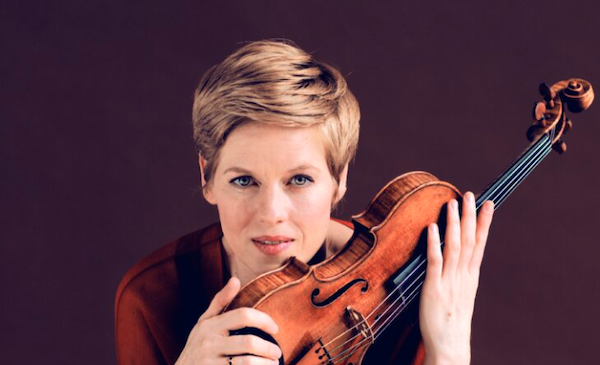
Two of this month’s notable violin releases are on my classical music playlist right now. One is a Bach album from Isabelle Faust, the other a Poulenc tribute from a violinist new to me, Hongyi Mo.
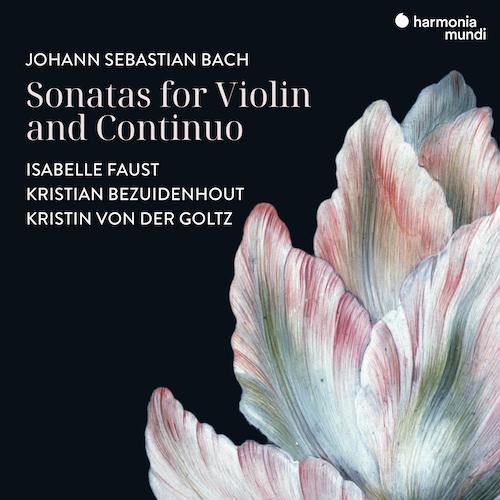
Isabelle Faust, Kristin von der Goltz, Kristian Bezuidenhout: Johann Sebastian Bach: Sonatas for Violin and Continuo
For sweetness of tone and melodic fluency few violinists can match Isabelle Faust. On Johann Sebastian Bach: Sonatas for Violin and Continuo she is backed by cellist Kristin von der Goltz and harpsichordist Kristian Bezuidenhout, who match Faust’s exemplary taste and subtle flourishes note for note. The collaboration vibrates with vivid realizations of the slow and fast movements, the Allemandes and Gigues, and even a Fugue.
Faust’s artistry is so complete it’s easy to take it for granted, especially when listening to a whole set of music like this. But don’t get swept away. Or rather, listen once for the sweep of it all, then again and more closely to appreciate her approach to all of the gifts Bach offers to musician and listener. Here are the proliferating melodies that always somehow resolve in the only possible way; the counterpoint that reveals at every listen new details of easeful balance and tension-building imbalance; the varying moods, from ecstatic to honeyed to anguished.
No surprise, the program opens and closes with pieces that will ring bells with many listeners. The Sonata for Violin and Continuo in E minor, BWV 1023, begins with its nimble, loping Vivace, but what really sets the tone for the album is a luxurious, almost chocolatey Adagio, with Bezuidenhout’s spidery chords rafting the violin melody over whispering waters. The track revels in the ensemble nature of this recording, whose scores are often depicted as violin features with the continuo providing mere support. The Largo of the G Major Sonata, BWV 1021, is another fine example, with Faust’s violin reaching heights of mournful questioning at the close.
The beloved Sonata in G minor, BWV 1029, provides the final bookend. Along the way we’re treated to the stunning Fugue in G minor, BWV 1026, featuring von der Goltz’s skillful bowing. We hear an almost Balkan-sounding rendition of the opening Adagio of BWV 1024, with Faust editorializing lushly (shades of Simone Dinnerstein) with an elfin performance of its adjoining Presto. And we bathe in the songful first movement of the early version of BWV 1019a.
This is exemplary, living Bach from musicians with few equals at the repertoire. Johann Sebastian Bach: Sonatas for Violin and Continuo from Isabelle Faust, Kristin von der Goltz, and Kristian Bezuidenhout is out August 29, 2025 on Harmonia Mundi.
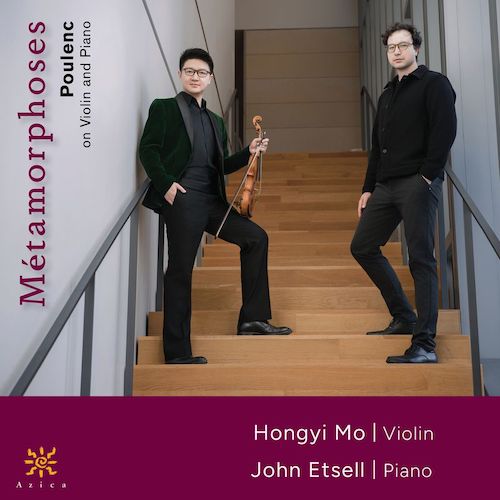
Hongyi Mo, John Etsell: Métamorphoses: Poulenc on Violin and Piano
Poulenc’s art songs are beloved in a different way. The French composer had a knack for enhancing with melody a poem’s meaning and effect. Converting art songs to instrumental form is going in the other direction, in a way, and it’s always going to pose a challenge, whether you’re Franz Liszt or a contemporary violinist like the Detroit Symphony Orchestra’s Hongyi Mo.
Wisely, Mo pairs his transcriptions with music by Poulenc that’s purely instrumental by design: the striking violin sonata and a transcription of the oboe sonata.
“A great piece requires no embellishment,” Mo writes in his liner notes; “it simply asks to be presented with sincerity and respect for its inherent perfection.” He says this in reference to the chanson “Les chemins de l’amour” but it applies to his overall approach to the music. He opens with the “Métamorphoses” triptych, settings of melancholy poems by Louise de Vilmorin. “C’est ainsi que tu es” is our first taste of the violinist’s appropriately cautious approach to the song material, emphasizing what’s there without unneeded embellished.
“Paganini,” the third chanson, is surely harder to sing than to play on the violin. But this setting retains the loping melody and rhythmic action.
A tasteful rendition of the indolent “Hôtel” then sets up the fiery “Allegro con fuoco” of the violin sonata. Mo believes that the sonata’s “compositional logic is rooted in the realms of piano and vocal music.” It’s easy to hear why he thinks so, with the percussive quality of this first movement framing the middle section’s sentimental melodies.
In the hands of Mo and his fine accompanist, John Etsell, the slow movement – one of the most precious in the literature, in my view – sounds exquisite. As the gently rocking basic melody gives way to intriguing double-stop iterations, a quiet room lit by candlelight comes to mind.
Poulenc marked the finale “Presto tragico.” It’s an odd beast, and Mo and Etsell give it an almost electric buzz. In one sense we’re far beyond the realm of the “vocal” here. But in another, some of the weirdness reminds me of art-rock music as much as anything.
The selections continue to alternate between melancholy poems about France during World War Two and more upbeat lyrics. The “Deux Poèmes de Louis Aragon” are two of my favorite Poulenc settings and these are strong, evocative renditions.
The oboe sonata ends the album strongly. The sad-sweet start to the first movement has a song-like simplicity, while its march-like central section begins an exploration of the most edgy outskirts of Poulenc’s harmonic imagination. This sonata was the last piece he wrote, and it’s loaded with his beautiful weirdness. The thunder-and-lightning Scherzo brings back the virtuosity that Mo and Etsell displayed in the spiky violin sonata; its slow interlude could again could again almost be a leid. The tragic finale, designated “Déploration” (“Lamentation”), expresses the composer’s feelings about Prokofiev, who had died a decade earlier and whose influence Mo detects throughout the sonata.
Listen once to the oboe sonata while keeping in mind that it was originally intended for that instrument. Then put that completely out of your mind and listen again, maybe while you’re doing a chore that’s occupying the front part of your brain, and if you’re like me you’ll find that the music sounds perfectly natural on violin. Either way, it’s a precious finish to this album, as it was to the composer’s career.
Métamorphoses: Poulenc on Violin and Piano is out August 15, 2025 on Azica.