Blogcritics The critical lens on today's culture & entertainment
Fjord
Cristian Mungiu’s 2026 Palme d’Or winner Fjord opens at the 64th New York Film Festival in its New York premiere. In Mungiu’s characteristic fashion (as in his 4 Months, 3 Weeks and 2 Days), the director reveals a disturbing dynamic. An immigrant family trying to improve their lives finds itself in conflict because of political and cultural disparities. So they must either accept the discrimination against them and assimilate, or flee back to their home country.
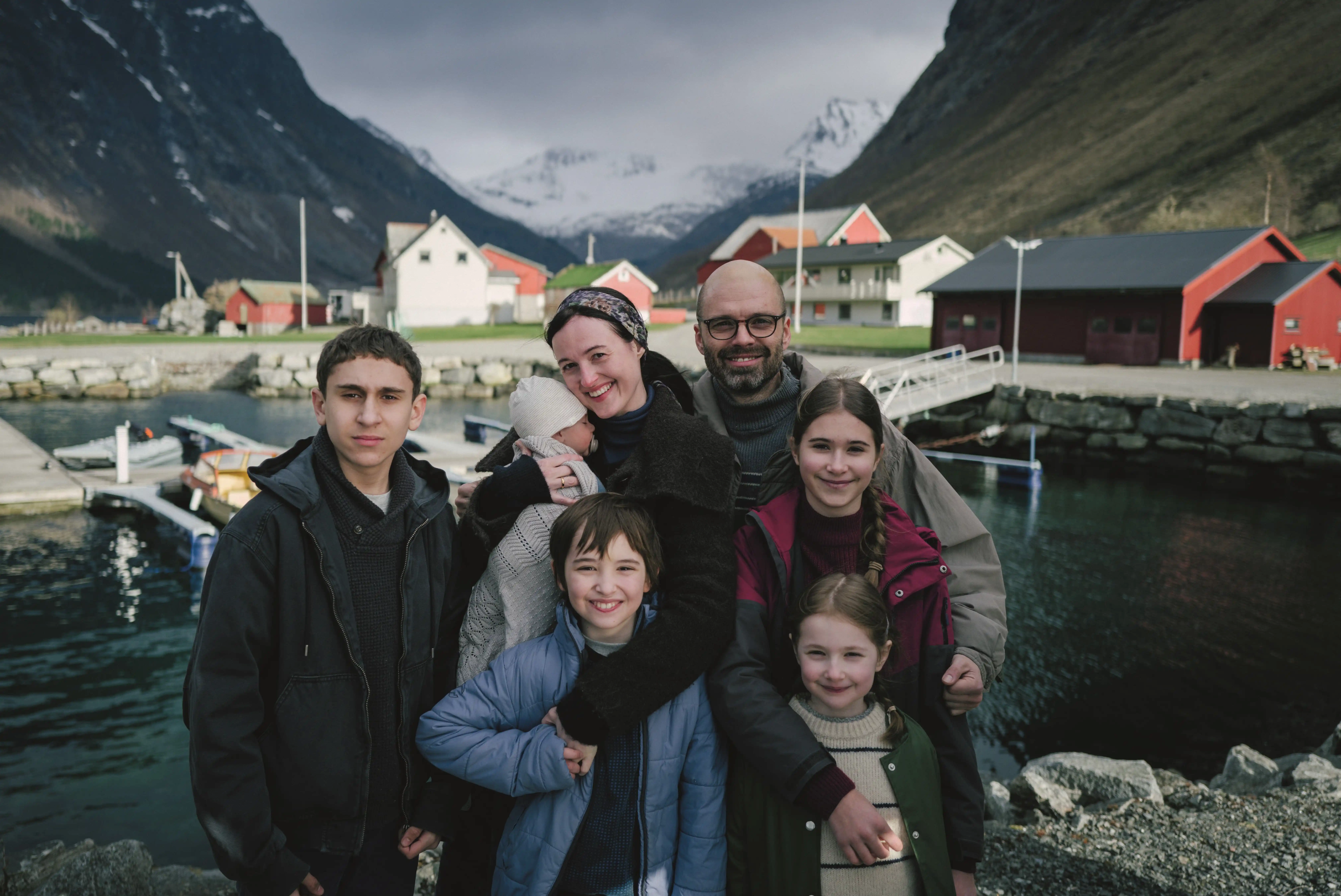
In Fjord, a conservative, religious family moves from Romania to liberal, socialist Norway. Ironically, in this open society, they run up against a rigid set of sociopolitical mores and expectations that differ from their own values. The family faces a clash of cultural lifestyles that lands them in court, where the parents must fight criminal child-abuse allegations.
Infividual vs. State
With this anomalous situation the film raises questions about conformity, identity, freedom of speech, freedom of religion, parenting, the individual vs. the state, and divergent cultural values. The issues raised by the Romanian family congeal in a battle against a local justice system’s institutional policies. The film leaves the audience with a disturbing conclusion and no certain resolution.
The complex drama unfolds subtly, as Mungiu shepherds the acting ensemble led by Sebastian Stan and Renate Reinsve as the parents. After accusations fly, both walk on the eggshells of the town’s political correctness. The cast’s restrained portrayals convey a netherworld of unexpressed emotions. The director uses cinematic contrasts profitably. He films the clean, angular lines of the mountainous seaside town on a fjord where avalanches are matter-of-fact occurrences. Then, he pits these foreboding scenes against unremarkable, washed-out interiors where humans gather. The contrasts convey a chilling, portentous atmosphere.
Mihai and Lisbet Gheorghiu (Stan and Reinsve) and their four school-aged children and one breast-feeding baby have lived in the remote village of Lisbet’s birth. Principally, they’ve moved because Mihai, a software engineer, can get an IT job in Norway. Secondly, a strong church community flourishes near the village, which should reaffirm and strengthen the Gheorghius’ devout faith as members of a conservative, strict, Christian sect.
Immigrants Welcomed
Welcomed by the progressive, liberal (non-Christian) headmaster and his family, who live next door, the Romanians ease their way into the community. The headmaster’s wild, disobedient daughter Noora (Henrikke Lund Olsen) happily connects with the two older Gheorghiu children. Trying to teach them her ways, she challenges them to take risks, including disobeying their parents. The Gheorghiu children jump out the window to explore with her when they should be in bed sleeping.
The contrast between the headmaster’s wayward daughter and the Gheorghiu children’s calm peacefulness becomes clear early in the film. In fact the Gheorghiu children gently guide Noora toward goodness. Yet their kindness and love lead to devastation at the film’s conclusion.
Initially, the town accepts the outsiders from Bucharest. But the school staff, noticing the children have marks and bruises, makes assumptions. They question the parents’ child-rearing. The Gheorghius’ religious upbringing includes a demerit system, mandatory Bible-reading and prayer time. The kids are also punished (e.g. prevented from going to a birthday party), when they’ve been reckless (almost spilling boiling water on the baby).
A Problematic Discovery
The staff discovers that the parents are spanking the children, violating the Scandinavian taboo against corporal punishment. Taking into account language disparities and the children’s fear, the staff investigates further. They believe that the children, for whom Norwegian and English are second and third languages, may be hiding something. Child protective services places the children in foster care, with a hearing and criminal trial to follow. The breast-feeding baby, also placed in foster care, undergoes a brain scan for evidence of (the fiercely disputed) shaken baby syndrome. At this juncture we may find ourselves questioning the openness and liberalism of the state representatives. This feels like repression and bigotry.
Child abuse is a hot button issue, but the director turns the issue on its head. He also redirects dislike of strict, religious upbringing by comparing the Gheorghius’ children with the selfish, undisciplined Noora. Unlike many hypocritical conservative Christians (in the U.S., think of Southern politicians who cover up criminal disclosures in the Epstein files), this family appears to live their beliefs. Indeed, we see that the disciplined family has set well-defined boundaries that benefit their children. These boundaries comfort Noora, whose parents let her do as she pleases to ill effect.
Manipulating the Viewer
The film creates empathy for the Romanian family in opposition to the Norwegian mores. The three women who represent school staff and child protective services and the male prosecutor appear prejudiced against the family’s ethnicity, conservatism and religion. Asking questions with snide asides, the prosecutor demeans the family’s political incorrectness. We understand that the Norwegian state views liberal, progressive parenting behaviors as healthful and correct. In contrast, it views how Mihai and Lisbet raise their children as wrong.
Indeed, the decision by the childless, unmarried females to put the children in foster care with little provocation creates more harm, emotional stress and pain. When they proclaim they do this for the good of the children, we recoil. Their justifications chill us to the bone.
Fjord’s edginess reminds us not to assume easily or categorize, but to consider all perspectives. The emotional conclusion clarifies the collateral damage that can be caused when an open, liberal state tries to make others conform to what it deems as correct.
Tickets to Fjord may be found at the New York Film Festival 2026 site (for the venue at Alamo Drafthouse on Staten Island) and the film is streaming on various platforms. It opens in theaters October 9, 2026.