 Blogcritics The critical lens on today's culture & entertainment
Queer
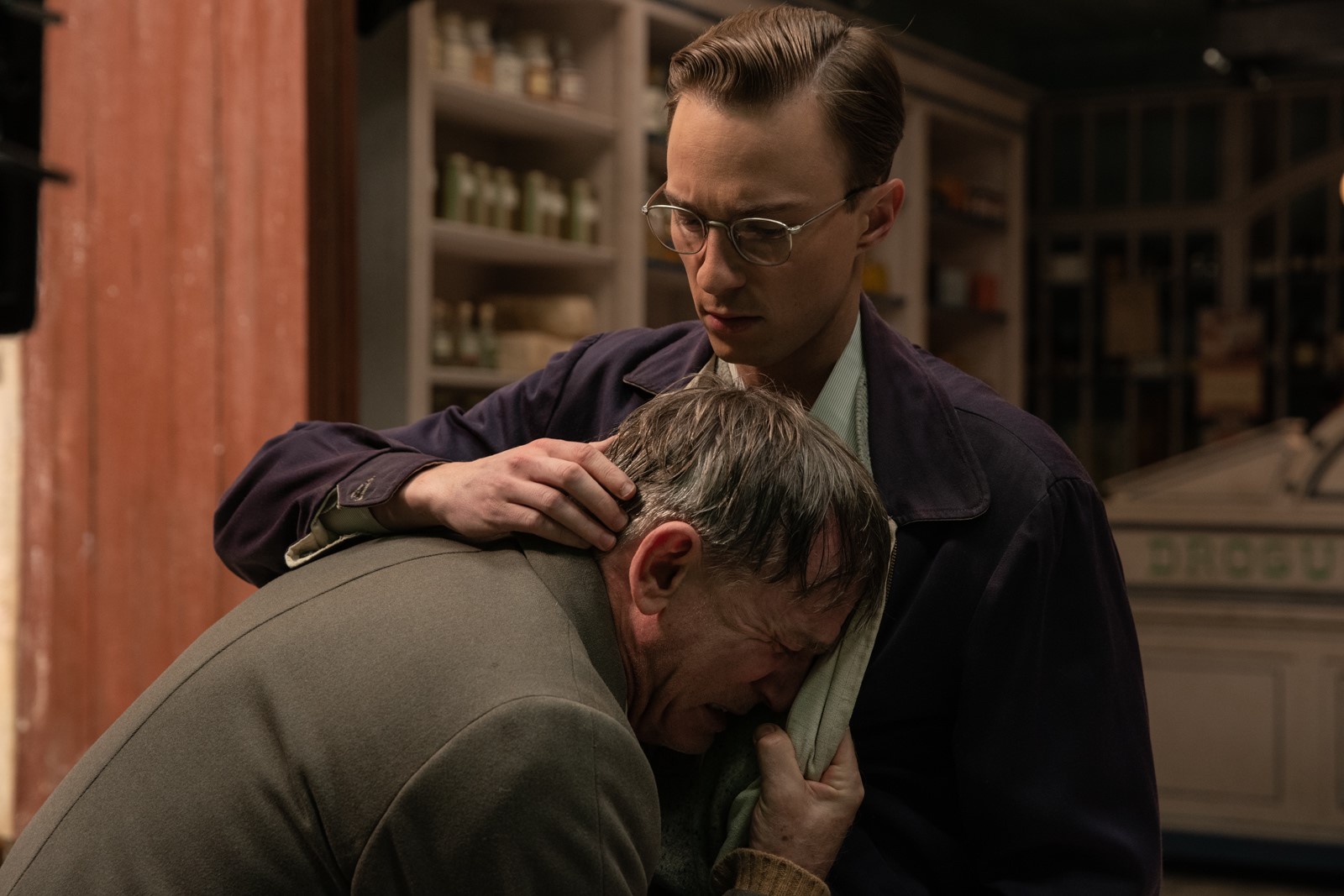
Basing his film on the William F. Burroughs novel, Queer, director Luca Guadagnino marshals his extraordinary talents to create a masterwork. Starring a brilliant Daniel Craig as William Lee, with the mesmerizing Drew Starkey as his obsession Eugene Allerton, Guadagnino hits this love story into the stratosphere.
Guadagnino carefully researched William S. Burroughs and the writer’s largely autobiographical work. A Beat Generation author, Burroughs’ Queer fascinates as mildly transgressive, gay literature. As it containing “untoward” elements punishable in the 1950s when Burroughs wrote it, the author released it in the 1980s. By then he and the Beats had received global renown rather than censure.
Justin Kuritzkes Adapts Burrough’s Novel
Guadagnino selected screenwriter Justin Kuritzkes to adapt Queer. Kuritzkes’ screenplay provides fuel for the director’s vision. Primarily, it concerns Lee’s lonely search for love and connection. Frequenting the bar scene, Lee hangs among expatriates in Mexico City after World War II. Jason Schwartzman, superbly humorous, believably portrays Lee’s friend, quasi-confidante and grounding influence.
Collaborating with cinematographer Sayombhu Mukdeeprom, production designer Stefano Baisi, composers Trent Reznor and Atticus Ross, and others, Guadagnino achieves new artistic heights. The gorgeous music and strikingly surreal scenes, especially in the last quarter of the film, remain with one afterward.
Queer: Beauty and Surrealism
The film is a long foray into beauty, surrealism, spiritual consciousness, and magical realism. Using fanciful elements, the filmmaker explores Craig’s Lee, who burns with longing for intimate connection. Wryly, Lee refers to himself as “disembodied,” not “queer,” though we see him have sex with only men. Ironically, much later in the film, Lee confronts his heart in a psychedelic episode with Eugene in the Amazon. Only then does Lee achieve what he wants, then loses it.
Recalling a few painters of the last century, the director illustrates Lee’s disembodied, alienated psyche visually in the beginning of the film. In fact, the production design subtly suggests Lee’s character’s isolation. To represent Lee’s loneliness and singularity, it evokes a mood and tone reminiscent of Edward Hopper’s paintings.
An Ethos of Melancholy
The muted colors, square buildings in shadow, a hotel’s tawdry reds, etc., effuse melancholy. The haunted, starkly lit interiors match the hollowness that drips from Lee. In the last minutes of the film, the director reinforces the disembodied Lee. Cleverly, Guadagnino edits in shots emblematic of surrealistic painters. Thus, when Lee comforts himself remembering a brief scene of connection that did occur between him and Eugene, we understand what Eugene meant to Lee. These elements cohere and create a stunning portrayal of Lee’s unflagging, relatable humanity and his quest for wholeness in love.
In executing the director’s vision of post-World War II Mexico, the film’s creative designers (production, scenic, costume) convey the tone and mood. These provide a superb backdrop for Lee’s character, as when the interior and exterior shots of city buildings and streets suggest Lee’s inner being. The first part of the film shows Lee’s wanderings as he searches for “someone.” As he walks the streets and meets up with gay friends in bars, we note that hhe lacks focus. Lee’s room and his favored surroundings are fashioned to parallel Lee’s sorrowful emptiness and yearning.
Poignantly, Lee’s Search Leads to Eugene
When Lee settles on Eugene, we note the fatality of his choice. The gorgeous Eugene, masculine and reserved, shows little interest in Lee. Ironically, the men mirror each other. Perhaps Lee has fallen in love with what he wished to be, the idealized version of himself.
Questioning Eugene’s sexual identity, Lee’s obsession grows. Eugene’s presence pierces Lee’s heart, psyche and imagination. Lee gently, carefully pursues Eugene sexually. Finally, Eugene reciprocates, thrilling Lee. But their mismatched feelings irk Lee who wants more. Conversely, Lee’s love and hunger annoy Eugene who wants less. To maintain his hold on Eugene, Lee suggests a contractual arrangement that Eugene grudgingly accepts.
Independently wealthy, Lee pays for access to Eugene twice a week. Also, to prevent Eugene’s total boredom, Lee pays for travel to South America. There, they indulge another passion of the heroin-addicted Lee, who intends to find the plant that he’s heard the Russians use to brainwash people. Lee wants to take it to induce a telepathic state, a different system of communication without words.
Though Queer leaves many unanswered questions, we anticipate that another reason Eugene goes with Lee may be that he worked for Intelligence during the war. Perhaps he, too, wants to learn more about this plant.
Journey to the Amazon
Together they sojourn into the Amazon once Lee discovers who may know about this “vine of the soul” that the Indigenous people use in their religious ceremonies. Their odyssey takes them through Lee’s horrific withdrawals from heroin, to the Ecuadorian jungle in pursuit of the what they don’t understand. There, they have an adventure both outward and inward that alters their lives and psyches. Finally, meeting the wise Dr. Cotter (the incredible, unrecognizable Lesley Manville in a star portrayal) blows them out of their comfort zones forever.
Morphing from the suave, god-like, masculine James Bond role into the insular, awkward Lee, Daniel Craig inhabits the complex Lee with genius abandon. As his cool counterpart, Starkey reveals Eugene’s quiet reserve and avoidance of his own inner being with incredible sensitivity.
The film has many Oscar nominations, for directing, acting, adapted screenplay, cinematography and production design (including special effects). In explicating this immutable search for love and connection, Guadagnino delights, terrifies, mesmerizes. Most importantly, in this time of paranoia and ultra-right-wing conservatism for political purposes, Guadagnino creates much needed empathy.
For tickets to Queer at visit the New York Film Festival website. The film’s limited release occurs in November.