 Blogcritics The critical lens on today's culture & entertainment
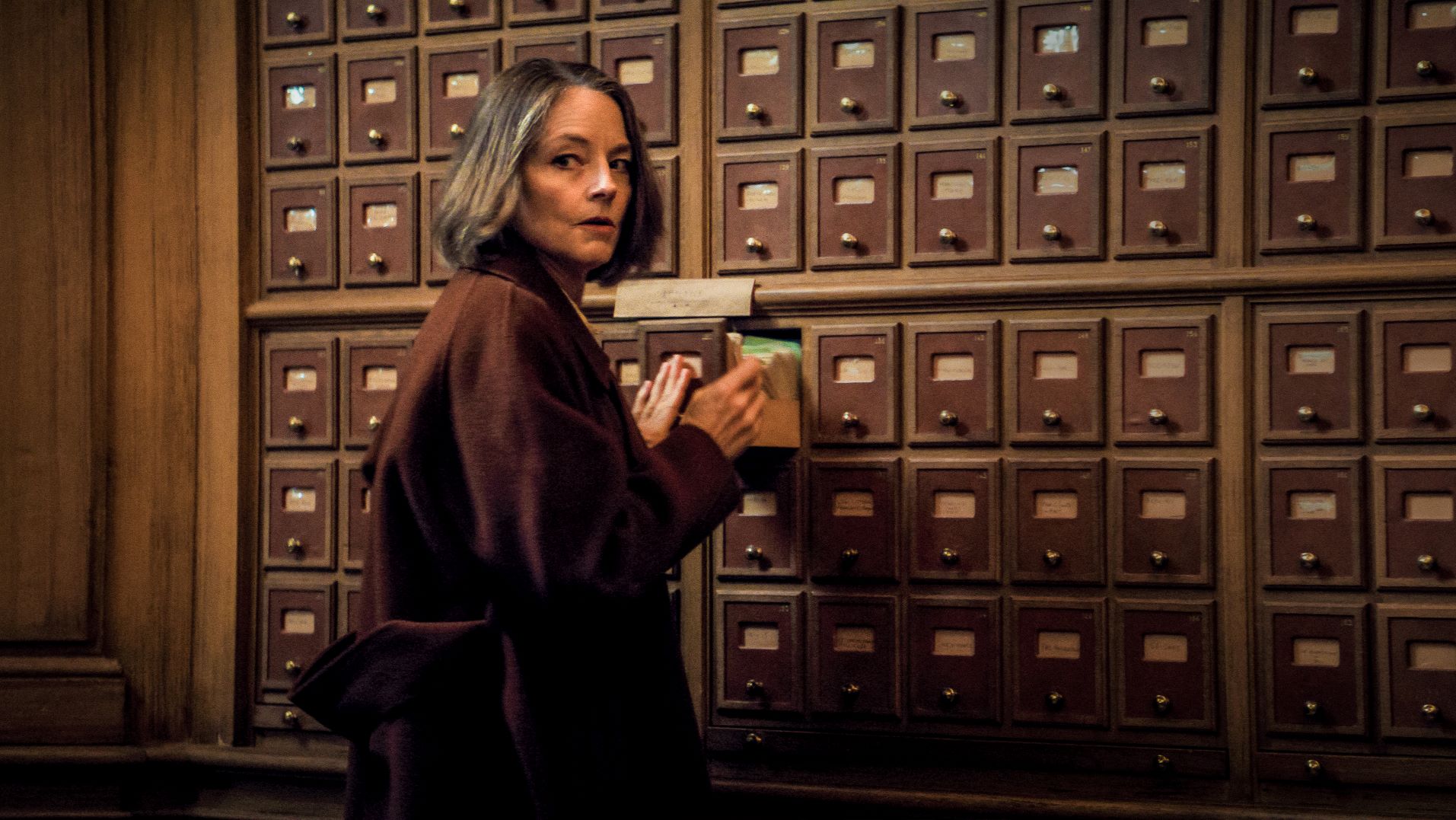
Jodie Foster speaks French in her starring role in A Private Life. The 63rd New York Film Festival spotlighted the movie in its New York City premiere. Having spoken French as a child, Foster had planned for years to act an entire role in French. She finally found the right vehicle in director Rebecca Zlotowski’s capricious, ironically funny murder mystery, which also is a character study.
Foster portrays Dr. Lilian Steiner, a hyper-stressed American psychoanalyst in Paris, whose compartmentalized, controlled life takes a weird turn. This occurs after her patient Paula (Virginie Efira), who has shown no signs of severe depression or psychosis, kills herself. Steiner believes she couldn’t have misdiagnosed Paula, so she questions what happened.

Cascading chaos
Events cascade into chaos when Steiner refuses to accept the suicide determination and believes someone, possibly Paula’s husband or daughter, killed her. When Steiner attends at Paula’s memorial service, invited by daughter Valerie (Luàna Bajrami), Paula’s husband Simon (Mathieu Amalric) angrily evicts her from the funeral. Simon blames her for over-medicating Paula and pushing her over the edge.
His furious response in believing her to be a terrible therapist liable for his wife’s depression and suicide dovetails with another patient’s claims that her expensive treatment to help him stop smoking over the years didn’t work. In contrast, holistic therapy by hypnotist Jessica Grangé (Sophie Guillemin) helps him stop smoking in record time. Eventually, he files a lawsuit to recoup the thousands of dollars he spent in useless therapy sessions with Steiner.

To add insult to professional injury, we discover her personal problems: Physician, heal thyself before you practice therapy. Divorced from ex-husband Gabriel (Daniel Auteuil), she visits her grown son Julian to bond with her recently born grandson. Julian (Vincent Lacoste) doesn’t seem pleased to see her and warns her not to wake the baby. A potentially warm visit turns cold and blows up in their faces, annoying Julian.
Steiner’s aloofness even spills out onto her ex-husband Gabriel, an ophthalmologist she drops in on because her eyes tear uncontrollably. He pronounces that she has no issues with her eyesight, and we understand his care and concern for her. But he can’t help her tearing up and crying.
Dr. Steiner goes to a hypnotist
Perhaps initially out of curiosity, she seeks out her former patient’s hypnotist to get relief for her crying. That she seeks out the unscientific approach of a regression therapist to stop her teary eyes makes little sense. Have upsetting events (Paula’s suicide, Simon’s rage and her other patient’s fury) triggered her? Rather than face her own shortcomings as a therapist and human being and examine how she contributed to the stressful circumstances, she distracts herself.
The humor comes out in the regression therapy scene with the hypnotist. A hallucinatory sequence unfolds taking her back to WW II and the Nazi occupation. This rational, reserved doctor accepts the hypnotist’s suggestions after they discuss what she “saw” that relates to Paula.
Because Foster’s consummate acting skills elevate the scene to the edge of credulity, we follow Lilian’s acceptance of the hypnotist’s analysis, despite its ridiculousness.
The murder plot thickens
As one fantastic notion leads to another, Steiner comes to believe either Valerie or Simon murdered Paula. She would rather believe in a fantasy than examine her own actions, and becomes obsessed with investigating the supposed foul play.
She elicits Gabriel’s help and he hops onboard. Together, their search for the truth becomes a caper they enjoy.
As they uncover clues, she discovers a motive. The ensuing action includes skullduggery on a rainy night, witnessing a sexual act, and searching where they shouldn’t. The humor, suspense, thrilling adventure, and resurgent romance the prodigiously talented actors create between their characters engage and delight us.
A nod to murder mystery films
The film nods to classic murder mysteries, from Hitchcock to Woody Allen. After three or four twists, eventually Lilian finds her way back to rationality and herself.
Foster steers the film with grace, likability and frenetic energy as her character attempts to discover a truth she has made for herself without realizing it. Thanks to great supporting performances by Auteuil and others, A Private Life delivers. The film resonates, more of a gem to revisit and appreciate than an eye-catching knockout to forget.