 Blogcritics The critical lens on today's culture & entertainment
Girl, Interrupted
Matyna Majok’s adaptation of Girl, Interrupted, based on Susanna Kaysen’s titular memoir, resonates with lyrical, haunting music by Aimee Mann. Finding an enthusiastic audience, producers extended the production to July 12, 2026. Girl, Interrupted currently runs at the Public’s Martinson Hall.
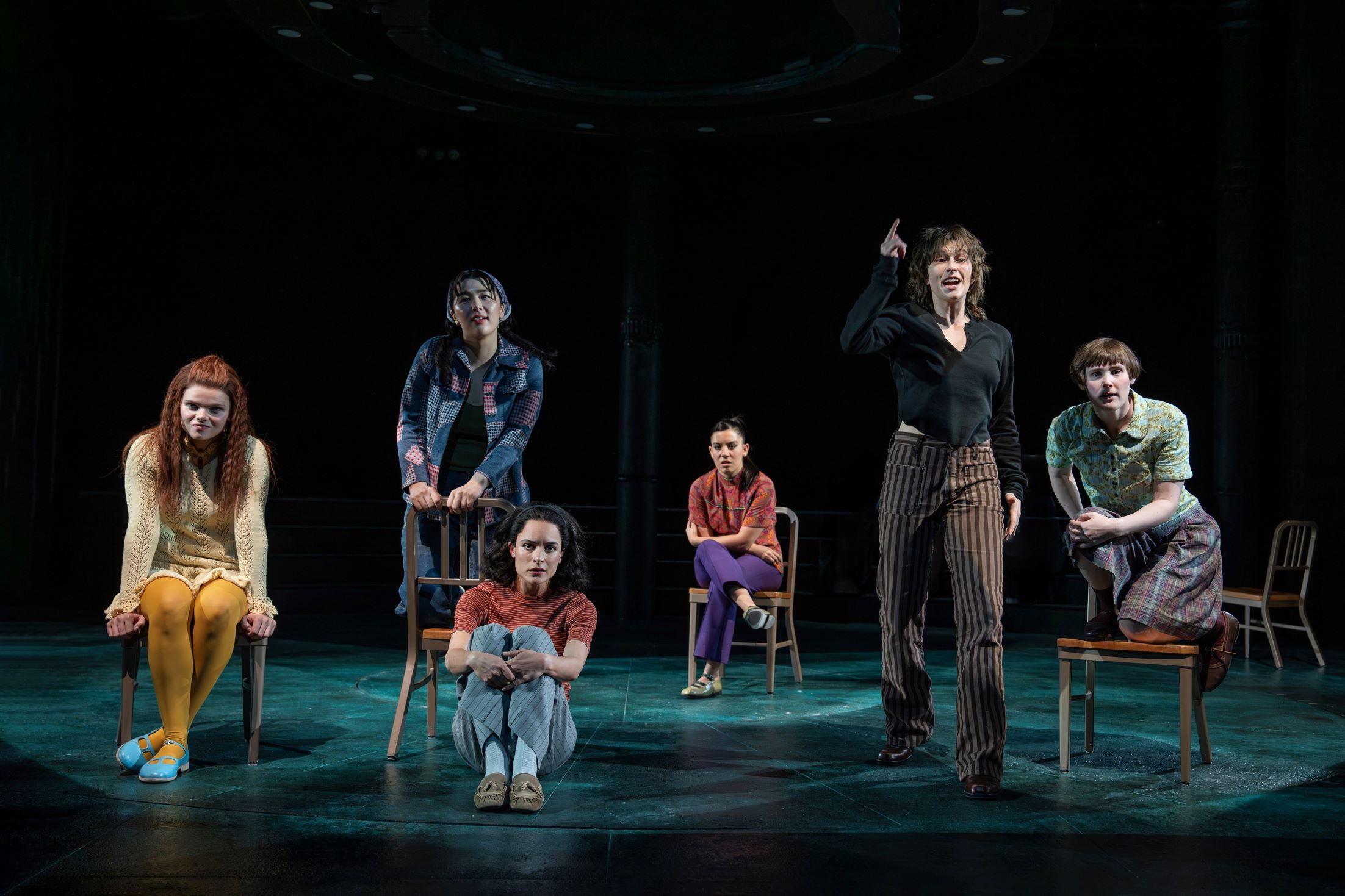
The production’s music – somber ballads and gentle, low-key blues songs – strike with its melodies and simple, clear lyrics. These heighten one’s identification with the characters. The music informs the acting and is the linchpin that makes the production riveting.
Susanna
Susanna (Juliana Canfield of Sterophonic) narrates her journey through McLean, a psychiatric hospital, as she bumps up against women her age and ultimately crashes into acknowledging her severe depression and suicide attempt. Initially opaque about the reason why she has landed in McLean, she finds comfort in her fellow patients. Her cultured and gentle roommate Grace (Mia Pak) sings-shares that the upscale institution was a temporary home for Robert Lowell, James Taylor, Sylvia Plath, and Ray Charles until they got back on their feet.
Grace implies that their experiences at McLean might find their way into a book that one of them may write. Artists, writers and musicians not “right” with the world have sought rehabilitation at McLean and benefited. Susanna quips that Sylvia Plath should have gotten a refund: Plath took her own life; the “place didn’t work for her.”
Jo Bonney’s direction
Over the span of two hours in a minimal set design, director Jo Bonney expands her vision. A wired circular cage with spiral steps leading up to it threatens where residents may go if “warranted.” Bonney’s staging is strong and stylized in a set with few props that relies on Heather Gilbert’s excellent lighting design.
The ensemble’s voices reinforce the themes of Majok’s adaptation in the poignant timbre of Mann’s soulful notes. Eventually, we discover why some of the patients, including Susanna, have checked themselves into McLean or been committed by others. We also learn that they don’t “fit into society” and have defaulted to various means of self-abuse. Frustrated, they punish themselves for not adjusting to what others want them to be.
Character details
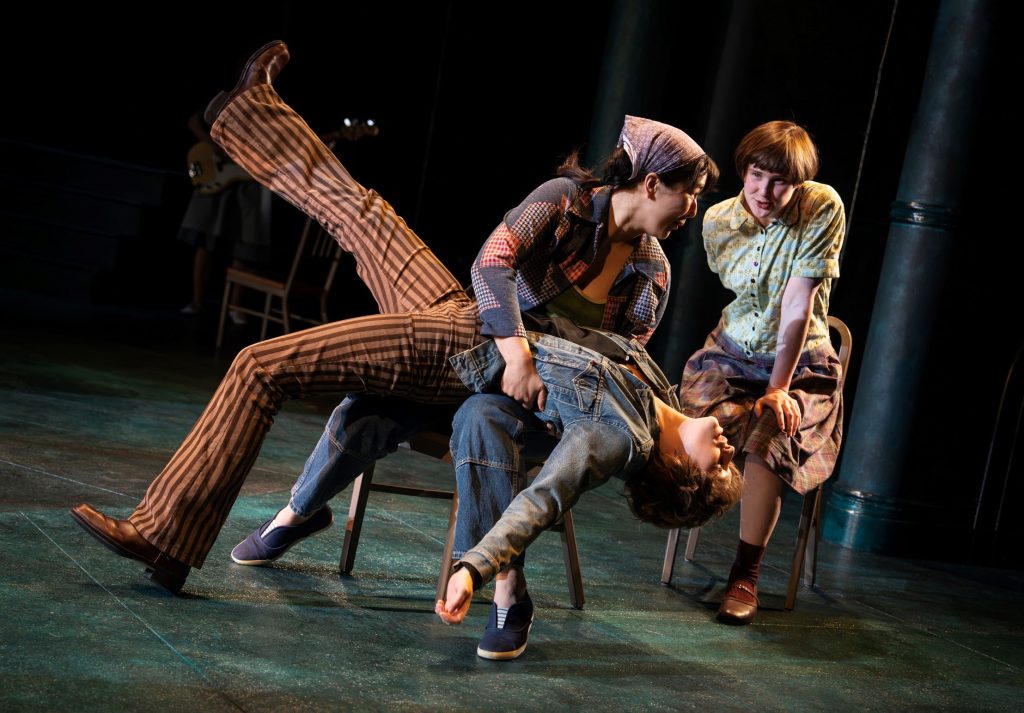
Lisa (singer-songwriter King Princess in a sexy, fluid, dynamic portrayal) challenges the others. She exhibits an electric spark of rebellion against an outer world of madness. The girls appreciate her, especially when she escapes to freedom, though caretakers always find her and drag her back to McLean.
Like Lisa, each of the girls attempts freedom. Their actions against themselves reveal the extent to which they feel imprisoned by pain, isolation and self-rejection. We learn that Polly (Sally Shaw brought down the house when she sang) poured gasoline over herself to “burn out” the shame and “get rid of” the person she believes herself to be. Tori’s (Gabi Campo) parents dumped her in McLean, blaming her for their problems.
Stasis and failure
Daisy (Katherine Reiss), who goes to McLean as a “seasonal event,” is perhaps the most tragic of all, having an incestuous relationship with her father. Her food obsession manifests the relationship in a disturbing way. No therapy helps her heal.
Likewise, Grace falls apart. When the others visit her for support, her behavior disturbs and depresses them. The girls try to stop Tori’s parents from taking her out, in order to prevent her falling back into patterns of addiction. Their plan fails. And Polly can’t heal because sheaths of her scar tissue remind her that she imprisons herself and can’t escape.
Only Lisa and Susanna remain self-aware, as the others they are close to “drop like flies.”
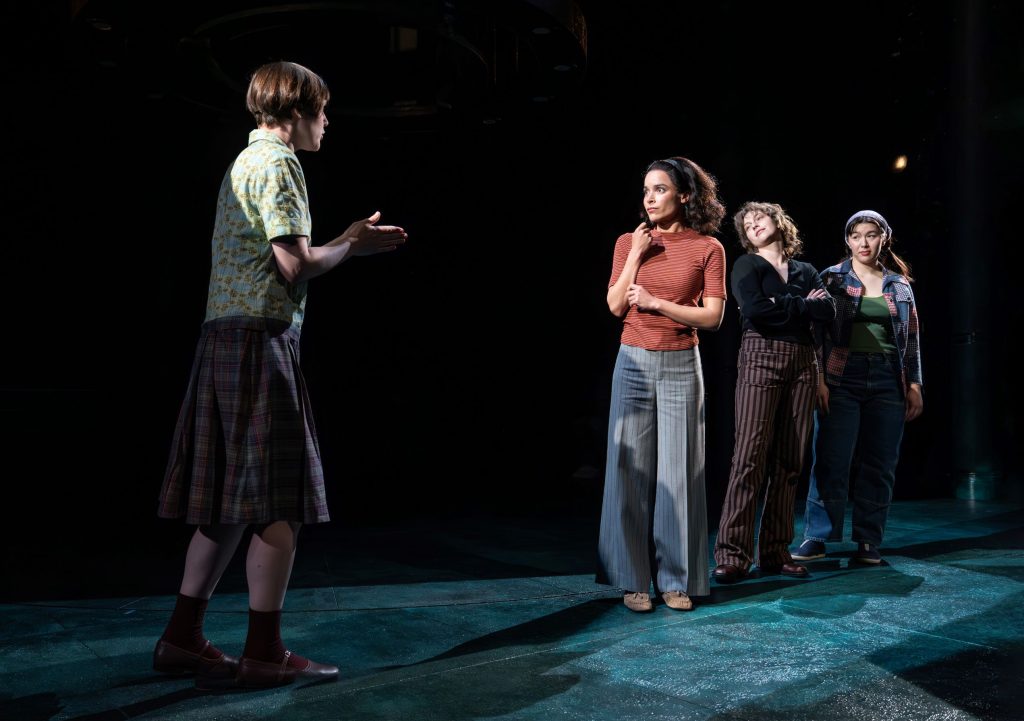
Stuck at McLean, Susanna gradually accepts her place. Though she receives therapy with Dr. Wick (Emily Skinner), she has no “plan” for her life or knowledge of what is “wrong with her.” Susanna discovers it’s easy to get into McLean, but nearly impossible to get out. Even if one has signed oneself in, or agrees with someone signing her in, as she did with a doctor after a 15-minute interview, the doctors delay any decision on release.
Susanna’s way out
After almost two years Susana finds a way out, not because she has confronted her internal self, but because the doctors and the patriarchal institution find marriage an acceptable way out of McLean. In other words, the institution encourages women who obey, women who don’t rebel or resist, women who fit into the roles men have prescribed for them. Released into the care of her husband, she “fits in” despite the fact that her problems remain unresolved.
Majok’s conclusion has a spiral circularity that satisfies. Susanna finally realizes what she needed to know about herself years later during a visit to the Frick Collection looking at Vermeers with her bored husband. The event is symbolic and ties in with the play’s development. Susanna begins the play discussing her visit to the Frick with another important male in her life. But this second time, Susanna has an epiphany. As she gazes at a particular Vermeer, she confronts and accepts herself.
Canfield does a fine job throughout, supported by an excellent ensemble. Her interpretation of “I See You” at the conclusion is especially resonant and current. Susanna finally sees herself without the filters of the world’s view distorting her vision.
Girl, Interrupted is at the Public Theater’s Martinson Hall in NYC.