 Blogcritics The critical lens on today's culture & entertainment
Mountain View Prison Unit, at Gatesville, just west of Waco, Texas, houses the state’s most hardened female prisoners, almost 650 in total, including eight on death row. Many face lengthy incarceration periods. Some are serving life sentences, and.. others will go home one day; all must try to find some meaning in their lives behind bars.
For almost 100 of the female inmates, a real opportunity to find that meaning comes from their work in the prison’s Braille facility. Opened in 1999, the facility transcribes textbooks, from elementary through to college level, into Braille. In 2013, Mountain View inmates transcribed around 60,000 pages of text.
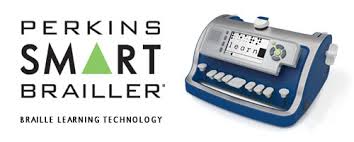
New workers at the facility must first learn how to transcribe. That process takes around two years of constant practice on a Perkins Brailler — a kind of typewriter which raises Braille dots on paper. After successfully completing the training program, and passing a number of examinations, the women become certified Braille transcribers. At that point, they move on to use computer software to transcribe the textbooks.
Some of the women even transcribe in foreign languages. While it is not necessary to be fluent in the language, it is important to have some familiarity in order to produce accurate transcriptions. In addition to Braille, the unit also has a tactile graphics department which produces maps and graphs where the individual components are differentiated through being printed in different textures, which blind students can feel.
Once the transcriptions have been finalized and checked, they are either printed on site at Mountain View, or sent to external contractors for printing into textbooks.
Achieving certification as a Braille transcriber is hard work, and as a result, earning this certification gives a great sense of achievement and pride to the incarcerated students. Careful attention is also required to produce accurate transcriptions of the textbooks. Because of the shared challenges and shared purpose the atmosphere in the unit is like a close-knit family; incarcerated students with their disadvantages helping disadvantaged blind students outside of prison.
Once completed, the textbooks are sent to public schools across Texas, where more than 4,100 registered blind students depend on them for their education, and thus, their futures. In this regard, the blind students and the inmate students have a symbiotic relationship of success and hope, as the blind students create the need for the incarcerated students to fulfill, the incarcerated students then have a chance at success post-release from custody due to the news skills imparted upon them.
When the women are released from prison their new skills offer them excellent opportunities. In the public sector a certified Braille transcriber can earn up to $100,000 a year. So far 25 inmates have been released from Mountain View and had transcribing jobs waiting for them. According to Prisoneducation.com, employment is one of the most important factors in determining whether a released prisoner will successfully reintegrate back into society and become a productive citizen, or return to crime, and eventually, prison. Studies show that almost 90 percent of those who return to prison are unemployed.
Mountain View’s Braille facility offers a remarkable opportunity for those inmates fortunate enough to secure a spot: a qualification to be genuinely proud of, membership of a supportive community, and the chance of a job back in society that most ex-convicts could only dream of.
For many of the women, however, what makes the venture so special is that it cannot only transform their lives, but through their textbooks they can also help transform the lives of thousands of blind children and adults around the state. What that offers is perhaps the most precious thing of all: a small measure of redemption.
[amazon template=iframe image&asin=0395968887]