 Blogcritics The critical lens on today's culture & entertainment
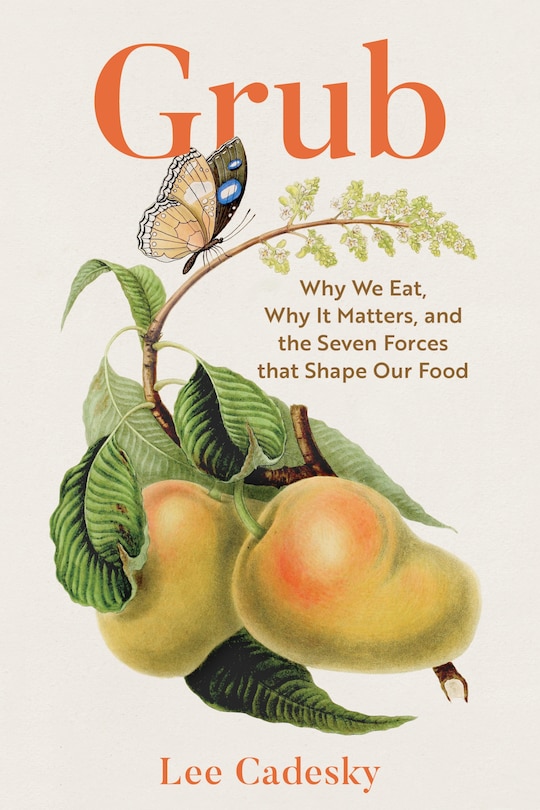
Water may be humanity’s most essential resource, but food follows close behind. We cultivate it, preserve it, trade it, celebrate it, and sometimes compete over it. Food is necessity, culture, identity, and increasingly a matter of global concern. In Grub: Why We Eat, Why It Matters and the Seven Forces That Shape Our Food, Lee Cadesky attempts to explore not only what food is, but how its pursuit and enjoyment have shaped human society and relationships—and how we might build a more sustainable food future. Drawing in part from his experience in the insect-protein industry, Cadesky uses alternative protein and emerging food systems as part of that broader conversation.
An Ambitious Subject
It is an ambitious subject and, at times, a fascinating one. Unfortunately, I often found the reading difficult to follow. The prose felt dense and frequently read more like a technical or scientific journal than a work intended for a broad audience. I struggled to find a rhythm in the writing, and with material this information-heavy, cadence and accessibility matter. I wanted more moments where the science was translated into something tangible and immediately understandable.
Those moments do appear occasionally, and when they do, they are genuinely engaging.
The Science Behind Cooking Techniques
One passage discussing protein structure and food preparation stood out in particular. Cadesky explains how different protein structures influence texture and cooking methods—for example, how muscle fibers create the directional grain of meat and why slow cooking changes tenderness. Those sections sparked my curiosity and made me want to understand more about the science behind cooking techniques and food itself.
At times, however, I wanted the author to go one step further. Concrete examples—specific cuts of meat, familiar ingredients, practical applications—would have helped bridge theory and experience. That sense of connection felt especially important because the book frequently shifts from explaining the natural structure of plants and animals to advocating for interventions such as genetic editing and industrial food innovation.
Unanswered Questions
That transition created some tension for me as a reader. If understanding food begins with appreciating its biological foundations, what happens when those foundations become increasingly engineered? Similarly, the book appears broadly supportive of food manufacturing and technological solutions. This raised questions that remained unresolved in my mind: If processed food is often criticized for distancing us from what we eat, do greater automation and AI meaningfully change that relationship?
Food Brings People Together
One idea presented in the book that resonated strongly with me was the argument that food brings people together. Food becomes a means of communication, negotiation, hospitality, and even peacebuilding. Shared meals connect families, communities, and nations. Cadesky suggests that food trade has historically encouraged cooperation and stability, even while acknowledging that food systems can also become tools in geopolitical conflict.
Ultimately, Grub succeeds most when it encourages reflection rather than certainty. I was not always sure which viewpoint Cadesky intended to champion, but that ambiguity is not necessarily a weakness. The central question—how humanity can understand, sustain, and improve its food supply—is unquestionably worth asking. Even when I found myself unconvinced or wanting clearer explanations, the book continued to provoke thought, and that alone gives it value.
Cadesky’s book is available in hardcover beginning June 30, 2026.