 Blogcritics The critical lens on today's culture & entertainment
Emancipation Proclamation
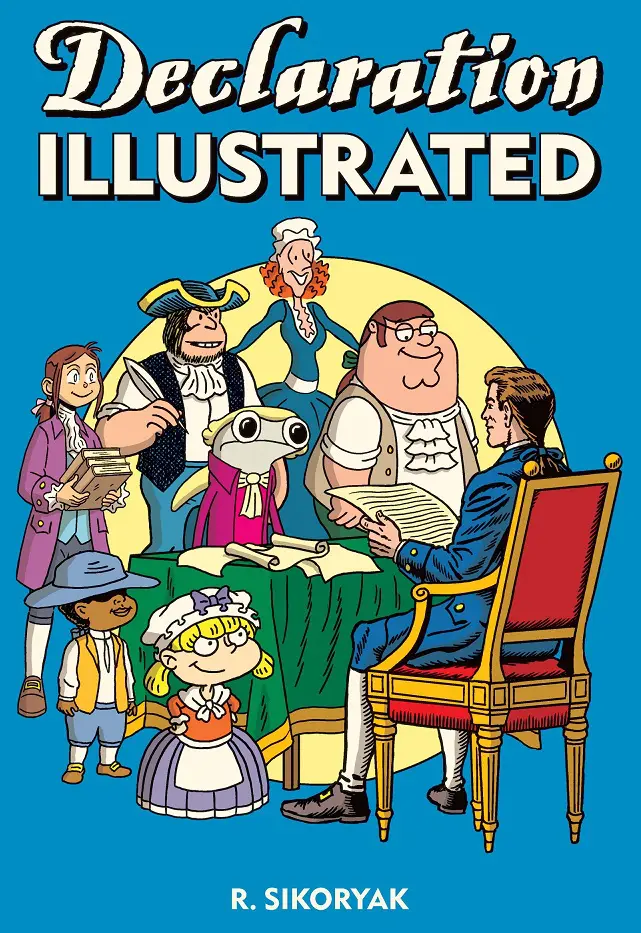
Declaration/Emancipation Illustrated by R. Sikoryak, published by Drawn and Quarterly, presents three famed historical documents along with modern characters in a pairing that delights and informs. Illustrating manuscripts is a centuries-old practice, adding visual color to bolster text literally and figuratively. Sikoryak has done it before for the U.S. Constitution, and now he is back for more legal papers, which are as impactful as they are packed with archaic language.
The Declaration of Independence and the Emancipation Proclamation are two of the most important writings in all of American history, and Sikoryak adds in the Gettysburg Address for good measure.
The release of Declaration/Emancipation Illustrated is timely, with the 250th anniversary of the famed day in Philadelphia. On July 4, 1776, representatives from each of the original 13 colonies signed their names to a legal breakup with Britain, a matter done on paper that would take four more years to affirm by war. While many people know this from their history classes, they may not have actually read the document itself, which makes bold claims that some find radical even today.
Sikoryak presents the Declaration piece by piece, only a few dozen words at a time. Each selection is accompanied with an illustration, such as Superman shattering chains as the text reads, “it becomes necessary for one people to dissolve the political bands” or the cast of Family Guy cheering on “Governments are constituted among Men, deriving their just powers from the consent of the governed.” The characters are all in 18th-century clothes, which echoes the historical time while also showing that the words affect people to this day.
While many people know the preamble to the Declaration of Independence, Sikoryak goes beyond to the real meat of the document. It is not only a manuscript of social philosophy but a list of complaints comprising the colonists’ case for revolution. The grievances, addressed to King George himself, include not granting pardons after the uprisings against the Stamp Act as promised, restricting local rule and courts, quartering soldiers, and much more. Readers might be surprised at accusations then seen as anti-patriotic, such as obstructing immigration and naturalization.
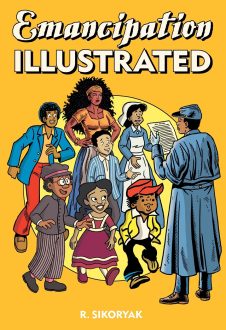
Like the Declaration of Independence, the Emancipation Proclamation would require a war to take effect. With the Civil War dragging into its darkest days, President Abraham Lincoln proclaimed in September of 1862 that on January 1, 1863, all slaves in rebelling states would become free. He put the weight of the executive branch behind it, meaning the military had the legal authority to liberate slaves and protect their freedom.
Sikoryak uses African American and Black characters to illustrate the legalese, including greats such as Curtis, Black Panther, Icon, Brother Voodoo, and the Harlem Globetrotters. Sikoryak includes the Gettysburg Address as well, presenting characters like Static, Bill Mauldin’s Willie and Joe, the Justice League, and Sgt. Fury and his Howling Commandos all in Civil War soldier garb.
The importance of actually reading the historical documents in Declaration/Emancipation Illustrated cannot be overstated. They may be difficult texts, but they are foundational in understanding what the United States is and what principles serve as its foundation. Sikoryak’s illustrations keep the reader engaged and highlight the constant effort needed to ensure, as Lincoln said, “that government of the people by the people for the people shall not perish from the earth.”