 Blogcritics The critical lens on today's culture & entertainment
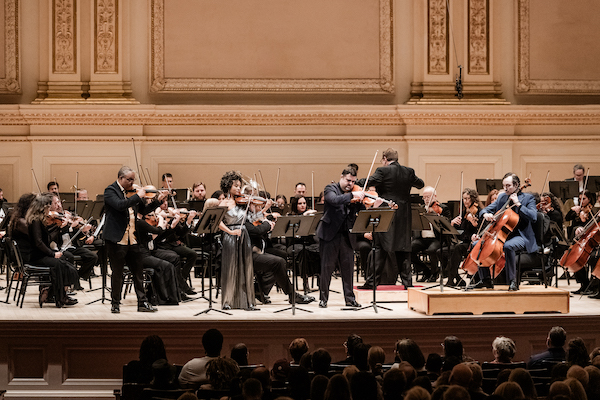
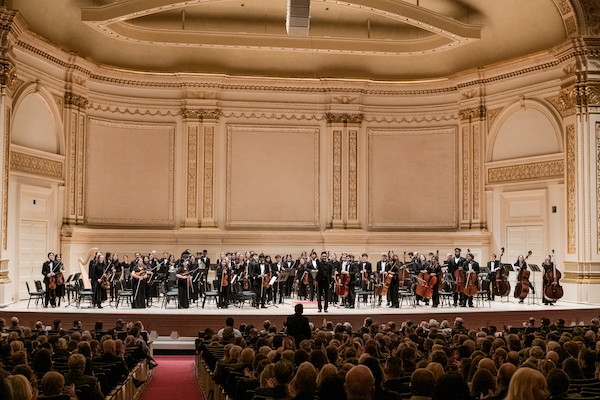
An omnibus concert billed “A Charleston Celebration” was that and more in New York on Feb. 26. The city of Charleston, South Carolina sent not one, not two, but three orchestras, including the Charleston Symphony, to debut at Carnegie Hall with a program devoted largely to music inspired by Charleston and composed by Charlestonians.
The professionals of the Charleston Symphony and the Harlem Quartet brilliantly performed a stunning contemporary concerto by Edward Hart. But the first half of the concert belonged to the Charleston Symphony Youth Orchestra, which acquitted itself well, and the College of Charleston Orchestra, composed of advanced students who have gelled into as good a student orchestra as any top U.S. music school can field.
Carnegie Kids
Plenty of parents were in attendance at the packed hall to hear the kids of the Youth Orchestra tackle some challenging selections. The world premiere of Thomas Cabaniss’ playful “Charleston Mix” evoked the famous old dance, the Charleston, with its muscular 3-3-2 beat. But the piece also revels in tricky rhythms which the youths, under the baton of talented up-and-coming conductor Ryo Hasegawa, for the most part navigated adeptly.
Edmund Thornton Jenkins was an early-20th-century African American Charlestonian who, like so many Black American artists in the last century, had to abscond to Europe to find acceptance and success. But the sounds and activity of his native town never left him, and his “Charlestonia” energetically portrays the cacophony of a busy American city.
It launches with rich jazzy harmonies and warm melodies, then really wakes up with a chugging section in five- (or 10-) beat time. The performance featured nice work in particular from the cellos and basses and from a harpist and a solo trumpeter.
The Youth Orchestra’s best performance was of Sibelius‘ “Finlandia,” whose pace and rhythms are a bit easier to manage. The brass section shone, and the orchestra overall gave a reading both rousing and touching, with kudos due to Hasegawa for his sensitive approach to this majestic music.
Sea Wolves and Subways
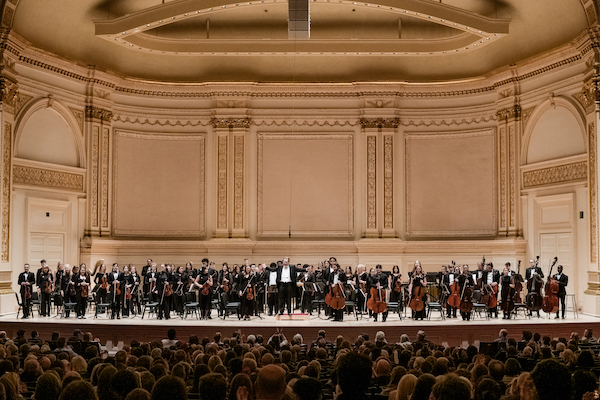
The College of Charleston Orchestra began its set with the New York premiere of “Corsaro” by composer Yiorgos Vassilandonakis, who has had a long association with Charleston. This piece evokes misty seascapes and ominous footfalls, with heady harmonic shifts verging on the harsh, and a progression of awkward rhythms under warped, softer harmonies and grey dissonances. It may not be to everyone’s taste, but I found it evocative and energizing in a focused performance, led by the Charleston Symphony’s conductor Yuriy Bekker, that approached a Wagnerian grandeur at moments.
The focus returned to city life with Trevor Weston’s “Subwaves.” In its opening strains this piece effectively captures the chaotic sound world of the New York City subway. Thereafter, though, it loses momentum, with a lack of narrative flow. Weston marshals a strong vocabulary of vivid musical language but to my ear doesn’t arrange it in a way that says anything much, notwithstanding the cool and careful performance from the college musicians.
The orchestra was a tiny bit shaky in the famous Finale of Dvořák’s “New World Symphony,” but the occasional slight timing imprecisions didn’t detract from the spirited energy and an overall strong performance. Individual musicians and sections acquitted themselves quite well in music whose familiarity demands close adherence to the “script.” On the whole, this large ensemble of advanced students made an excellent impression.
The City of Charleston – in Three Movements
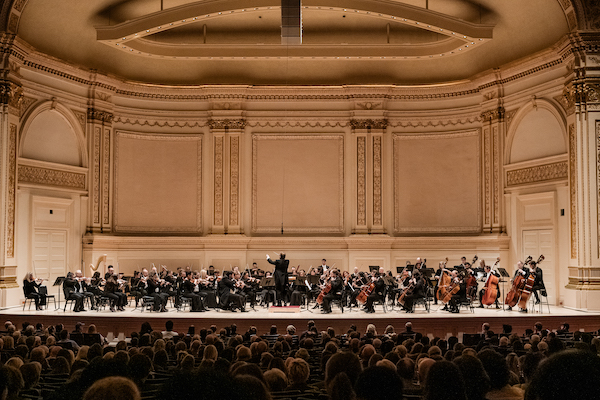
The long concert resumed after an intermission with the Charleston Symphony itself, joined by the four members of the Harlem Quartet. It had been a long evening already and I was beginning to fade, as I was suffering from a slight cold, but Edward Hart’s A Charleston Concerto woke me right up and captivated me from beginning to end.
The three movements trace the history of the city, beginning with its “discovery” by the first Indigenous people to move there. This first movement sparkles with adeptly crafted conversations between orchestra and quartet. The individual members of the quartet could be heard clearly, projecting tones of various colors but all in a warm palette.
A beautiful violin-viola duet leads into a lively tango-like section as the soloists and orchestra wildly but firmly develop a basic two-note whole-step motive. The end of the movement drew an unexpected burst of applause – as it should have. The performance shone, and our present-day custom of holding off on applause until the end of a multi-movement work is, in many situations, uncomfortable and just plain silly.
The “Tragedy and Reconciliation” movement takes on the city’s (and the South’s) history of slavery. Percussive cracks are overtly suggestive. Wailing dissonances and mournful interludes evoke the horrors of chattel slavery. A booming bass tread and biting trumpet accents lead to a Gullah spiritual, which carried hints of early jazz and blues through much of the movement. The Harlem Quartet in particular dug into these themes with open-armed sensitivity.
“Reconciliation” arrives with a solo from the first violin and the re-setting of an earlier, spirit-challenging major-seventh interval into a comforting melodic setting. Still, the movement closes with somber blue notes and a final crack of a whip, hinting at a painful legacy that cannot and must not be forgotten.
The optimistic final movement, “Tomorrow,” is a joyful syncopated gambol in which a striking percussion beat dialogues with the string quartet. The solo viola’s tone was sublime. Percussive choppy rhythms maintain some tension amid an overall positive vibe. Orchestra and quartet sounded glorious both separately and, as Hart’s brilliant writing allows, together.
All the orchestra’s colors along with a full measure of George Gershwin’s wit and drama showed in force in Mr. Bekker’s bright take on An American in Paris. This familiar, hummable music proved an excellent companion piece to the Edward Hart concerto, and a happy way to finish a most satisfying evening at Carnegie Hall. May the musicians of Charleston make many happy returns to New York.
Also see our recent interview with Charleston Symphony CEO Michael Smith, and see the Charleston Symphony’s website for upcoming events.
Photos by @alyonaphotography