 Blogcritics The critical lens on today's culture & entertainment
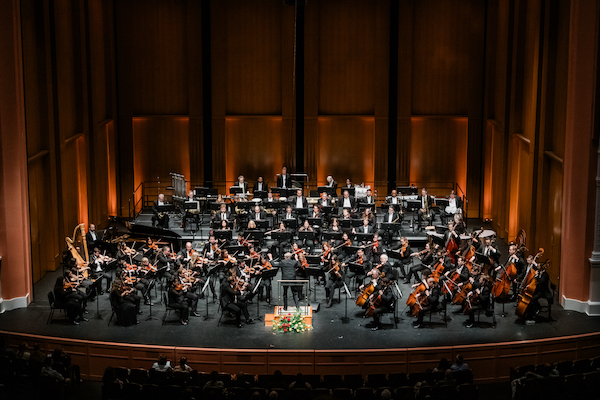
On February 26, 2025, the Charleston Symphony, College of Charleston Orchestra, and Charleston Symphony Youth Orchestra will cap a three-day event called “Holy City in the Big Apple” with the ensembles’ respective debuts at Carnegie Hall. Michael Smith, CEO of the Charleston Symphony, spoke with us about the orchestras, the music, and how this unprecedented two-city celebration came about.
How the Charleston Celebration become a reality?
For quite some time, we have been looking for the right opportunity to showcase our orchestra on a national stage. Across the industry, audience-building for classical music presents significant challenges, yet Charleston and the Charleston Symphony continue to defy the trends.
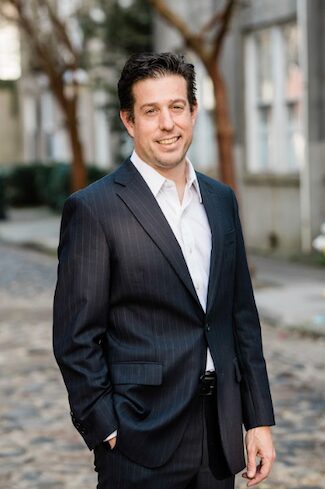
We have a unique model and a deeply engaged community, and our trajectory reflects that. Since just before the pandemic, our overall attendance has surged by 75%, and as the pandemic began to fade, we successfully raised $16 million for our endowment. We’ve made bold investments in programming and education, and our community’s response has been remarkable.
Symphony and Community
When the opportunity arose to partner with the College of Charleston and bring not just our orchestras, but the spirit of Charleston [itself] to Carnegie Hall, we knew this was a moment to seize. This isn’t just a concert – it’s a statement about how a symphony deeply embedded in its community can grow, thrive, and inspire new generations of musicians and audiences alike.
A particularly meaningful part of this project is the inclusion of the Charleston Symphony Youth Orchestra, one of our flagship education programs. These talented young musicians will not only have the once-in-a-lifetime experience of performing at Carnegie Hall, but they will also take center stage at the Gaillard Center the following week, showcasing their talents on another world-class stage.
How are the three ensembles linked?
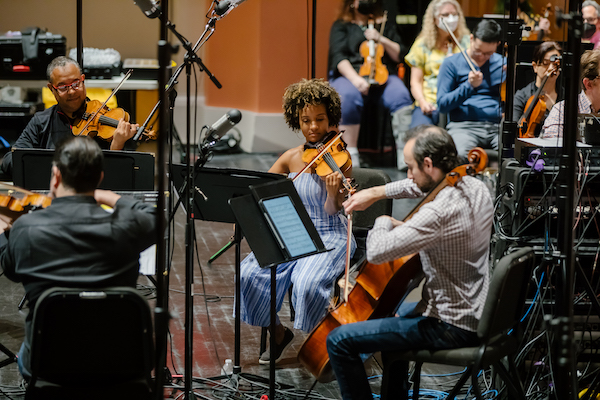
The Charleston Symphony Youth Orchestra (CSYO) is one of the Charleston Symphony’s flagship educational programs, designed to nurture the next generation of musicians. Our professional musicians serve as mentors and coaches, working closely with the students on a weekly basis to develop their technical and artistic skills.
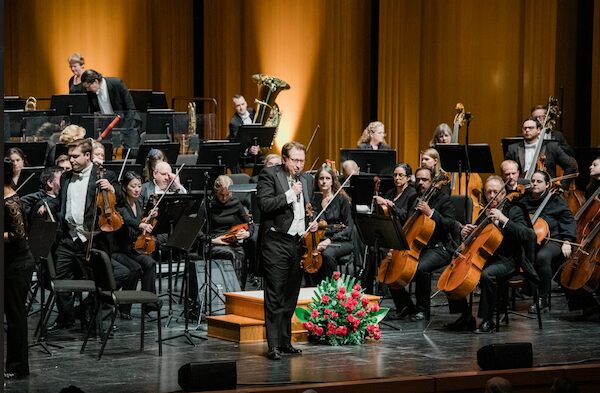
Our Artistic Director, Yuriy Bekker, is also the conductor of the College of Charleston Orchestra, further strengthening the institutional and artistic ties between the Charleston Symphony and the College of Charleston. Our collaboration with the college has resulted in numerous innovative and inspiring projects, and this event at Carnegie Hall is a prime example of how our partnership continues to evolve and grow.
At the heart of this celebration is A Charleston Concerto, composed by renowned composer Edward Hart, a Charleston native, faculty member at the College of Charleston, and a valued member of the Charleston Symphony’s Board of Directors. His work is a powerful reflection of Charleston’s rich musical heritage and cultural identity, making it a perfect centerpiece for this landmark performance.
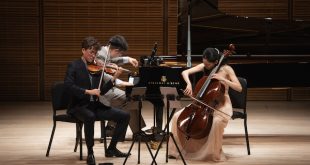
We are also honored to be joined by the Grammy-winning Harlem Quartet, who will perform as soloists for “A Charleston Concerto.” Their participation adds another layer of artistic excellence and depth to the program, highlighting what makes Charleston such a vibrant artistic hub.
Through shared leadership, deep institutional connections, and a commitment to showcasing Charleston’s musical identity on the world stage, this performance is a true celebration of our city’s artistic excellence and innovation.
A Tale of Two Cities
Edward Hart’s A Charleston Concerto was a CSO commission which the CSO performed and recorded for its 2023 album Under an Indigo Sky: Works by Edward Hart. The Harlem String Quartet were the soloists on the recording and will perform the same role at the Carnegie Hall concert as well. How did this collaboration come about?
The Harlem Quartet was a new and exciting artistic partner for the Charleston Symphony, and from the very beginning, we were captivated – not just by their extraordinary technical and musical abilities, but also by their genuine warmth, collaborative spirit, and deep artistic integrity.
When we embarked on recording A Charleston Concerto, it became clear that the Harlem Quartet was the perfect ensemble to bring to life Edward Hart’s work, which beautifully captures the rich cultural fabric of Charleston.
The collaboration was so inspiring that it was only natural to continue this partnership at Carnegie Hall, where they will once again serve as soloists. Their participation elevates this performance, adding an exciting new dimension to an already significant evening celebrating Charleston’s musical identity.
Native Sons
The Charleston Symphony Youth Orchestra’s portion of the concert will include “Charlestonia” by Edmund Thornton Jenkins, and Thomas Cabaniss’s “Charleston Mix.” Can you tell us a little about these Charleston-themed works?
“Charlestoniana” is a vibrant orchestral work that captures the spirit, rhythms and cultural essence of Charleston, South Carolina. Jenkins was a Charleston-born composer and infused his works with elements of Gullah traditions, jazz, and classical influences, reflecting the city’s rich African American heritage and musical diversity.
We love working with Thomas Cabaniss. He is a native Charlestonian, and the architect of the world-renowned “Link-Up” Young People’s Concerts developed in partnership with Carnegie Hall. We thought it was a perfect fit to commission him to write a work for the CSYO.
Together, these two works honor Charleston’s past while celebrating its vibrant musical future, making them a meaningful and exciting part of this performance.
The College of Charleston Orchestra will perform the world premiere of “Corsaro” by Yiorgos Vassilandonakis, who is a professor of music theory and composition at the College of Charleston. Can you tell us a little about this music?
Yiorgos is a valued artistic partner of the Charleston Symphony, and we are thrilled to showcase his work with this premiere. In fact, his artistic presence extends beyond this performance – we are excited to premiere another of his works in our Masterworks series next season.
His music is deeply expressive and intellectually intricate – a fascinating blend of cerebral complexity and emotion that we love exploring. As an integral part of Charleston’s musical fabric and a composer of international stature, his contributions to the contemporary music landscape are significant.
We are passionate about celebrating the work of living composers – particularly those with deep roots in Charleston – making this premiere a meaningful moment for our orchestra, our community, and the next generation of musicians.
A Charlestonian in New York
Elsewhere the program references New York City, notably with Gershwin’s An American in Paris, Trevor Weston’s “Subwaves” (a musical tribute to the NYC subway), and of course the participation of the Harlem Quartet. What comes to mind when you think about connections between the two cities?
Charleston and New York City are deeply personal to me – I have called both places home, and they are communities I care about deeply. While Charleston is known for its rich history and distinct cultural identity, it is impossible to ignore the many New Yorkers, like myself, who have relocated here. This convergence has created an exciting fusion of artistic innovation and creativity, bringing together Charleston’s deep-rooted traditions with New York’s dynamic energy.
An American in Paris is a perfect example of this kind of cross-cultural inspiration. While the piece itself is about an American experiencing Paris, Gershwin had a profound connection to Charleston. Many people know that he spent significant time here while composing his iconic opera Porgy and Bess. Walking through the streets of Charleston, it’s easy to imagine him doing the same – soaking in the sounds, the dialects, and the rhythms that would become the heartbeat of his music. His incorporations of these “Charleston” sounds are unmistakable in his music.
And of course, the Carnegie Hall connection makes this program even more meaningful. Gershwin’s An American in Paris premiered at Carnegie Hall in 1928, and nearly a decade later, Porgy and Bess had its first full production in New York, cementing its legacy as one of the most significant works in American music. Now, nearly a century later, we head to Carnegie Hall with a program that celebrates Charleston’s musical identity alongside works inspired by New York, including Trevor Weston’s “Subwaves,” a brilliant tribute to the NYC subway, and the Harlem Quartet, whose artistry represents the best of the city’s vibrant musical culture.
This program is more than a concert – it’s a dialogue between two cities that have long shaped American music. It’s a chance to honor the past while celebrating the creative energy that continues to connect Charleston and New York in exciting, unexpected ways.
More generally, what’s special about the Charleston Symphony? What makes it so beloved in the community?
For decades, the Charleston Symphony has been recognized among musicians as an orchestra of exceptional quality, with alumni who have gone on to perform in nearly every major orchestra in the country – many of whom return to Charleston to perform with us today.
Building Trust
But while the orchestra’s artistic excellence was long established, at the turn of the 21st century it faced a significant challenge: aligning its business model with its musical success.
That all changed in 2011, when the Symphony launched a bold new approach that redefined its relationship with its musicians, its leadership, and, most importantly, its community. Today, the orchestra is firing on all cylinders – attendance is soaring, the annual fund is growing, and we’ve gone a long way to securing our future by raising $16 million for endowment.
So, what was the tipping point?
The turning point in 2011 wasn’t just about financial restructuring or programming adjustments; it was about building trust and unity from the inside out. We started by fostering a culture of transparency between our board, staff and musicians, because an orchestra cannot effectively serve its community unless it is united in purpose.
From there, we expanded that trust outward, strengthening our bond with the Charleston community. And we did something that proved to be the most important step of all – we listened.
We listened to what Charleston wanted from its orchestra, what would resonate with our audiences, and how we could be more than just a performing arts institution – we could be a cultural partner, an educational resource, and a true reflection of our city’s identity. What we heard inspired us, and from that moment on, we never stopped listening.
Since then, our budget has grown from $1.3 million to nearly $6 million, but the real success is measured not just in financial growth, but in the deep and enduring relationships we have built – relationships that fuel our commitment to delivering outstanding performances and transformative educational programs that truly matter to our city.
Looking ahead, we believe we can be an industry leader in demonstrating how a modern symphony serves its community and thrives – artistically and financially. We have the vision, the talent and the momentum to establish ourselves as a premier cultural destination and a leading performing arts organization that fosters lasting connections and meaningful impact for all of Charleston and beyond.
The Charleston Symphony is not just an orchestra. It is a reflection of the city itself, built on history, resilience, relationships, and a relentless pursuit of artistic and organizational excellence.
Tickets for “A Charleston Celebration” at Carnegie Hall are available online, with more information at the Charleston Symphony website.