 Blogcritics The critical lens on today's culture & entertainment
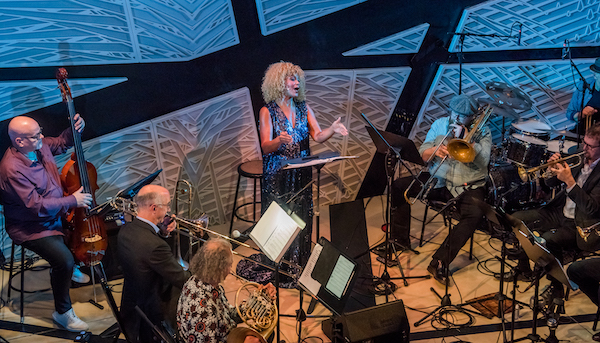
It’s with concerts like “Zombie Blizzard” that the eclectic Brooklyn venue National Sawdust lives up to its reputation for adventurous and boundary-breaking music programming. Composer-pianist Aaron Davis and mezzo-soprano Measha Brueggergosman-Lee have collaborated for years, and their long-nurtured meeting of the minds blossomed anew with Zombie Blizzard, Davis’ song cycle of poems by Margaret Atwood.
Brassy Overtures
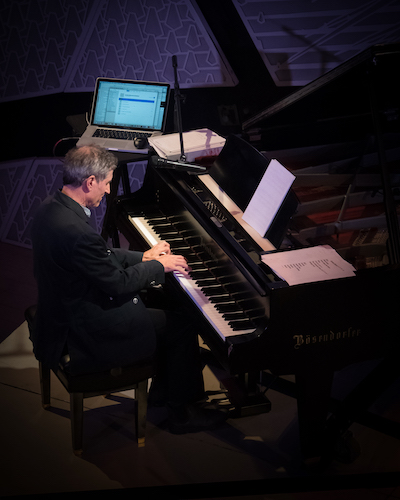
Before Ms. Brueggergosman-Lee took the stage, a skilled ensemble of brass players along with a bassist and a drummer and Davis at the piano led off the concert with three of Davis’ instrumental songs. “Shtetl Waltz” shrewdly and smoothly fused European waltz modes à la Nino Rota with klezmer and jazz. “Earth Above Sky Below,” inspired by the experiences of International Space Station astronauts, surged with rhythmic adventures in the form of a kind of jazz waltz inside an energetic 12/8 beat with spirited trombone and trumpet solos. “Oseo,” in a rare instance of 4/4 time from Davis, reveled in the high-spirited Afrobeat sounds that were inspiring Western musicians and new listeners in the 1980s when Davis wrote it. These engrossing and enjoyable pieces all reflected Davis’ wide-ranging skills as a composer and arranger (and pianist) as well as the ensemble’s jazz bona fides.
Brueggergosman-Lee with her creamy mezzo then emerged to lead the ensemble in The Confession Stone (The Songs of Mary). This cycle of art songs by Robert Fleming has been arranged by Davis for brass quintet and rhythm section. The text comes from poems by Owen Dodson that take the points of view of the New Testament’s various Marys.
In these pieces Brueggergosma-Lee established her impressive dynamic range, moving easily from subtle cool tones to shouts that cut like a sharp stone. Her voice sometimes sailed amid the brass section’s neoclassical and big band harmonies; at other times she soared above them.
Miked to be heard from behind the trumpets, French horn, trombone and bass trombone, she brought home the music’s eclectic-modern take on Christian spirituality. Many “legit” singers sound stilted when they sing jazz or pop. Brueggergosman-Lee, a noted opera singer, has mastered – or should I say, developed – a unique crossover style and technique that combine jazz with the operatic, and sound thoroughly authentic.
Some of the Fleming songs have more depth than others. Ironically, perhaps the most powerful was the quietest, with muted horns signaling the tolling of a bell.
To end the set, the cycle flowed right into a multilayered arrangement of “Strange Fruit.” Introduced by an eerie descending chromatic scale on the bass, and ending on a sigh, this rendition of Abel Meeropol’s iconic depiction of a lynching offered both a stark contrast and a disturbing parallel with the Fleming song cycle’s imagery of a crucified Jesus.
Zombie Blizzard
The main event was Davis’ seven-part Zombie Blizzard song cycle. The poems come from Atwood’s collection Dearly. They concisely address matters close to the writer’s heart, generally from an expressly feminist point of view. Helpfully, we heard before each song a recording of the poem as recited by Atwood herself. I noted right away, in “Zombie,” how Davis had aptly shaped and accented a dramatic arrangement and melody to the lyrics.
“Blizzard” begins with a flowing thrum from the piano, yielding to a burst of Romantic expression, followed by a waterfall of dissonant chords from the brass. With a 6/8 beat on top of a 3/4, this was a good example of Davis’ evident love for rhythms made of threes. Perhaps the feeling of rocking that arises from them is especially appropriate to the soft flow of Atwood’s gently slashing free verse. In this case, the piece powerfully evoked the subject: the strength of body and spirit that the poet’s frail mother, in her 90s and asleep, once had.
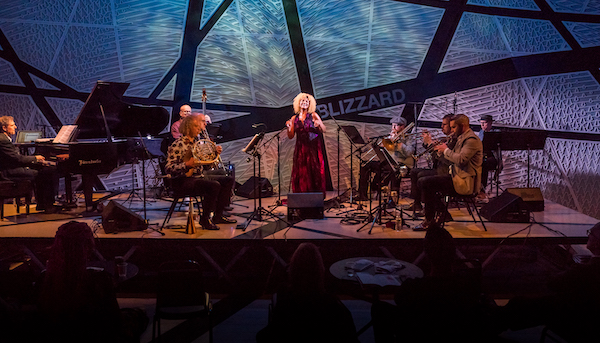
“Health Class 1953” had a Kurt Weill-esque archness. In “Princess Clothing,” which deals with the symbolism of women’s clothing, Davis playfully applied different musical styles to each item – jazzy changes and blue notes; a brisk polka for “cotton”; smooth syncopations for “satin.”
“Shadow” is a gut punch of a poem about the objectification of the human (female) body. Davis sets it in slinky music interrupted by contrasting martial bursts, culminating in a musical cry of anguish. Singer and ensemble embodied the music to illuminate the text with a dramatic flair reminiscent of a Jacques Brel performance. In “Digging of the Scythians” the music turns up the heat on the same theme, with a chunky swing beat uncomfortably cushioning a chilling holler of “rape, death, death, rape.” This text seemed to give both Davis and Brueggergosman-Lee exceptionally strong inspiration.
The cycle came to a close with a soulful performance of the final piece, “Dearly.” Ironically it’s a poem about words at risk of extinction that completes a cycle that forefronts the power of words, both in themselves and as inspirations for music. Throughout Zombie Blizzard as written, arranged, played and sung, the music and texts march, sail, and churn in lockstep. On top of that, with composer and singer having developed the work together, Brueggergosman-Lee’s voice fits the music perfectly.
The album version of Zombie Blizzard is out now on Leaf Music.