 Blogcritics The critical lens on today's culture & entertainment
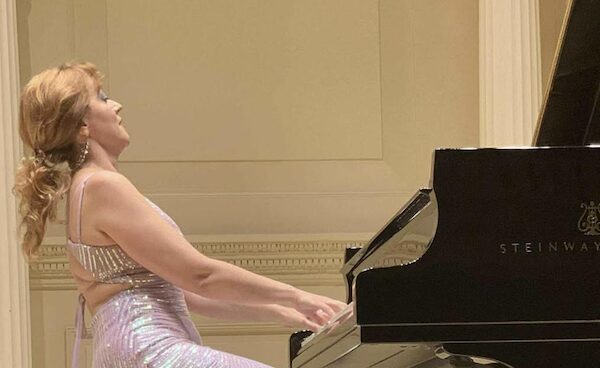
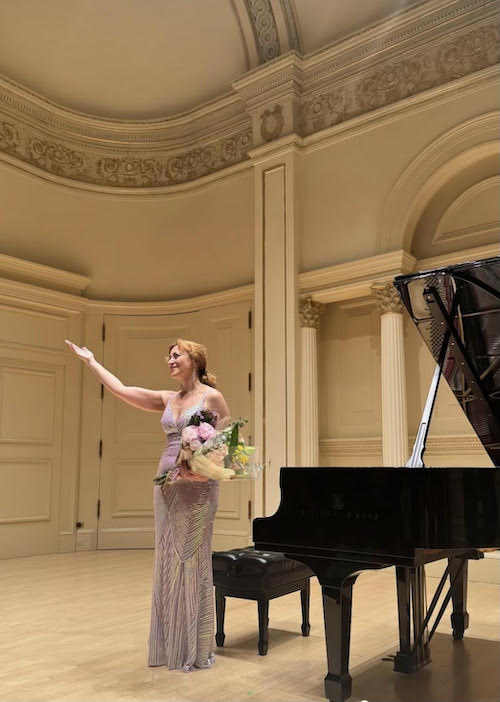
When Armenian pianist Kariné Poghosyan played the “Toccata” by Aram Khachaturian last year at Carnegie Hall’s Weill Recital Hall, it was in the context of a jazz-themed program. This year she returned to the venue with an all-Khachaturian program that underscored her affinity for her countryman’s music.
The lush Romanticism of the “Adagio” from the ballet Spartacus can feel indulgent. But Poghosyan is so much fun to watch and so committed to the music’s Lisztian excess that it becomes hard to resist. The concert was only a few minutes old and I was already scribbling in my notebook phrases like “as if pulling out the guts of the piano itself.” And I meant it admiringly.
Like much of Khachaturian’s music, the piece goes unexpected places while bursting with ideas. Poghosyan follows the composer’s muse devotedly.
Poetry and Dance
Though written decades earlier, in the 1920s, “Poem” also plunges into Romance, but this time the waters are stormy. Agitated parallel chords and anguished dissonances mix with lyrical, poetic passages. Harmonies clash. Poghosyan navigates these troubled waters like she’s born to it.
Even when he worked with timeworn form like a waltz, Khachaturian could cram a myriad of ideas into small quarters. The middle section of the “Valse Caprice” from Two Pieces (1926) bubbled with them. Poghosyan took highly liquid tempos in the “Tanz” that followed, always in the service of her distinct expressivity. (If you don’t care for rubatos, she is not your pianist.)
She showed a more temperate side in selections from the Masquerade Suite, bestowing upon them a lyrical and relatively modest reading. Here she located the expressivity firmly in the melodies. When Khachaturian provides those exquisite melodies at which he was so adept, trusting them is key, something Poghosyan with all her showiness clearly understands.
The “Toccata” becomes a technical feat in her hands, whizzing by in a blur. I think some of the musicality gets lost. Not so in Poghosyan’s own skillful arrangement, elegantly voiced and sensuously enunciated, of the “Oror” (lullaby) from the ballet Gayaneh. It demonstrated that she is as adept with a light touch as with muscular firepower.
It also provided a respite between the “Toccata” and the first movement of the Piano Sonata (1961). The movement’s perpetual-motion figures had plenty of force but also sparkled playfully. Blazing energy propelled the chordal development atop Khachaturian’s characteristic chromatic descents in the bass. This piece can be played too percussively; in this case it was just rattling enough, just where needed. My scribble at the end was “almost looked like she could break the piano.”
Live Action
The “Andante tranquillo” slow movement was a highlight of the concert. Full of dreamy rubatos, it launches into a frenzy of the composer’s beloved octave-hopping in a middle section, then subsides back into lyrical gentleness. Poghosyan’s surging performance was the kind that gains from being seen live. Throughout the concert her body language suggested that she was living the music, not just playing it. Memorizing the full repertoire as she does adds to that aspect of her appeal.
In the final movement she focused on dynamics, drive, and steady rhythm. After an opening statement that seemed to presage industrial rock, the music danced under her fingers as if they were inventing it as they went. The total effect was explosive – and sheer fun.
For an encore Poghosyan returned to the Masquerade Suite for a hearty and charming performance of the Waltz, possibly the composer’s most famous work (aside from the “Sabre Dance” of course). The “Unabi” from the (to me) obscure Six Dances for Piano by the Ottoman-Armenian priest and composer Komitas made for a lovely second encore.
The pianist wrote in her program notes that while Khachaturian wasn’t the most gifted of pianists, “he had such a phenomenal natural instinct for the instrument that his piano works feel so comfortable to play.” That was evident in spades at this exciting pianist’s latest recital.