Blogcritics The critical lens on today's culture & entertainment
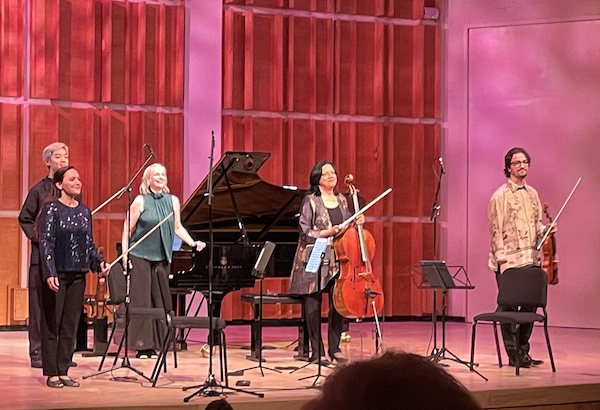
Pianist Orli Shaham’s concert featuring the music of Clara Schumann at the Kaufman Music Center last night was titled In Clara’s Hands. But it was through Shaham’s hands that a bright new light shone on Schumann.
Spoken-word introductions from Sarah Fritz, author of the new biography Madame Composer (and a colorful speaker), placed each piece in historical and artistic context. The book may be the first true “composer biography” of Clara Schumann, focused on her own music more than on Schumann as a pianist, or a muse, or the wife and champion of Robert Schumann, or even as the influential educator and shaper of performance traditions still observed today.
We can perhaps be excused for never having known we needed such a book. True, in recent years Clara Schumann’s music is being presented more than ever. But often it’s as part of a “women composers” program, situating Schumann as a precursor of today’s celebrated contemporary women composers. Or a Schumann piece appears amid a concert of music by the great male composers of the classical and Romantic canon, programmed as if to say, But look, there was also Clara.
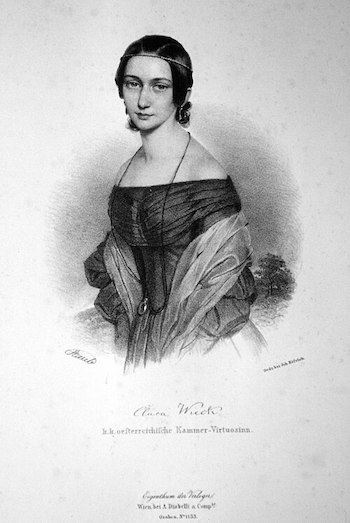
There’s nothing “also” about the piano music Shaham played at last night’s sold-out concert. Most of it was new to me, as Shaham admitted it had been to her until a few years ago. It’s astoundingly rich. It takes in influences from other great composers of the 19th century, including Chopin, Mendelssohn (whose sister Fanny Mendelssohn Hensel is also now receiving more recognition as a composer), and Robert Schumann. But in terms of influence it gave as much as it got, famously inspiring Brahms as well as Robert and others.
Student pianist Mayu Kanai gave the concert a bright and chipper start with a piece by the teenage Clara, the Impromptu from the Quatre Pièce caractéristiques, Op. 5. I thought back to this when, at the discussion after the concert, Shaham expressed hope that she is helping to establish a performance tradition for Clara’s music that younger generations of musicians will take up and develop further.
Shaham proceeded through a set that included another piece from that early opus, the beautiful Romance. She also played the Prelude and Fugue No. 1 from Op. 16, showing, through her interpretive skill, Clara’s mastery of both formal virtuosity (in the Fugue) and sublime expressivity (in both Prelude and Fugue). Next, the fiery, Chopin-esque Scherzo No. 1 in D minor, Op. 10, though still a youthful effort, had startling power in Shaham’s hands.
Brahms and Liszt would both borrow from Clara’s fervidly imaginative Trois Romances pour piano, Op. 11. Shaham played them with great clarity and feeling. No. 2 had epic intensity, and No. 3 made me imagine a more controlled Chopin.
Those Romances were the last pieces Clara composed as Clara Wieck. The concert narrative picked up 14 years later, in 1853, with Clara’s musical response to her husband Robert’s mental-illness crisis. Shaham gave us the first of the Drei Romanzen, Op. 21. It’s full of ineffable sadness, though still with a detectable sparkle that reflected the composer’s recognition that life must go on, even if in a new phase. We also heard the posthumously published Romanze in B minor, which Clara wrote in 1856 after Robert’s death.
Chamber Music
After intermission, the dynamic violinist Areta Zhulla of the Juilliard String Quartet joined Shaham in a vivid accounting of the Drei Romanzen für Violine und Klavier, Op. 22, a work the pianist is well familiar with. The sweetness of this music from Clara’s mature period contrasted interestingly with the stormier passions of many of the solo piano works. The first piece lived up well to the designation “Romanze.” The sprightliness of the second was tempered with late-blooming shadows. And there seemed something French about the third, which featured Shaham’s agile arpeggiating.
Shaham partnered with the full Juilliard String Quartet in Robert Schumann’s hook-laden Piano Quintet in E-flat Major. Why not give “Clara’s husband” (as he was sometimes known during his lifetime) a spot on a program devoted to Clara?
The lush first movement was powerfully rhythmic. The second had grace and a sense of organic intimacy. (Kudos to violist Nicholas Gallitano for a deep, mournful tone not always easy to achieve on that instrument in a concert hall.)
If ever a music student asks why they have to practice so many scales, introduce them to the ebullient Scherzo. And the finale, like the first movement, sounded just brawny enough – witty and expressive and just plain exciting.
I left the concert hall with Robert Schumann’s melodies in my head. But the evening belonged to Clara. This tribute from Orli Shaham and Sarah Fritz, soulfully performed and historically contextualized, was a significant step in both establishing that missing “performance tradition” and elevating Clara Schumann to her rightful place in classical music history.