 Blogcritics The critical lens on today's culture & entertainment
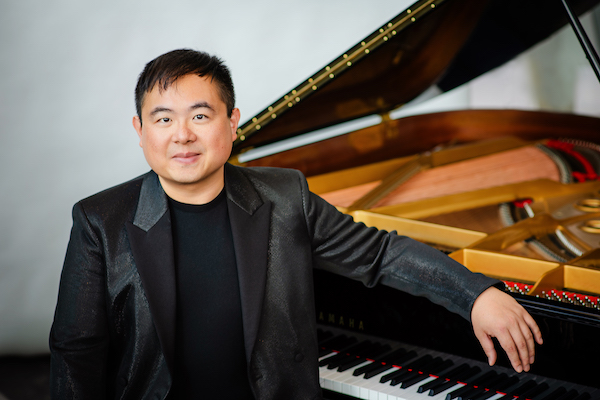
Pianist Chengcheng Ma speaks eloquently about the music that’s on his mind and in his fingers. But no words can truly convey the lived experience of a live performance. (And I recognize the irony that this is a written concert review!) One thing I wasn’t totally prepared for at Ma’s NYC recital last night was the sheer stamina he evinced.
Yes, the program included all 12 of Chopin’s intentionally challenging Études. And yes, Ma has said that Rodney Lister’s Many’s the Time I’ve Seen Her Nude at the Piano was “a dazzling technical challenge” that’s “rarely performed due to its staggering difficulty.” But what the audience at Merkin Hall at Kaufman Music Center experienced last night wasn’t just a couple of difficult pieces; it was an almost nonstop whirlwind of effervescent power.
Paging Couperin
Chengcheng Ma has the expressive depth to match the sheer physical prowess much of his active repertoire demands. This was manifest in the first piece on the program, the New York premiere of suite française by Ketty Nez. I hadn’t know of this composer. I’m glad I do now.
The five-movement piece emerges from (and includes) fragments of music by Françoise Couperin. Specifically, it parallels five of the movements of the French Baroque composer’s first suite, from the first book of his Pièces de Clavecin. In Ma’s hands the work proved spellbinding in several ways, although troubling (or maybe troublesome) in one way.
The “Prelude and Allemande” is built from fists of ghostly grace notes and insistent accents. These scudding clouds surface in the movement’s more lyrical sections as well as the crisp ones. One hears, woven into Nez’s original material, snatches of the Baroque source music – scales, trills, the occasional cadence. Couperin surfaces more baldly during the blocky progress of the “Sarabande,” where amid unfolding drama some haunting dissonances ring out.
The music grows even more adventurous in the “Gavotte,” where Couperin duets with billowing fields of motion and eccentric harmonies with unexpected resolutions. Ma conveyed all this with rich flavor, and sometimes, as in a pointillist middle section, a welcome frisson of humor.
In the closing “Rondeau,” named as in Couperin’s original for “Les Abeilles” (the bees), Nez’s singing insects constantly play with our expectations. Indeed in its details the whole suite delivers a surfeit of surprises. But I found the fairly consistent palette of this substantial work, while exuberant and engaging, to be a little too much of the same over its duration.
That didn’t temper my admiration for what the composer accomplished here, or for the brilliance and sparkle of Ma’s rendition of this impressive new work.
Chopin Still Thrills
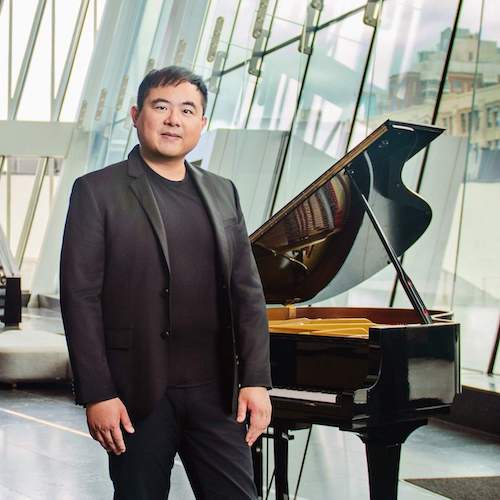
Ma applied similar brio to the Chopin Études. These famously difficult works have been showpieces for pianists for almost two centuries. But while they may have long since given up all their secrets, they continue to thrill. I don’t think I had ever heard all 12 played in succession in concert. It’s something of a marathon: chromatic scales; fantastically fast arpeggio passages; tough workouts for both hands individually; broad landscapes of speed and range – they test a pianist’s virtuosity on many counts.
Today’s young virtuosos play these and similar classic works so fast that they often sacrifice musicality. Chengcheng Ma knows to hold back from such extremes, playing with plenty of velocity but maintaining clarity. In last night’s bravura performance he showed that he had Chopin in his bones.
Pianist as Athlete
After a (surely necessary) intermission the pianist recommenced with the program’s true wonder. Rodney Lister’s single-movement marvel may have a quirky title, but playing this perpetual-motion ogre is no laughing matter. Lister wrote Many’s the Time I’ve Seen Her Nude at the Piano for another pianist back in the ’90s. Apparently she performed it only once. In unveiling it anew, Ma restores to the repertoire – to his repertoire, at least – a near-superhuman exercise in musical athleticism.
Repeated notes are interrupted harshly and irregularly by accented chords that leap all over the keyboard. Rhythm is both relentless and impossible for a listener to nail down. More than once, just when the barrage eases up and you think the piece is going to wind down, it renews its attack.
I found myself literally open-mouthed at times. It’s an exhausting listen, never mind what a challenge it must be to play. The audience cheered mightily, especially when Ma pointed out the composer’s presence in the hall.
Devilish Dante
Yet even then the energy level remained high, indeed reaching stratospheric levels as Ma sailed into an explosive performance of Franz Liszt’s Après une lecture du Dante: Fantasia quasi Sonata, often called the Dante Sonata. As with much Liszt, I find this work hard to grasp. Replete with climaxes and thundering passion, suffused with dramatic breathlessness, it succeeds in suggesting the contrasting worlds depicted in Dante’s epics without sewing its surrealistic panels into a hangable tapestry.

The descending chromatic theme does keep the listener hanging on, but in my case just barely. Fortunately Ma brought such deep commitment to the music that his very physicality summoned interest and appreciation. And as the fourth consecutive piece requiring deep reserves of technical and expressive mastery, it cemented an impression of this pianist as a conjurer of the forces of nature.
Hua Yi Dance for Piano Four-Hands by eminent Chinese composer Zhao Zhang concluded the program. Joined by pianist Yimiao Fang, Ma lightened the mood with this charming short piece inspired by the traditional dances of China’s Yi people.
It was a wise choice to conclude the concert this way, after a program of mostly heavy music. The Asian modes were evident but Zhang puts his own spin on them; at moments I sensed flavors of Spanish and even Russian music.
The concert was presented by Forte International Group. See Chengcheng Ma’s website for performance videos, including excerpts from music by Ketty Nez and Rodney Lister, as well as information about upcoming concerts.