 Blogcritics The critical lens on today's culture & entertainment
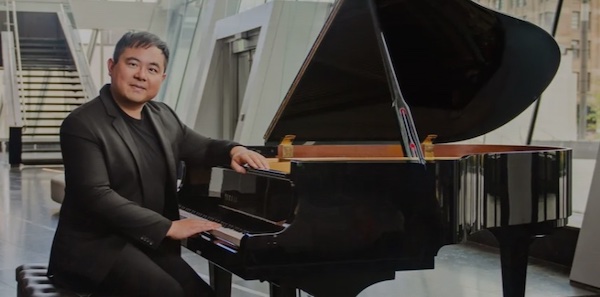
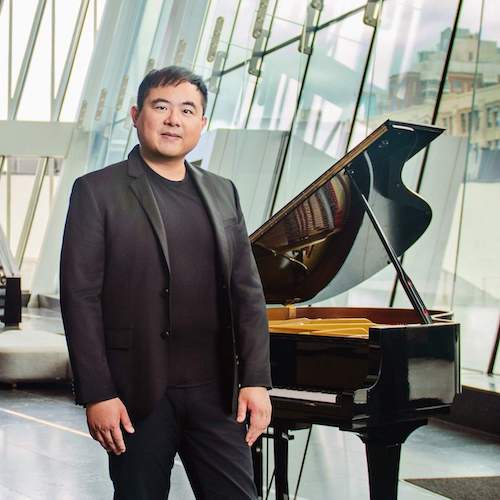
Acclaimed pianist Chengcheng Ma will give a rare New York City recital on Thursday, January 8, 2026 at 7:30 PM at Merkin Hall at Kaufman Music Center. Presented by Forte International Group, the concert will span international traditions to include music by contemporary American and Chinese composers as well as Chopin and Liszt. I had the opportunity to speak with the pianist about his background, his approach, the Thursday night concert, and how jazz has influenced his classical music playing.
Spanning the World
Ma began studying piano at age seven. Music, he told me, “has always been one of the primary ways I understand the world and express myself.” After getting his start in China, he continued his training in the U.S., where his repertoire has ranged “from Baroque to contemporary works” along with “in-depth engagement with jazz,” which distinguishes him from most classical pianists.
During his years of study at Boston University he was encouraged to “think critically about musical structure, historical context, and aesthetic meaning,” he recalled. “For me, music is not merely a technical skill or a performance medium, but a way of understanding and responding to the world – it adds dimension and color to how we experience it.”
Ma explained that jazz, and particularly Harlem stride piano, “has had a profound impact on my understanding of rhythm, time, and freedom. Stride piano demands a high level of independence between the hands, but more importantly, it requires acute sensitivity to pulse, groove, and spontaneous response.”
His jazz studies made him more aware of the interdependence of structure and freedom. “The score is not an endpoint but a starting point. Music truly comes alive in the moment – in breath, time, and immediate reaction.” Thus jazz has directly informed his approach to playing classical music, “whether in rhythmic flexibility, the natural flow of phrasing, or the shaping of musical tension.”
‘Staggering Difficulty’ and a New York Premiere
Ma’s engagement with American music doesn’t stop with decades-old jazz techniques. Far from it. The program will feature two notable contemporary works by American composers, including the world premiere of suite française by Ketty Nez. Ma explained that Nez’s compositions “often engage in dialogue with musical tradition, not through imitation or reconstruction, but by transforming historical materials” into contemporary forms of expression.
The pianist worked closely with the composer as he prepared to give the October 2025 world premiere of Nez’s suite française. This enabled him to “gain a deep understanding of the work’s structure and musical language from its very beginning,” he said. “Presenting the New York premiere at Merkin Hall feels like a natural continuation of this journey. In the context of New York’s vibrant musical culture, placing this work alongside historical repertoire and other contemporary pieces highlights Nez’s unique ability to connect tradition with the present.”
Ma has also collaborated fruitfully with composer Rodney Lister. At the NYC concert he’ll perform Lister’s “Many’s the Time I’ve Seen Her Nude at the Piano.” This work has been described as “rarely performed due to its staggering difficulty.” I asked what draws him to Lister’s music.
Ma spoke of “its deeply honest and direct emotional force. His works combine intellectual depth with emotional candor, and even when the musical language is complex, there is always a clear sense of human presence – vulnerable, searching, and perceptive.”
He continued: “‘Many’s the Time I’ve Seen Her Nude at the Piano,’ composed in 1990, places extraordinary demands on the performer. Its difficulty is not only technical but also psychological and expressive.” Central to the music is the tension in how it “constantly pushes the performer to the edge between control and loss of control. To me, this state also reflects our contemporary world – the human condition as it oscillates between order and uncertainty.
“What draws me back to this piece,” Ma elaborated, “is its uncompromising expressive honesty. Virtuosity here is never about display; it serves the intense emotional weight and inner tension of the music.” The piece “asks the performer to remain truthful and fully present under extreme conditions, which is why it holds such lasting artistic significance for me.”
Rhythm and Ritual
Adding further dimension to Ma’s repertoire and style are connections to music from his native China. The Merkin Hall concert will include Zhao Zhang’s four-hand piano work “Hua Yi Dance” (2014), in which he’ll be joined by pianist Yimiao Fang. The piece is inspired by the rhythms and spirit of the Yi ethnic traditions of China.
Ma described Yi musical and dance traditions as “characterized by a strong sense of rhythm and physicality.” More generally, he said, “Music is often closely connected to dance and ritual, emphasizing pulse, repetition, and collective energy rather than linear narrative.
“In ‘Hua Yi Dance,’ Zhao Zhang captures this spirit through driving rhythmic motives, layered textures, and a percussive approach to piano writing.” With two pianists at one keyboard, “the energy is constantly passed, layered, and exchanged between the two performers, much like interaction among dancers.” Ma shares with Yimiao Fang a “long-standing musical rapport and shared cultural understanding” that “allow the music’s raw and exuberant vitality to emerge naturally.”
Chopin and Liszt
Of course, every classical pianist must confront the titans of the Romantic movement. Chopin and Liszt have been essential to Ma’s artistic development. Central to the recital are Chopin’s Études. Ma describes them as “not only the pinnacle of technical training but also highly concentrated musical poems” demanding “sensitivity of sound, breath, and poetic expression under extreme technical conditions.
“These works shaped my understanding of tone color, touch, and inner lyricism.”
Ma sees Liszt’s Dante Sonata in a different light, describing it as more “dramatic and philosophical…It challenges not only pianistic technique but also the performer’s sense of large-scale structure and narrative. The journey from ‘inferno’ to ‘transcendence’ unfolds through layers of harmony, texture, and form.”
In general, Ma says, “Living with the music of Chopin and Liszt over time has led me to a core belief: True technique must always serve expression, and artistic maturity emerges from a continual search for balance between technique, structure, and emotion.”
Teaching
Like many musicians, another balance the pianist must negotiate is that between performing and teaching. While Ma thinks of himself as primarily a performing artist, “teaching has always been an integral part of my artistic life. Through university masterclasses – most recently in October 2025 at the University of Mary [in North Dakota, where he gave the world premiere of ‘Many’s the Time I’ve Seen Her Nude at the Piano’] and [through] mentoring young musicians, I share musical experience with students at different stages. Teaching is not only a process of transmitting knowledge; it continually prompts me to reflect on my own playing and understanding.”
Summing up, he said that “performance and teaching are mutually nourishing and mutually deepening pursuits.”
New Yorkers can hear Chengcheng Ma perform this vigorous and eclectic program on Thursday, January 8, 2026 at 7:30 PM at Merkin Hall at Kaufman Music Center (near Lincoln Center). Details and tickets are online.