 Blogcritics The critical lens on today's culture & entertainment
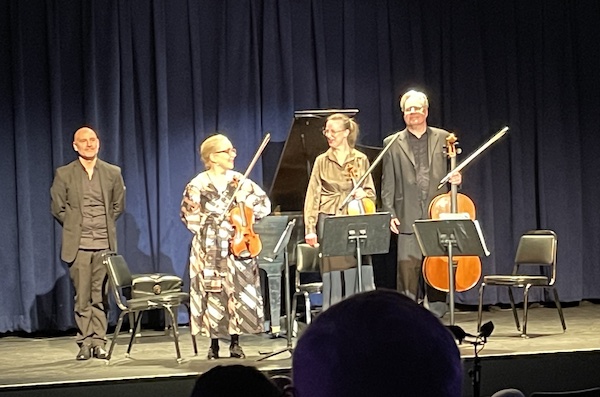
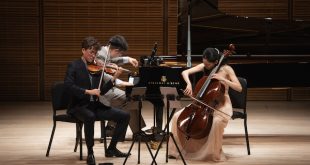
Composer Victoria Bond’s Cutting Edge Concerts series excels at bringing new music and unheralded artists to New York City. April 16 saw the NYC debut of Denmark’s Rudersdal Chamber Players, a versatile small ensemble of international musicians founded in 2017 by violinist Christine Pryn.
On this occasion the group took the form of a piano quartet to perform a modernist (and rather modest) Four Seasons by Russian-British composer Elena Firsova; a new work written for the occasion by Andrew Waggoner; and a Piano Quartet by Danish composer Poul Ruders. In addition, a trio lineup gave us a winning piece by Victoria Bond herself.
Muted Seasoning
Bond introduced the Firsova work with a smidge of humor: Having settled in the UK, the composer experiences seasons that are, shall we say, less than extreme. So we weren’t to expect anything like Vivaldi’s Four Seasons.
In the event, what we got was something quite abstract that suggested shifting moods more than weather patterns. It began with drifting chords punctuated by staccato hits from the cello. The music built to a tense scream, from which emerged humming harmonies and nervous piano gestures depicting a cloudy sort of anxiety. Most melody came from the rich tones of John Ehde’s cello.
The seasons marched on. A slow, ruminative episode tingled with gestures from the strings and hints of steady rhythm. Contemplative chromatic musings developed into a rather furious climax, before high, rising portamentos graced the finish with a sense of lightness.
Other Voices, Other Selves
Bond’s Trio: Other Selves for violin, cello and piano began as a ballet, and it was easy to picture dancing figures. Beginning with quiet harmonies, the music quickly turned lively, with a bubbling, rhythmic drive from the piano. A solo movement for the violin titled “Country Fiddle” featured energetic fiddling from Pryn, with sequences of forceful multi-string technique and heavy pizzicatos. It was like a traditional Celtic or American fiddle tune rendered with a different vocabulary – clever, showy, fun.
A jumpy, darkly humorous tutti Passacaglia led to a piano solo designated “Mechanical Dolls.” Here the music’s balletic nature resounded most clearly. Quirky, pretty, even pop-dramatic, the music vividly depicted dancing dolls with the capacity to grab at the heart.
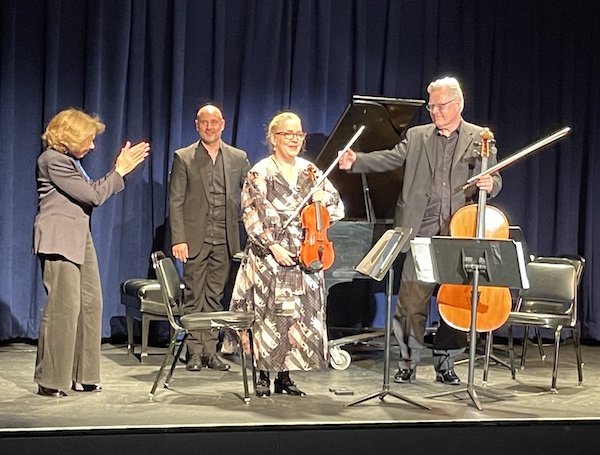
Pryn and pianist Manuel Esperilla traded melodies in a skewed, captivating “Rag,” where Bond plays with ragtime tropes in various tempos. Cellist John Ehde then gave an affecting performance of the appropriately titled “Monologue,” comprised of winding melodies redolent with arpeggios, faintly suggestive of Bach’s cello suites.
The trio finished the suite with a Finale that had a stark and rather dark conclusion. But the overall feeling of the piece was of playful seriousness, or serious play. I have always liked Bond’s music and Other Selves was no exception.
Nordic Awakenings
After intermission the full quartet returned for the premiere of “Matter, Circle, Heart” by Andrew Waggoner. Staccato rhythms and string harmonies made the first part of this piece into a toe-tapper. A more open-ended but still active section followed, decked with tone clusters and impassioned tonal harmonies before a return to the original rhythmic flavor. I thoroughly enjoyed this interesting and rather original piece.
The Piano Quartet by Danish composer Poul Ruders is a substantial and challenging work that received a deep reading from the Rudersdal musicians. (The similarity of the composer’s name to the ensemble’s is coincidental). Something felt American about the plainspoken melody that gently launches the piece, first heard in the piano, then in unison. But the tune develops quickly into a rhythmically and harmonically complex structure that I found powerfully entrancing, the melodic elements always echoing somewhere within. The first movement is titled “Awakening,” and it wakes us up indeed at the end with a stunning shift to soft, mellifluous traditional harmonies.
The second movement earns its title, “Innocence,” with long-held, humming close harmonies that frequently resolve with all three string instruments playing the same note in the same octave. Snaking in and out of those resolutions are softly atonal harmonies, quiet and thoughtful, continuously moving as the piano accompanies and interjects with sharp, flustered modernist chords.
Scampering rhythms take over in the “Sprightly” movement, where surface complexity rests on a foundation of melodic intelligibility – an impressive trick. The finale, “Translucent,” unfolds with forceful chords along with tight, quiet ones that call back to the second movement. The opening melody from “Awakening” returns to craft a solemn ending.
I’ve appreciated Ruders’ work on the few past occasions when I’ve heard it, but never so much as this performance of piece new to me. The dedication of the Rudersdal Chamber Ensemble to the composer’s work was evident in every note, as it was to everything on the program.